
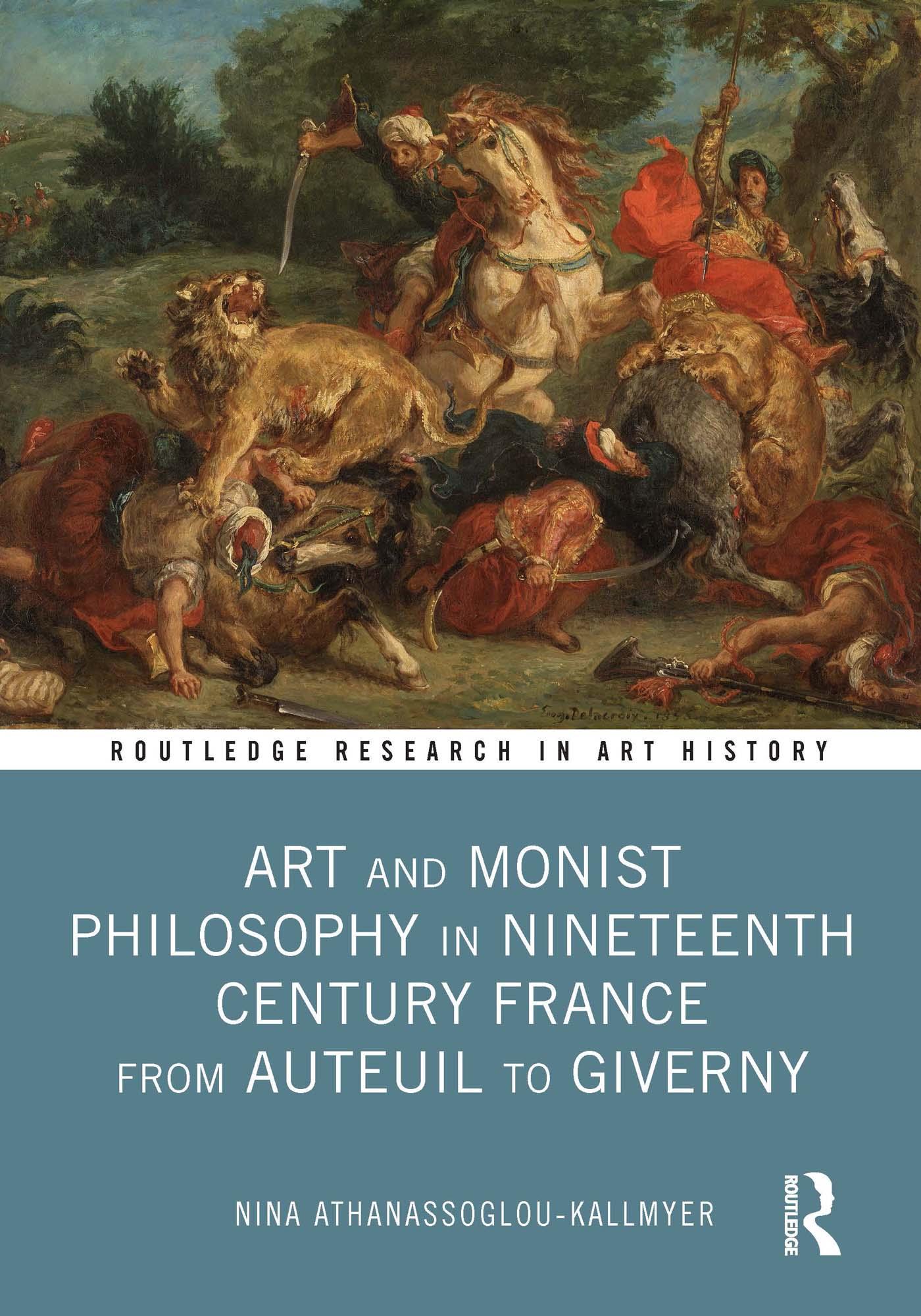
This is a study of the relation between the fine arts and philosophy in France, from the aftermath of the 1789 revolution to the end of the nineteenth century, when a philosophy of being called “monism” – the concept of a unity of matter and spirit – emerged and became increasingly popular among intellectuals, artists and scientists.
Nina Athanassoglou-Kallmyer traces the evolution and impact of this monist thought and its various permutations as a transformative force on certain aspects of French art and culture – from Romanticism to Impressionism – and as a theoretical backdrop that paved the way to as yet unexplored aspects of a modernist aesthetic. Chapters concentrate on three major artists, Théodore Géricault (1791–1824), Eugène Delacroix (1798–1863) and Claude Monet (1840–1926), and their particular approach to and interpretation of this unitarian concept.
The book will be of interest to scholars working in art history, philosophy and cultural history.
Pay easily by card, Klarna, Apple Pay or Google Pay. Not happy? You always have a 14-day money-back guarantee. Read more in our terms. If you have any questions, email us at hello@memmo.org.
Memmo makes studying easier – wherever you are in the world. We bring your course books and smart study tools together in one place: summaries, quizzes, podcasts and flashcards. Plus Ted, your study buddy who answers anything you wonder. Over 50,000 students already study here – built to help you learn faster and stress less.