
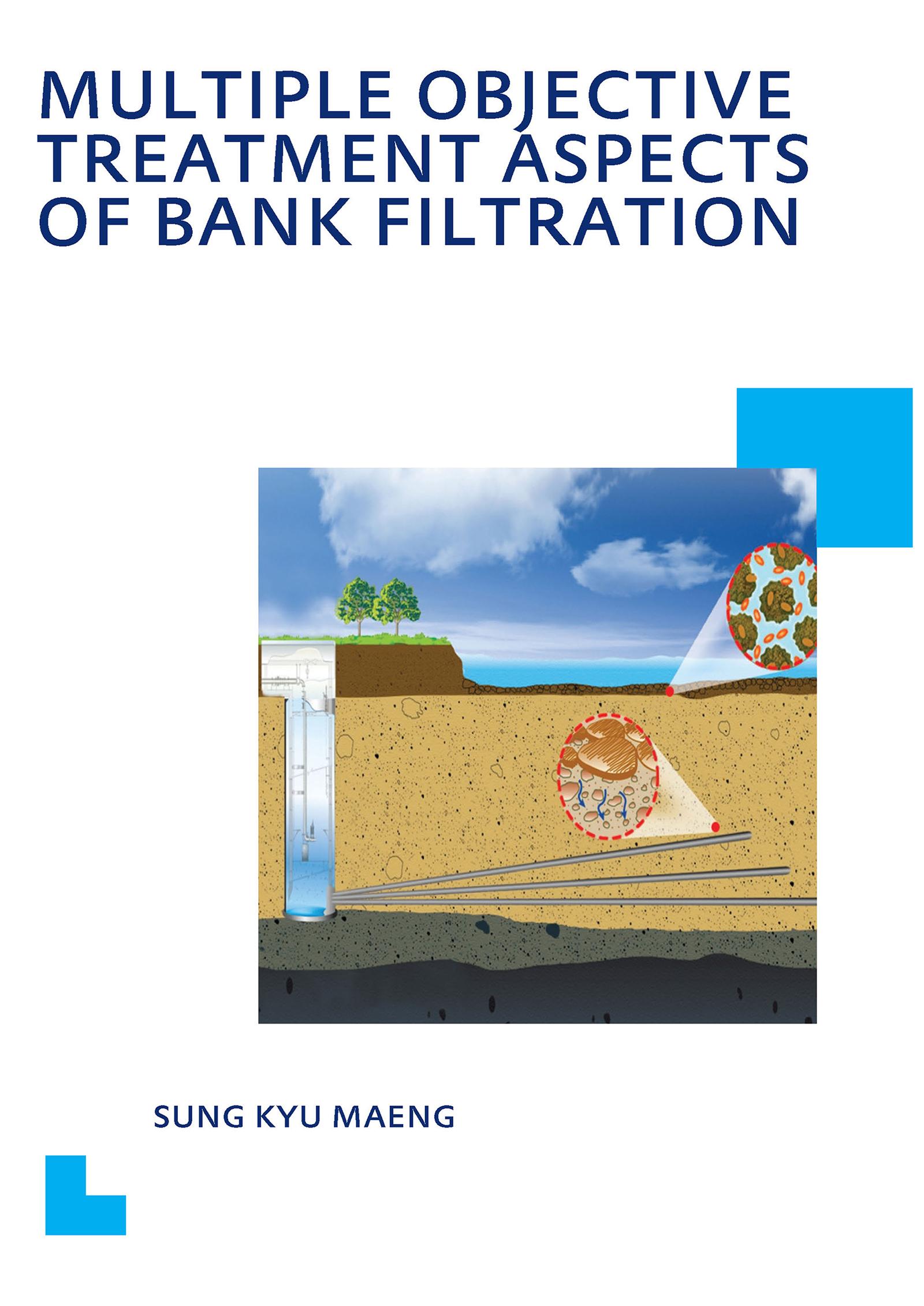
Bank filtration (BF) is a natural water treatment process which induces surface water to flow in response to a hydraulic gradient through soil/sediment and into a vertical or horizontal well. It is a relatively cost-effective, robust and sustainable technology. From a historical perspective, BF is first mentioned in the bible, and the process has been recognized as a proven method for drinking water treatment in Europe for more than 100 years. However, the mechanisms of removal of different contaminants during BF are not fully understood. This study showed that BF is an effective multiple objective barrier for removal of different contaminants present in surface water sources including bulk organic matter and organic micropollutants (OMPs) like pharmaceutically active compounds and endocrine disrupting compounds. It was found that biodegradation and adsorption play primary and secondary roles, respectively, in the removal of OMPs during soil passage. Furthermore, using field data from BF sites and chemical properties of OMPs, models were developed to estimate the removal of OMPs during soil passage. It can be concluded that the removal efficiencies of BF for these contaminants can be maximised by proper design and operation of recovery wells taking into consideration source water quality characteristics and local hydrogeological conditions.
Pay easily by card, Klarna, Apple Pay or Google Pay. Not happy? You always have a 14-day money-back guarantee. Read more in our terms. If you have any questions, email us at hello@memmo.org.
Memmo makes studying easier – wherever you are in the world. We bring your course books and smart study tools together in one place: summaries, quizzes, podcasts and flashcards. Plus Ted, your study buddy who answers anything you wonder. Over 50,000 students already study here – built to help you learn faster and stress less.