
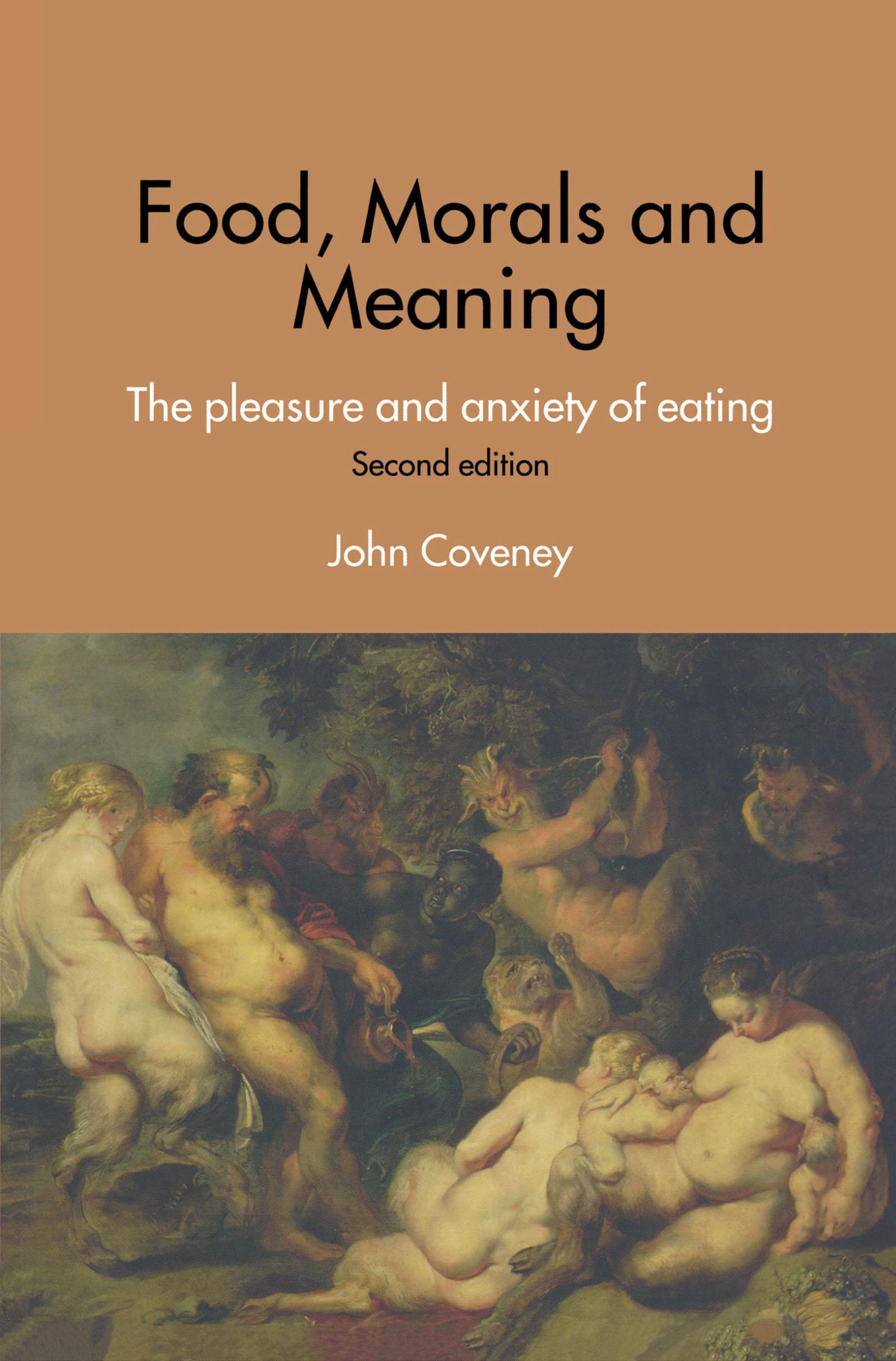
First published in 2006. Food, Morals and Meaning examines our need to discipline our desires, our appetites and our pleasures at the table. However, instead of seeing this discipline as dominant or oppressive it argues that a rationalisation of pleasure plays a positive role in our lives, allowing us to better understand who we are. The book begins by exploring the way that concerns about food, the body and pleasure were prefigured in antiquity and then how these concerns were recast in early Christianity as problems of 'natural' appetite which had to be curbed. The following chapters discuss how scientific knowledge about food was constructed out of philosophical and religious concerns about indulgence and excess in 18th and 19th Century Europe. Finally, by using research collected from in-depth interviews with families, the last section focuses on the social organisation of food in the modern home to illustrate the ways that the meal table now incorporates the principles of nutrition as a form of moral training, especially for children. Food, Morals and Meaning will be essential reading for those studying nutrition, public health, sociology of health and illness and sociology of the body.
Pay easily by card, Klarna, Apple Pay or Google Pay. Not happy? You always have a 14-day money-back guarantee. Read more in our terms. If you have any questions, email us at hello@memmo.org.
Memmo makes studying easier – wherever you are in the world. We bring your course books and smart study tools together in one place: summaries, quizzes, podcasts and flashcards. Plus Ted, your study buddy who answers anything you wonder. Over 50,000 students already study here – built to help you learn faster and stress less.
You might also like
Buy the book0