
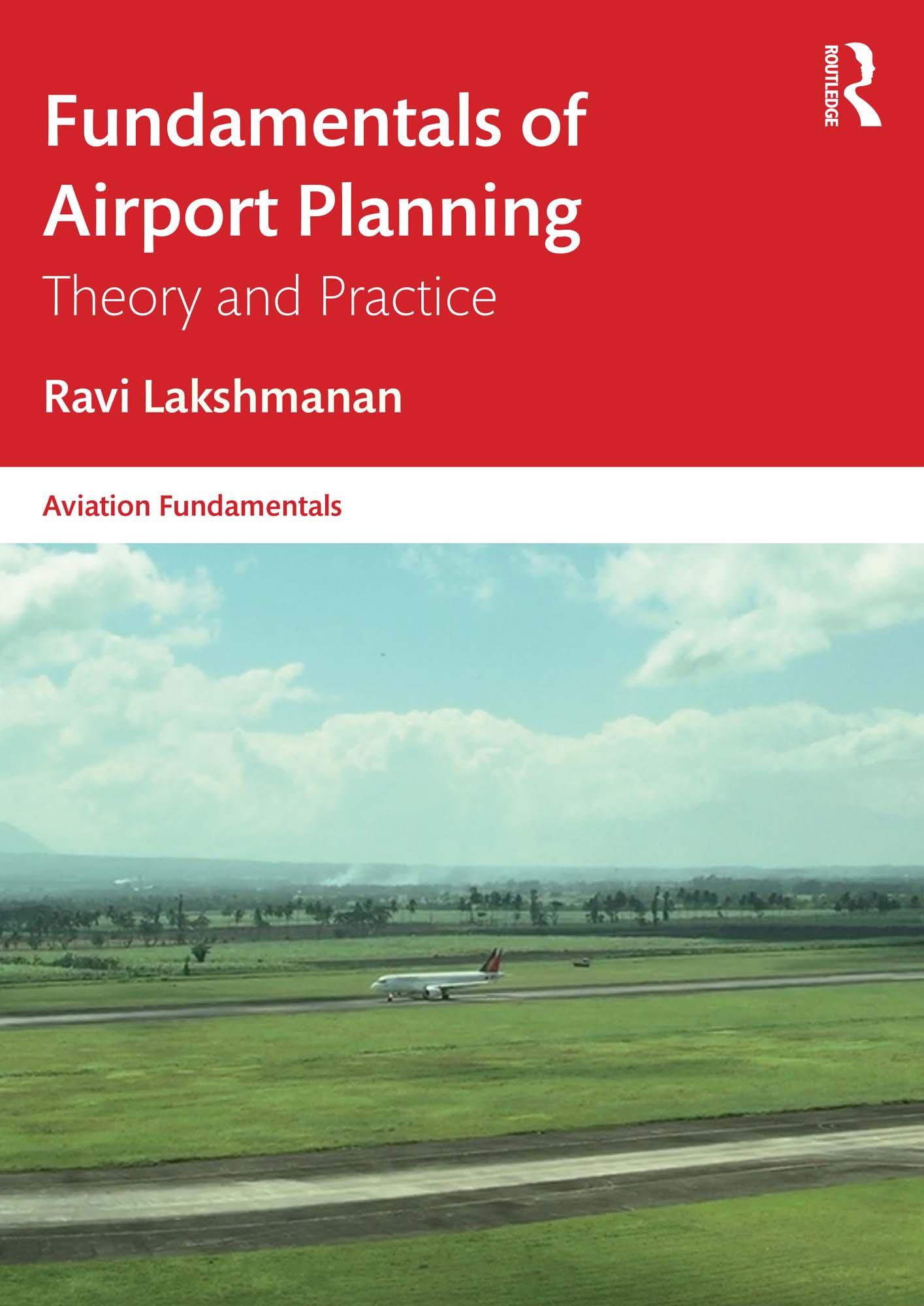
Airport planning, especially the airside, is based on strict compliance with regulatory requirements. In heavily urbanized, industrialized countries, where suitable sites for new airport developments are increasingly hard to find – and subjected to unprecedented public scrutiny – the role of the airport planner is more crucial than ever.
Fundamentals of Airport Planning aims to explain airport planning from the ground up. Utilizing a basic framework and step-by-step approach, the author introduces the critical parameters for selecting a suitable and 'best' location from among multiple sites. International and country-specific regulations are described and accounted for. The master planning process is described with suitable illustrations and examples, and the benefits and best practices of master planning are discussed. The location of visual aids (lighting and marking) and non-visual aids Communication, Navigation and Surveillance Systems (CNS) is considered, and readers will also learn how to prepare technically feasible plans with various infrastructures and how to assess a project's financial viability. This book includes a chapter on land use planning to maximize the utilization of the asset, with appropriate control within and outside the airport.
This book is aimed at postgraduate students who are specializing in aviation or air transport management, as well as professionals studying or working in airport planning and design and related aviation topics.
Pay easily by card, Klarna, Apple Pay or Google Pay. Not happy? You always have a 14-day money-back guarantee. Read more in our terms. If you have any questions, email us at hello@memmo.org.
Memmo makes studying easier – wherever you are in the world. We bring your course books and smart study tools together in one place: summaries, quizzes, podcasts and flashcards. Plus Ted, your study buddy who answers anything you wonder. Over 75,000 students already study here – built to help you learn faster and stress less.