
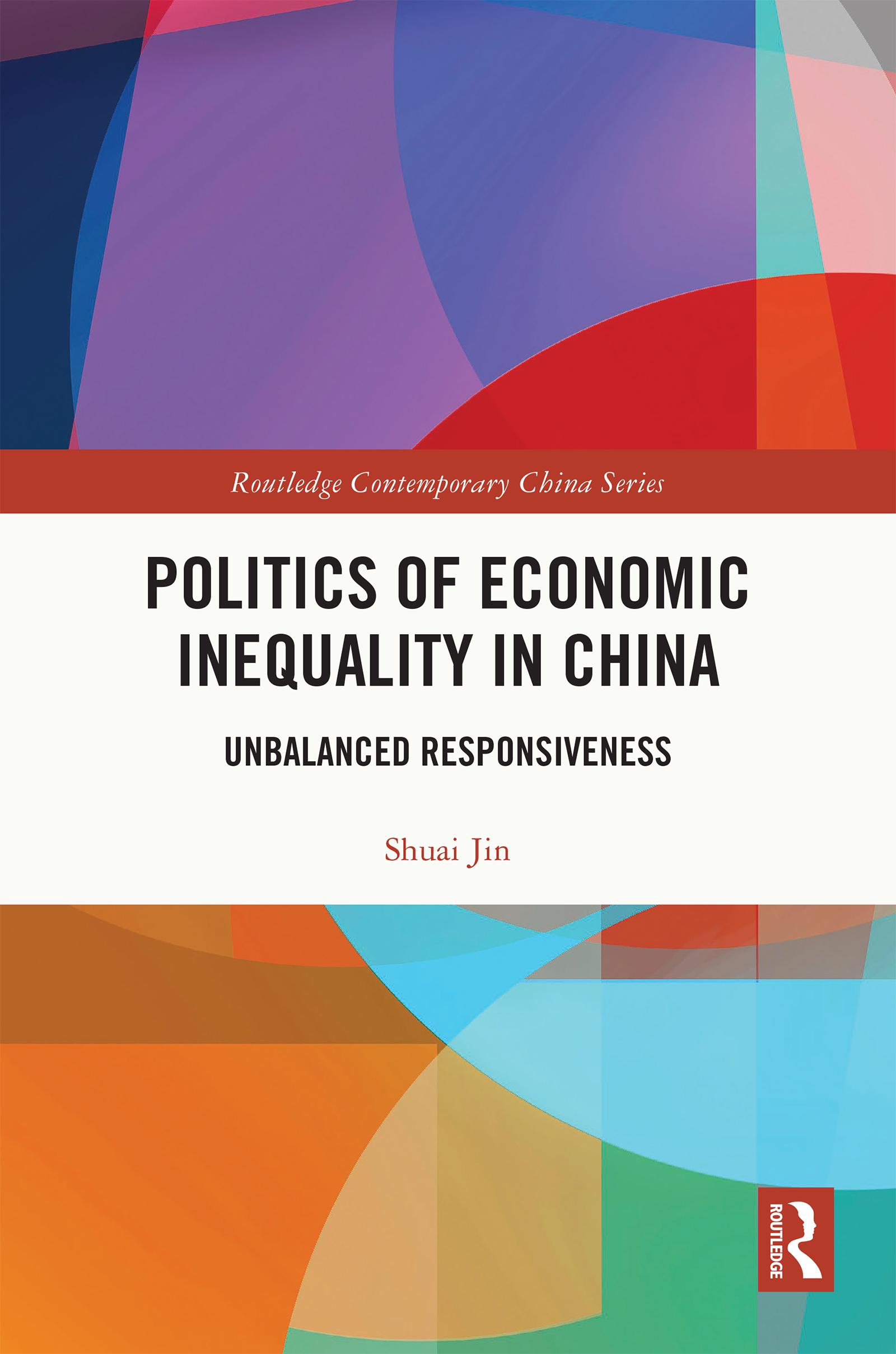
This book applies a novel theory of ‘unbalanced responsiveness’ to the issue of economic inequality in China to better understand the relationship between authoritarian regimes and their citizens.
The book highlights how the Chinese Communist Party (CCP) has responded to dissatisfaction over inequality, with both propaganda and policy, revealing how the responsiveness in these two arenas is unbalanced. Arguing that while CCP propaganda claims to reduce inequality, its welfare programs have been stratified, unfair, and regressive, aggravating instead of alleviating inequalities. By utilizing data from multiple national surveys, the book reveals that the discrepancy between propaganda and policy ultimately generates further dissatisfaction and strong demands for redistribution. The findings of this study indicate how unmitigated and prolonged economic inequality could be a real threat to the sustained rule of the CCP regime.
Providing a new theory, applicable to authoritarian and especially communist regimes, demonstrated through the lens of China, this book will be a valuable resource to students and scholars of Chinese studies, political science, and public policy.
Pay easily by card, Klarna, Apple Pay or Google Pay. Not happy? You always have a 14-day money-back guarantee. Read more in our terms. If you have any questions, email us at hello@memmo.org.
Memmo makes studying easier – wherever you are in the world. We bring your course books and smart study tools together in one place: summaries, quizzes, podcasts and flashcards. Plus Ted, your study buddy who answers anything you wonder. Over 50,000 students already study here – built to help you learn faster and stress less.