
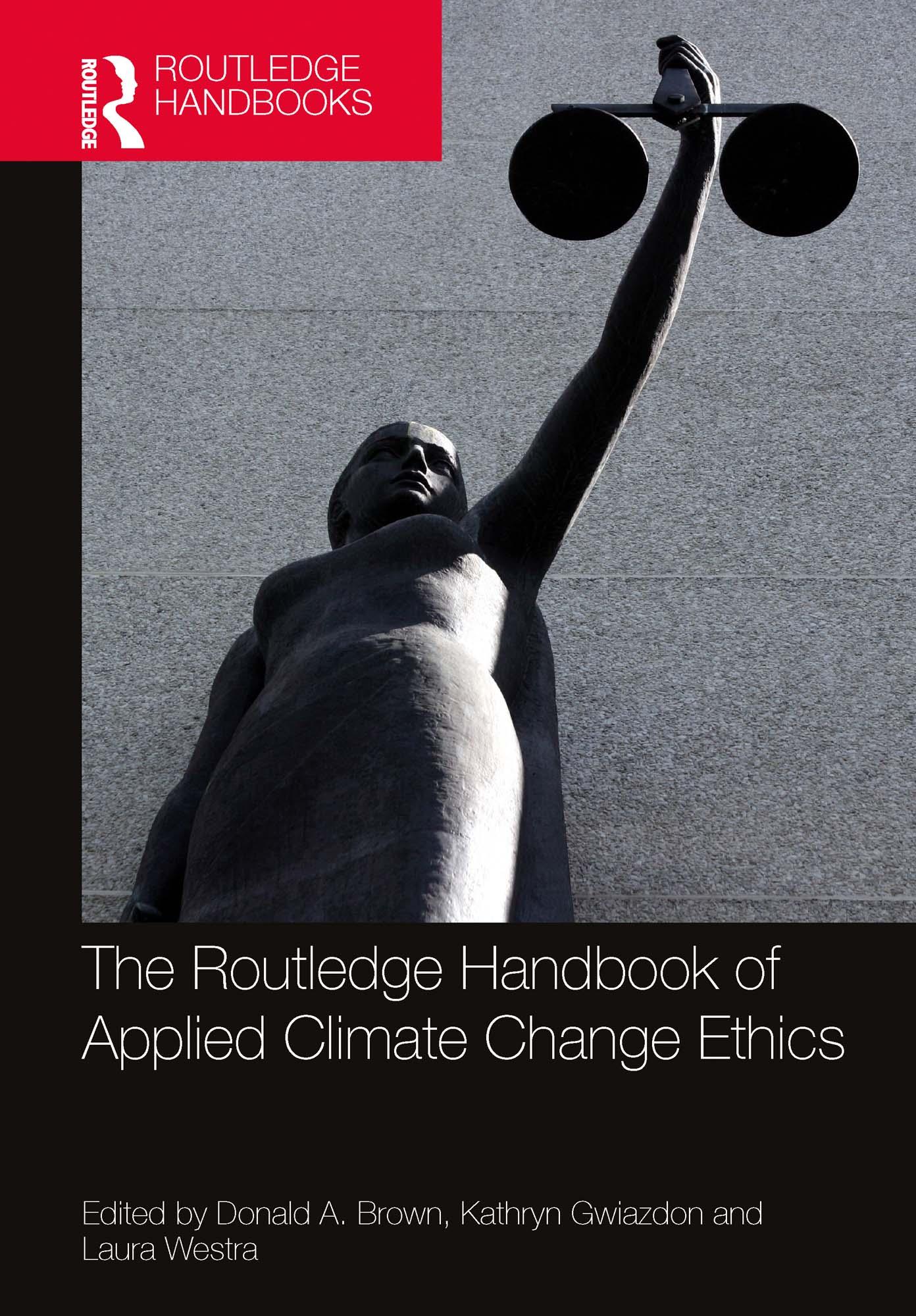
The Routledge Handbook of Applied Climate Change Ethics is a powerful reference source for the identification and exploration of the underlying ethical issues in climate change law and policy. Bridging theory with practice, it takes ethical engagement out of the classroom and into the halls of governance.
The Handbook‘s 39 chapters--written by a diverse and inter-disciplinary team of experts from around the world--are case studies divided into five parts. Parts I-IV highlight the ethical issues that arise in climate change policy formation, from duties not to harm to duties to consider the views and voices of those who will be, or are being, harmed; from the role of human rights, justice, and democracy to how to identify and respond to disinformation and denialism. It also raises the ethics of various policy responses, such as cap-and-trade, carbon taxing, and geo-engineering. Part V offers a way forward, with strategies on how to expressly consider ethics in climate change policy formation, from negotiations to education, media, communication, and the power and potential of shaming.
The volume is essential reading for students, professors, and practitioners who wish to better engage with government and non-government organizations on climate policy, to better understand the practical application of the theory and philosophy of ethics, and how to more strongly draft and defend ethical action in negotiating, drafting, and defending climate change law and policy.
Pay easily by card, Klarna, Apple Pay or Google Pay. Not happy? You always have a 14-day money-back guarantee. Read more in our terms. If you have any questions, email us at hello@memmo.org.
Memmo makes studying easier – wherever you are in the world. We bring your course books and smart study tools together in one place: summaries, quizzes, podcasts and flashcards. Plus Ted, your study buddy who answers anything you wonder. Over 50,000 students already study here – built to help you learn faster and stress less.