
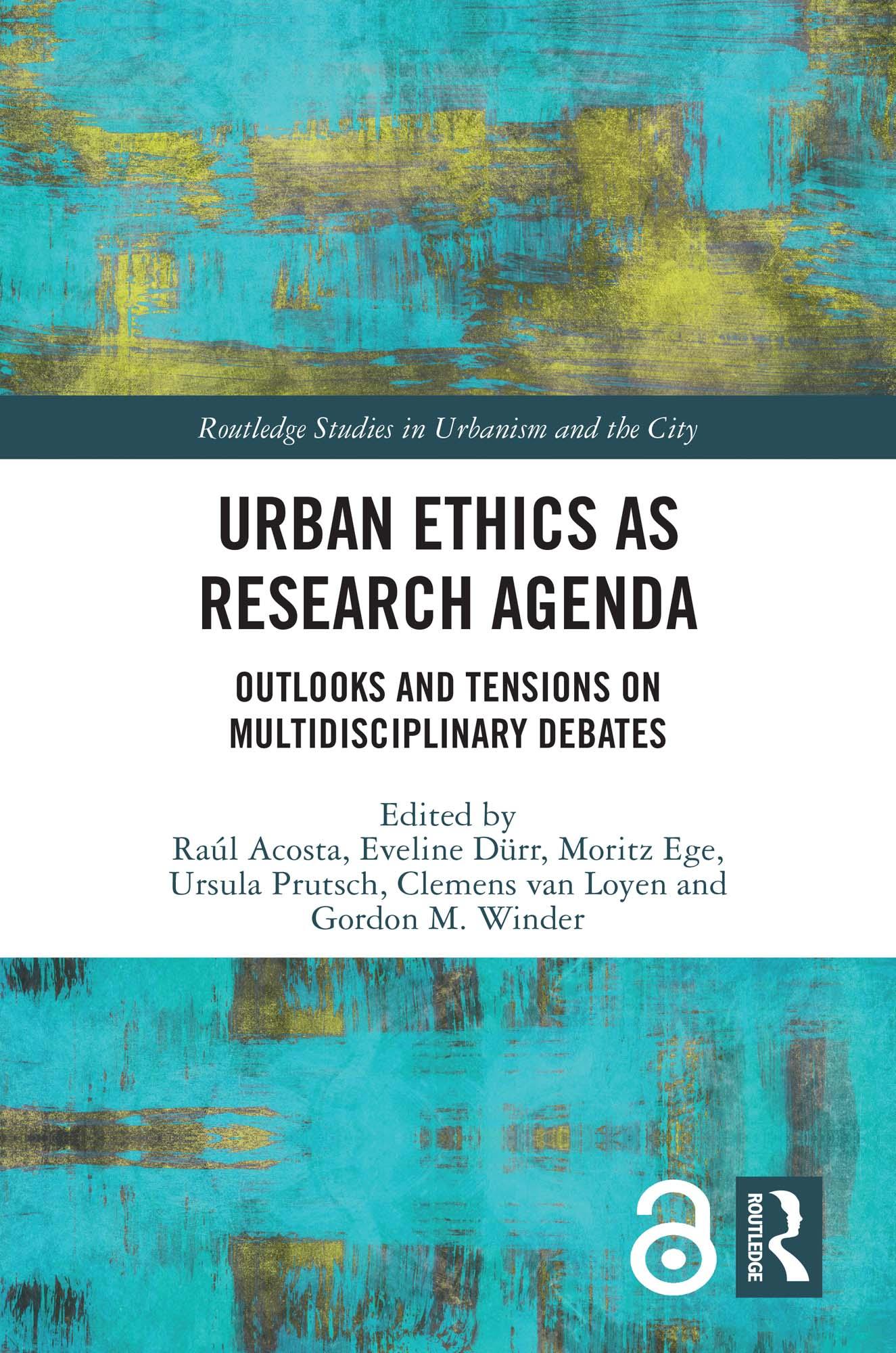
This book provides an outline for a multidisciplinary research agenda into urban ethics and offers insights into the various ways urban ethics can be configured. It explores practices and discourses through which individuals, collectives and institutions determine which developments and projects may be favourable for dwellers and visitors traversing cities.
Urban Ethics as Research Agenda widens the lens to include other actors apart from powerful individuals or institutions, paying special attention to activists or civil society organizations that express concerns about collective life. The chapters provide fresh perspectives addressing the various scales that converge in the urban. The uniqueness of each city is, thus, enriched with global patterns of the urban. Local sociocultural characteristics coexist with global flows of ideas, goods and people. The focus on urban ethics sheds light on emerging spaces of human development and the ways in which ethical narratives are used to mobilize and contest them in terms of the good life.
This timely book analyses urban ethical negotiations from social and cultural studies, particularly drawing on anthropology, geography and history. This volume will be of interest to scholars, researchers and practitioners interested in ethics and urban studies.
Licence line: The Open Access version of this book, available at www.taylorfrancis.com, has been made available under a Creative Commons Attribution-Non Commercial-No Derivatives 4.0 license.
Pay easily by card, Klarna, Apple Pay or Google Pay. Not happy? You always have a 14-day money-back guarantee. Read more in our terms. If you have any questions, email us at hello@memmo.org.
Memmo makes studying easier – wherever you are in the world. We bring your course books and smart study tools together in one place: summaries, quizzes, podcasts and flashcards. Plus Ted, your study buddy who answers anything you wonder. Over 75,000 students already study here – built to help you learn faster and stress less.