
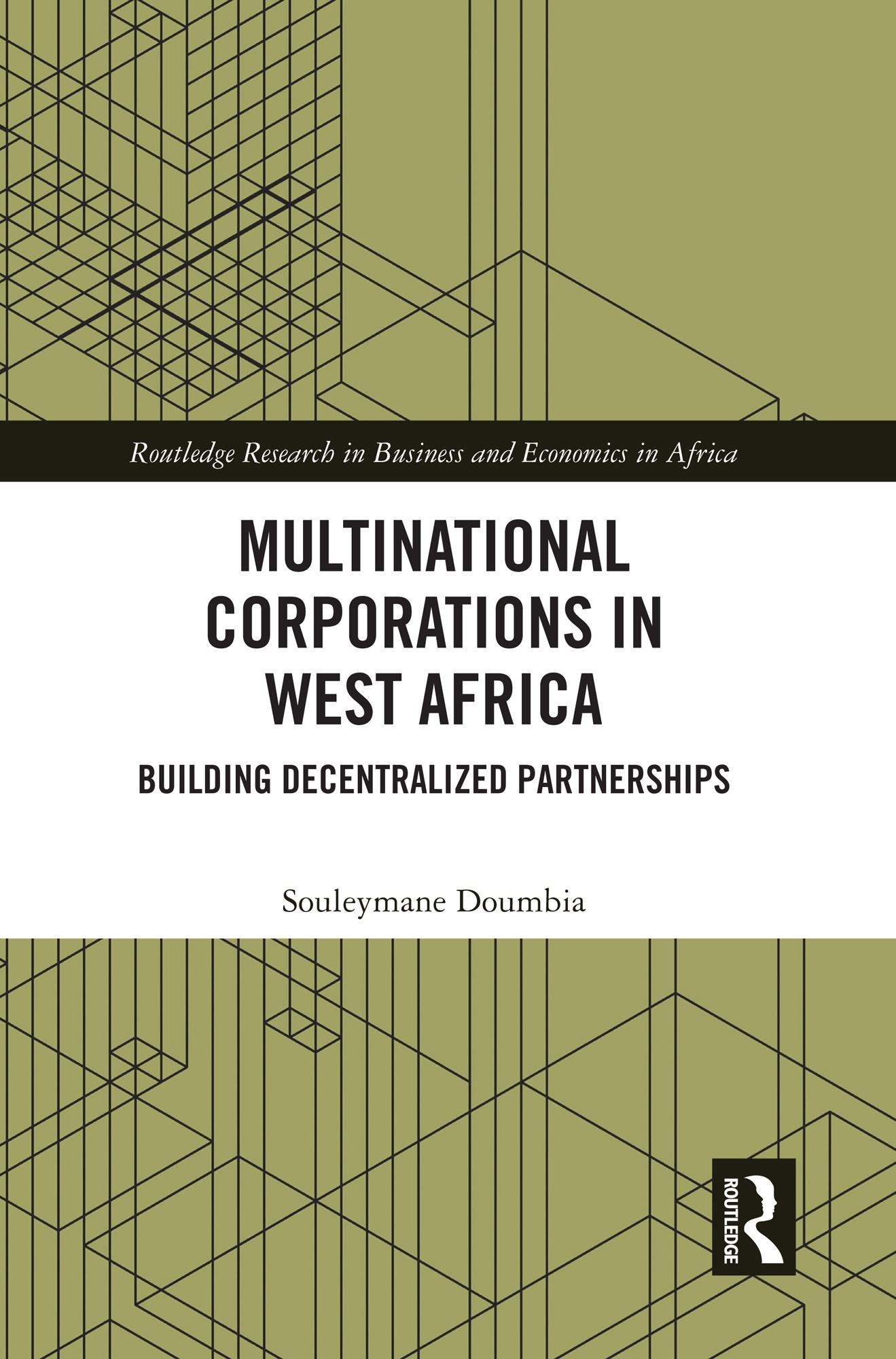
This book investigates the relationship that Multinational Corporations form with Local Authorities and governments in West Africa. It argues that informal partnerships at the local level can provide significant socioeconomic benefits to communities and overcome shortfalls in state provision of infrastructure and collective goods and services.
Drawing on in-depth case studies in Niger, Ghana and Liberia, the book demonstrates that Decentralized Partnerships benefit from lower transaction costs while maintaining profitability and investment protection, whereas in formal relationships between multinationals and local government, asset specificity and uncertainty are high. By complying with informal rules, which are in many ways just as restrictive as formal rules, Multinational Corporations can adapt and acculturate themselves, become actors of territorial authorities and can get around the incompleteness of the contract that binds them to the state.
Reflecting on a range of local projects (educational, infrastructural, health, micro-financial, entrepreneurial), this book provides a rich and detailed assessment of the interactions between Local Authorities and Multinational Firms.
The book will be useful to upper-level students and researchers across the fields of economics, business, sociology, anthropology and African studies as well as to development practitioners and regional and international organizations with interest in the functioning of Multinational Corporations in local environments.
Pay easily by card, Klarna, Apple Pay or Google Pay. Not happy? You always have a 14-day money-back guarantee. Read more in our terms. If you have any questions, email us at hello@memmo.org.
Memmo makes studying easier – wherever you are in the world. We bring your course books and smart study tools together in one place: summaries, quizzes, podcasts and flashcards. Plus Ted, your study buddy who answers anything you wonder. Over 50,000 students already study here – built to help you learn faster and stress less.