
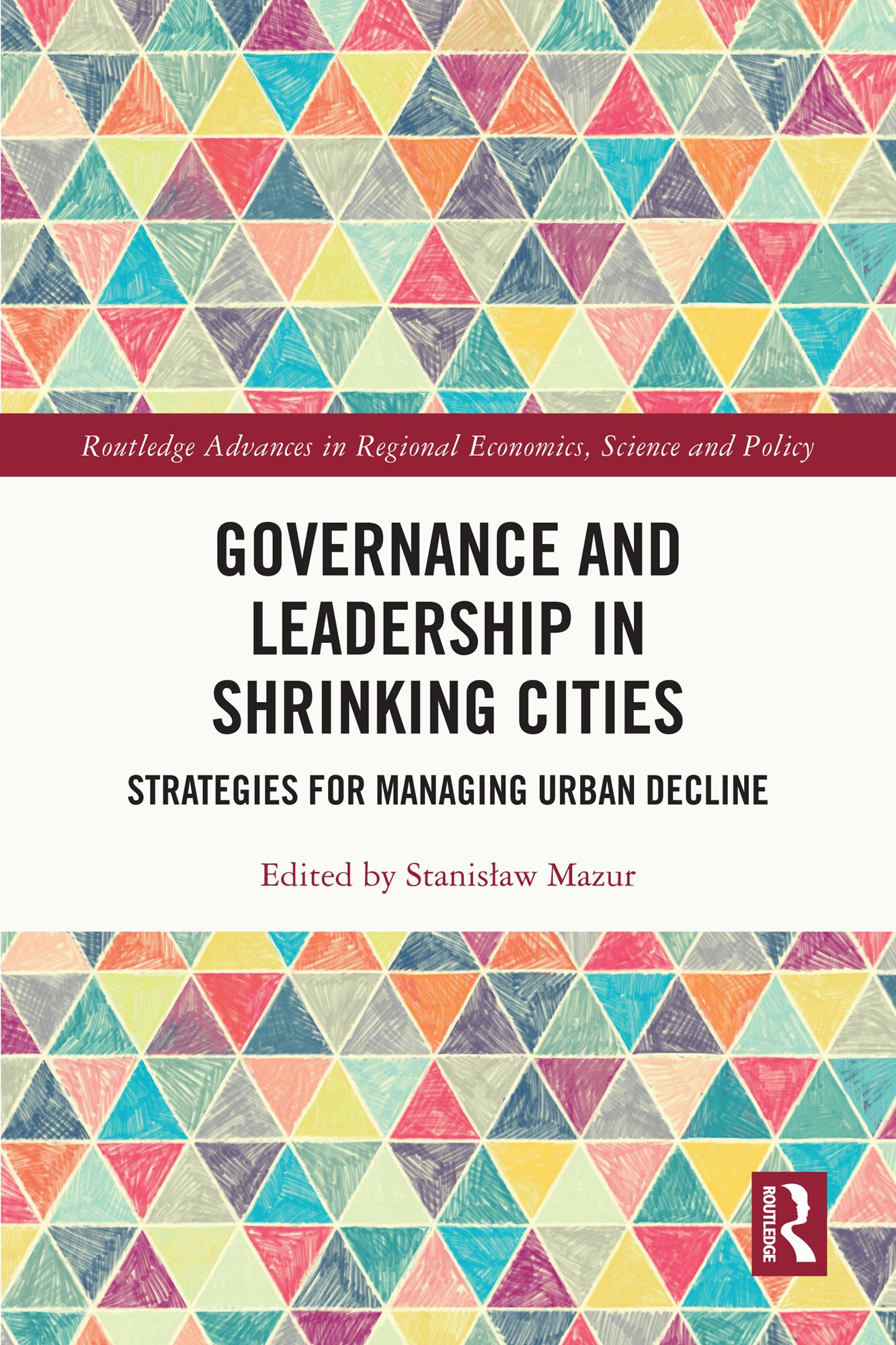
The aim of this publication is to look in depth at depopulation - a trend that is affecting an increasing number of cities worldwide. It has recently become a critical issue with a range of detrimental social, economic, spatial, and financial consequences. However, attempts by central and local governments to combat depopulation have yet to yield satisfactory results. Compelling evidence suggests that one of the reasons for this state of affairs is that the role of local (urban) leadership in devising solutions, mobilizing resources, and creating networks to address the problem has been underestimated. Moreover, according to the authors of this monograph, there is a significant positive correlation between urban leadership and the ability to effectively respond to and counteract the negative effects of depopulation. Without an understanding of the impact of urban leadership on the ability to address the negative consequences of urban depopulation, it is impossible to pursue effective public policies in this regard.
This book presents a novel approach to explaining the ability of cities to combat depopulation through the prism of urban leadership quality. It compares domestic empirical research findings with international case studies, and offers a comprehensive review of valuable practices to counter urban shrinkage and depopulation, from both academic and practical perspectives. Further, the book provides a new interpretation of the processes associated with these trends.
The magnitude of the phenomenon in question, the negative spatial, economic, and social consequences, as well as the relatively low effectiveness of policies aimed at its mitigation, will make this book an invaluable guide for researchers, and students from a wide range of disciplines including urban studies, economics, public management, leadership studies, local government, climate change and energy transition and urban movements. The audience will also comprise of policymakers and urban experts such as sociologists, planners, social geographers, economists, and architects.
Pay easily by card, Klarna, Apple Pay or Google Pay. Not happy? You always have a 14-day money-back guarantee. Read more in our terms. If you have any questions, email us at hello@memmo.org.
Memmo makes studying easier – wherever you are in the world. We bring your course books and smart study tools together in one place: summaries, quizzes, podcasts and flashcards. Plus Ted, your study buddy who answers anything you wonder. Over 75,000 students already study here – built to help you learn faster and stress less.