
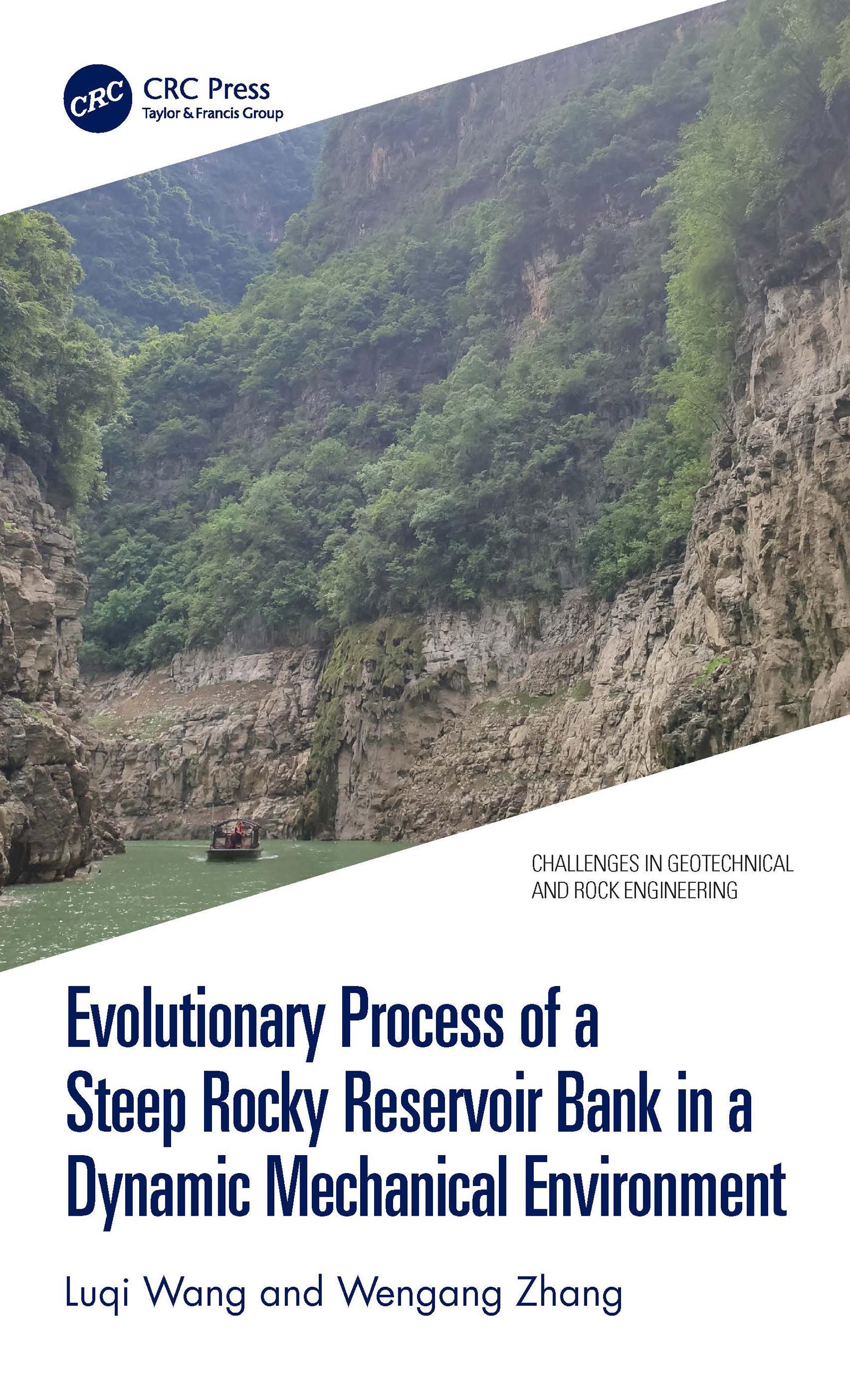
To prevent the collapse of dangerous rock masses on steep rocky reservoir banks which can cause casualties and property loss, it is essential to design and conduct practical experiments to quantify the evolution processes of the reservoir banks and control such dangerous rock masses.
Using the Jianchuandong Dangerous Rock Mass project as a case study, this book generalizes the mechanical model of the project to show how improved equipment can be used to measure the mechanical state transition under the continuous action of axial pressure. It details a series of experiments to study the evolution of a severely steep rocky reservoir bank, which comprehensively consider the influence of hydraulic coupling, dry-wet cycles, axial pressure, and time-dependent effects. The results support a new method for determining the stability of dangerous rock masses on reservoir banks.
- Combines engineering principles, real data, experimental methods and results
- Provides a complete research method for investigating hydrogeology failure processes
The book suits practitioners in hydropower engineering, engineering geology, and disaster protection.
Pay easily by card, Klarna, Apple Pay or Google Pay. Not happy? You always have a 14-day money-back guarantee. Read more in our terms. If you have any questions, email us at hello@memmo.org.
Memmo makes studying easier – wherever you are in the world. We bring your course books and smart study tools together in one place: summaries, quizzes, podcasts and flashcards. Plus Ted, your study buddy who answers anything you wonder. Over 50,000 students already study here – built to help you learn faster and stress less.