
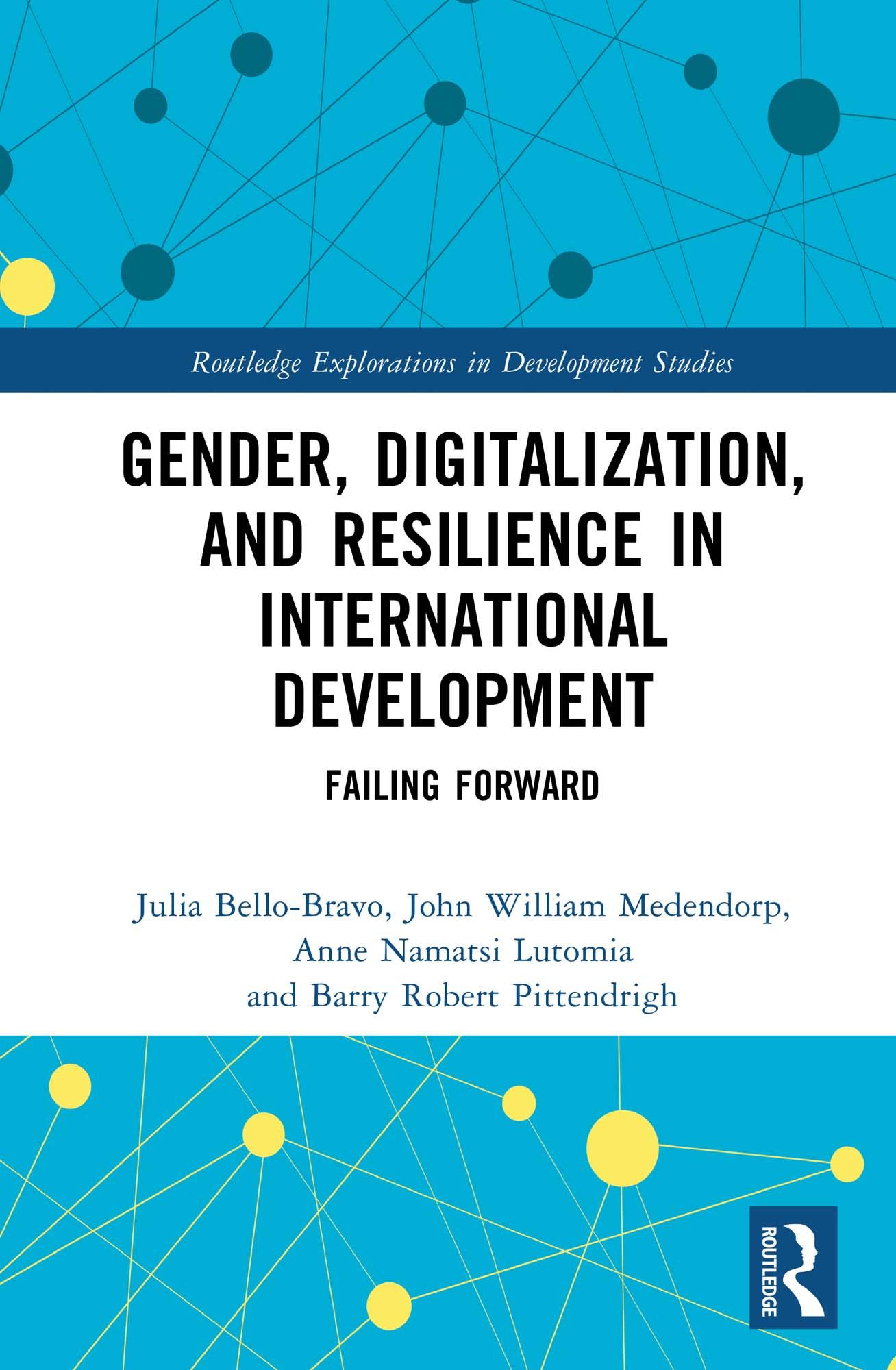
This book explores the intersection of gender, digitalization, and resilience in international development.
Building resilience is increasingly seen as crucial when planning and implementing development programmes, enabling communities to mitigate, adapt to, and recover from shocks and stresses in a manner that reduces chronic vulnerability and facilitates inclusive growth. Gender plays a crucial role in the resilience of development systems, as the exclusion of women from participation can make communities more vulnerable to economic shocks, perpetuating and even worsening current levels of poverty, instability, and insecurity. Drawing on meta-data from across the world, as well as specific case studies from Ghana, Kenya, Burkina Faso, and Mozambique, this book reflects on these intersections and the potential of digitalization as a democratizing tool for improving the access of women and other marginalized groups to information vital for their participation in the process of development. By outlining the importance of digitalization for addressing gender imbalances, this book draws the evidentiary lines between the role of digitalization for women and resilience as a whole.
This book will be of interest to development practitioners and policy makers, as well as researchers with specialisms in gender inclusion, resilience, digitalization, and international development.
Pay easily by card, Klarna, Apple Pay or Google Pay. Not happy? You always have a 14-day money-back guarantee. Read more in our terms. If you have any questions, email us at hello@memmo.org.
Memmo makes studying easier – wherever you are in the world. We bring your course books and smart study tools together in one place: summaries, quizzes, podcasts and flashcards. Plus Ted, your study buddy who answers anything you wonder. Over 50,000 students already study here – built to help you learn faster and stress less.