
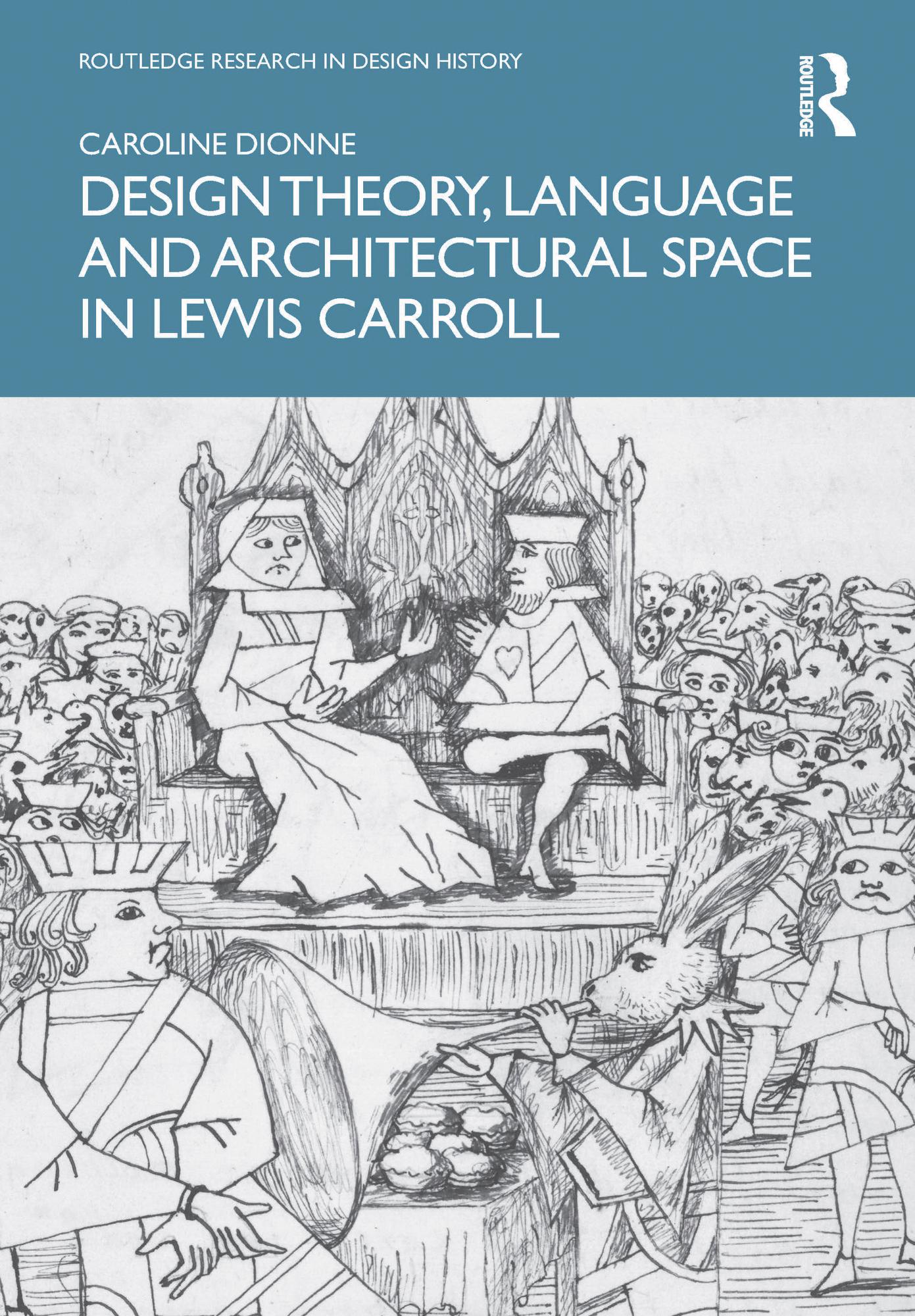
This volume offers spatial theories of the emergent based on a careful close reading of the complete works of nineteenth-century writer and mathematician Lewis Carroll—from his nonsense fiction, to his work on logic and geometry, including his two short pamphlets on architecture.
Drawing on selected key moments in our philosophical tradition, including phenomenology and sociospatial theories, Caroline Dionne interrogates the relationship between words and spaces, highlighting the crucial role of language in processes of placemaking. Through an interdisciplinary method that relates literary and language theories to theories of space and placemaking, with emphasis on the social and political experience of architectural spaces, Dionne investigates Carroll’s most famous children’s books, Alice’s Adventures in Wonderland and Through the Looking-Glass and What Alice Found There, in relation to his lesser-known publications on geometry and architecture.
The book will be of interest to scholars working in design theory, design history, architecture, and literary theory and criticism.
Pay easily by card, Klarna, Apple Pay or Google Pay. Not happy? You always have a 14-day money-back guarantee. Read more in our terms. If you have any questions, email us at hello@memmo.org.
Memmo makes studying easier – wherever you are in the world. We bring your course books and smart study tools together in one place: summaries, quizzes, podcasts and flashcards. Plus Ted, your study buddy who answers anything you wonder. Over 75,000 students already study here – built to help you learn faster and stress less.