
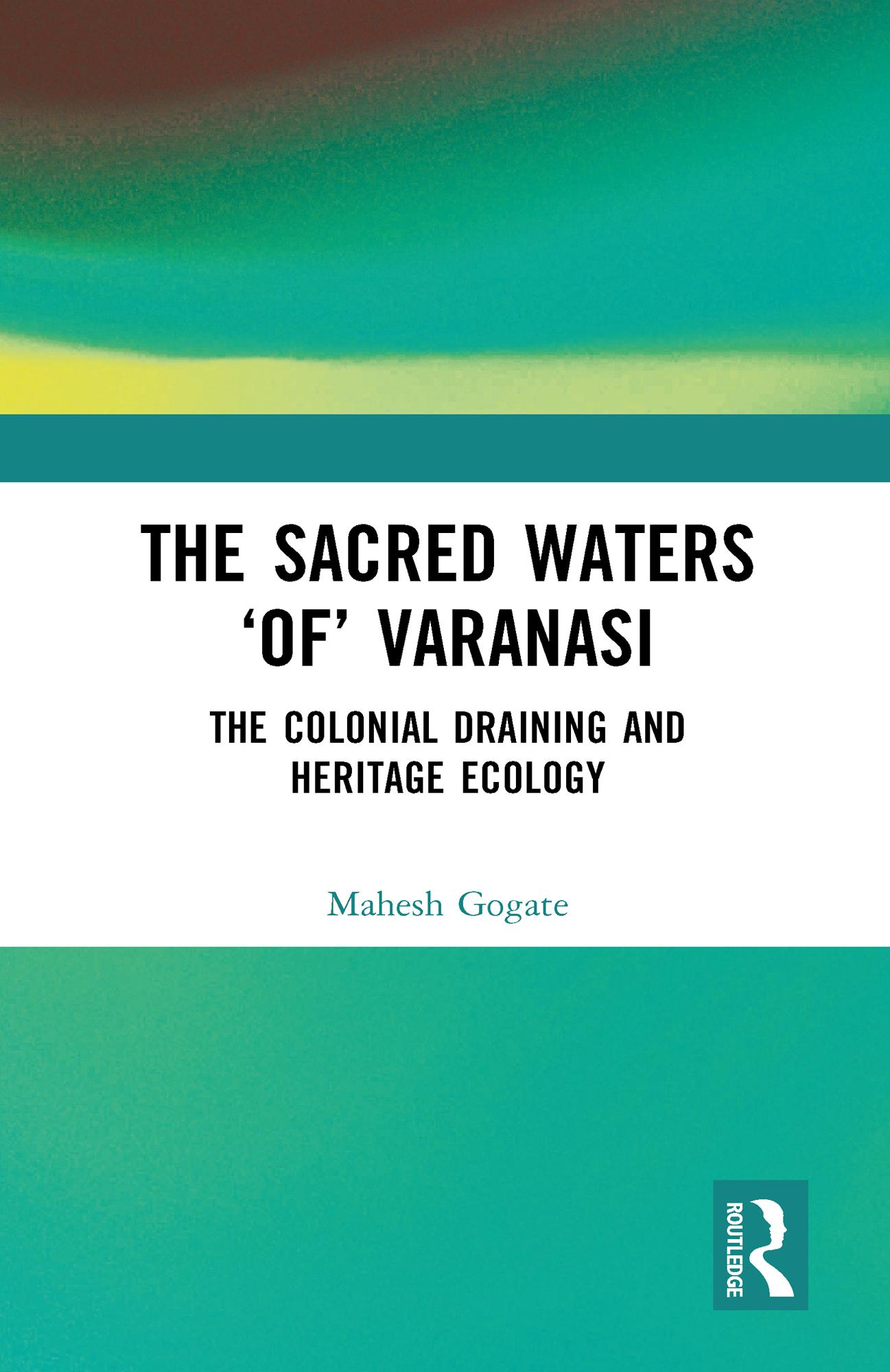
This book on urban water bodies, catchment areas and drainage pattern is set against the backdrop of the unprecedented heavy rainfall that severely deluged metropolitan cities and other parts of India in recent years. The recurring natural catastrophes in water-stressed cities of India and alarming rate of diminishing water bodies, wetlads and catchment areas needs a re-visit to an entire urban water-cycle.
This book, thus, discusses how the processes and implementation of colonial urban development policies and projects have radically transformed the water bodies and their catchment areas – traditional water holding systems of Varanasi city. In this imperative colonial process, through the case study of Varanasi, the book mainly engages with the reasons behind the elimination of the temple tanks and ponds after the annexation of Varanasi by the British from 1775 till 1947. The book investigates the colonial notion of ‘dry city’, and how this notion crafted the process of separating land and water bodies, which arguably resulted in the reclamation and draining of water bodies, and also gave rise to water pollution. Additionally, the book analyzes the elimination of water bodies and loss of catchment areas through the ongoing processes of restoring the ancient city’s natural and cultural heritage.
Print edition not for sale in South Asia (India, Sri Lanka, Nepal, Bangladesh, Pakistan and Bhutan)
Pay easily by card, Klarna, Apple Pay or Google Pay. Not happy? You always have a 14-day money-back guarantee. Read more in our terms. If you have any questions, email us at hello@memmo.org.
Memmo makes studying easier – wherever you are in the world. We bring your course books and smart study tools together in one place: summaries, quizzes, podcasts and flashcards. Plus Ted, your study buddy who answers anything you wonder. Over 75,000 students already study here – built to help you learn faster and stress less.