
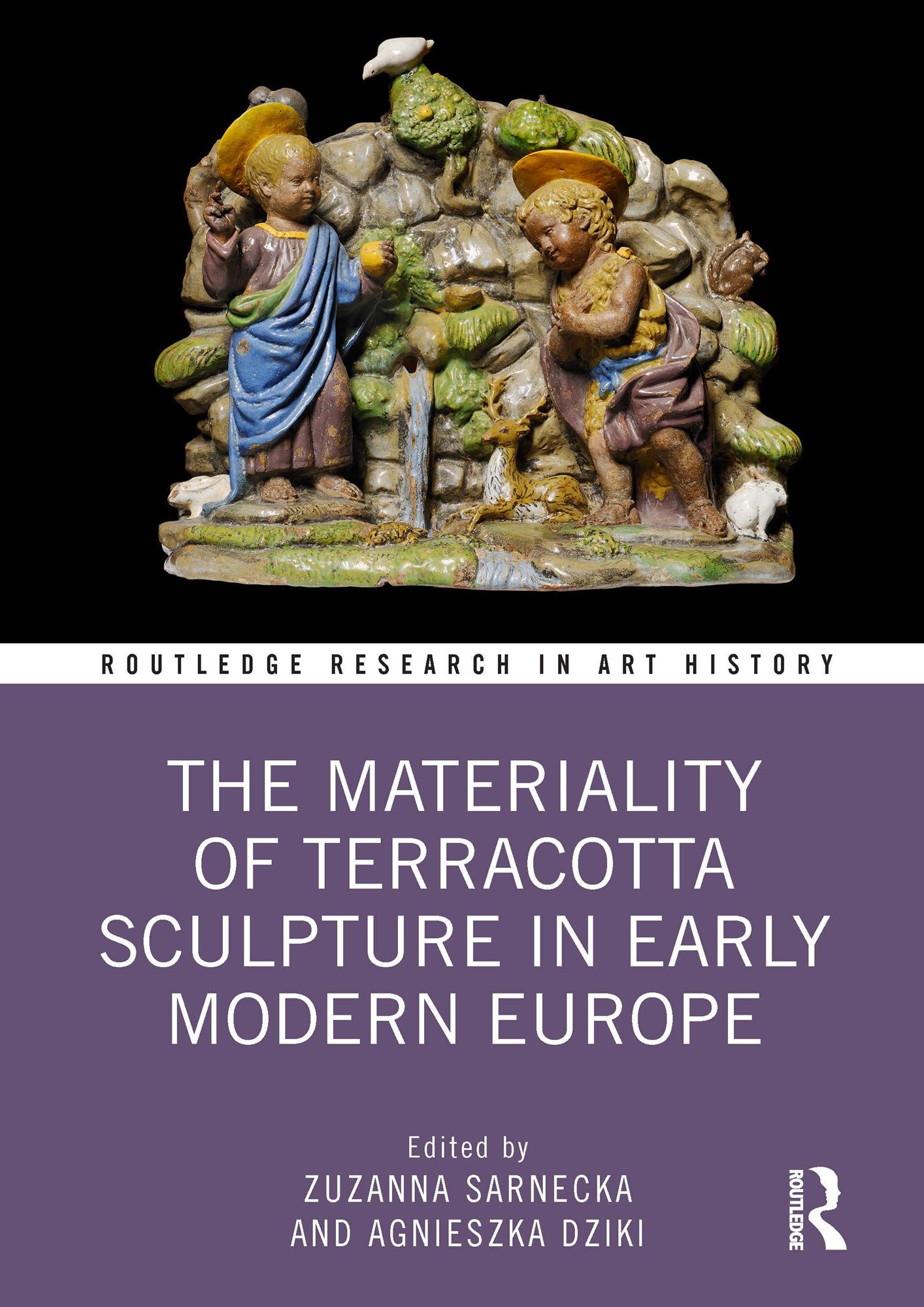
Through meticulously researched case studies, this book explores the materiality of terracotta sculpture in early modern Europe.
Chapters present a broad geographical perspective showcasing examples of modelling, firing, painting, and gilding of clay in Portugal, Spain, Italy, Germany, and the Netherlands. The volume considers known artworks by celebrated artists, such as Luca della Robbia, Andrea del Verrocchio, Filipe Hodart, or Hans Reichle, in parallel with several lesser-studied terracotta sculptures and tin-glazed earthenware made by anonymous artisans. This book challenges arbitrary distinctions into the fine art and the applied arts, that obscured the image of artistic production in the early modern world. The centrality of clay in the creative processes of artists working with two- and three-dimensional artefacts comes to the fore. The role of terracotta figures in religious practices, as well as processes of material substitutions or mimesis, confirm the medium’s significance for European visual and material culture in general.
This book will be of interest to scholars working in art history, Renaissance studies, and material culture.
Pay easily by card, Klarna, Apple Pay or Google Pay. Not happy? You always have a 14-day money-back guarantee. Read more in our terms. If you have any questions, email us at hello@memmo.org.
Memmo makes studying easier – wherever you are in the world. We bring your course books and smart study tools together in one place: summaries, quizzes, podcasts and flashcards. Plus Ted, your study buddy who answers anything you wonder. Over 50,000 students already study here – built to help you learn faster and stress less.