
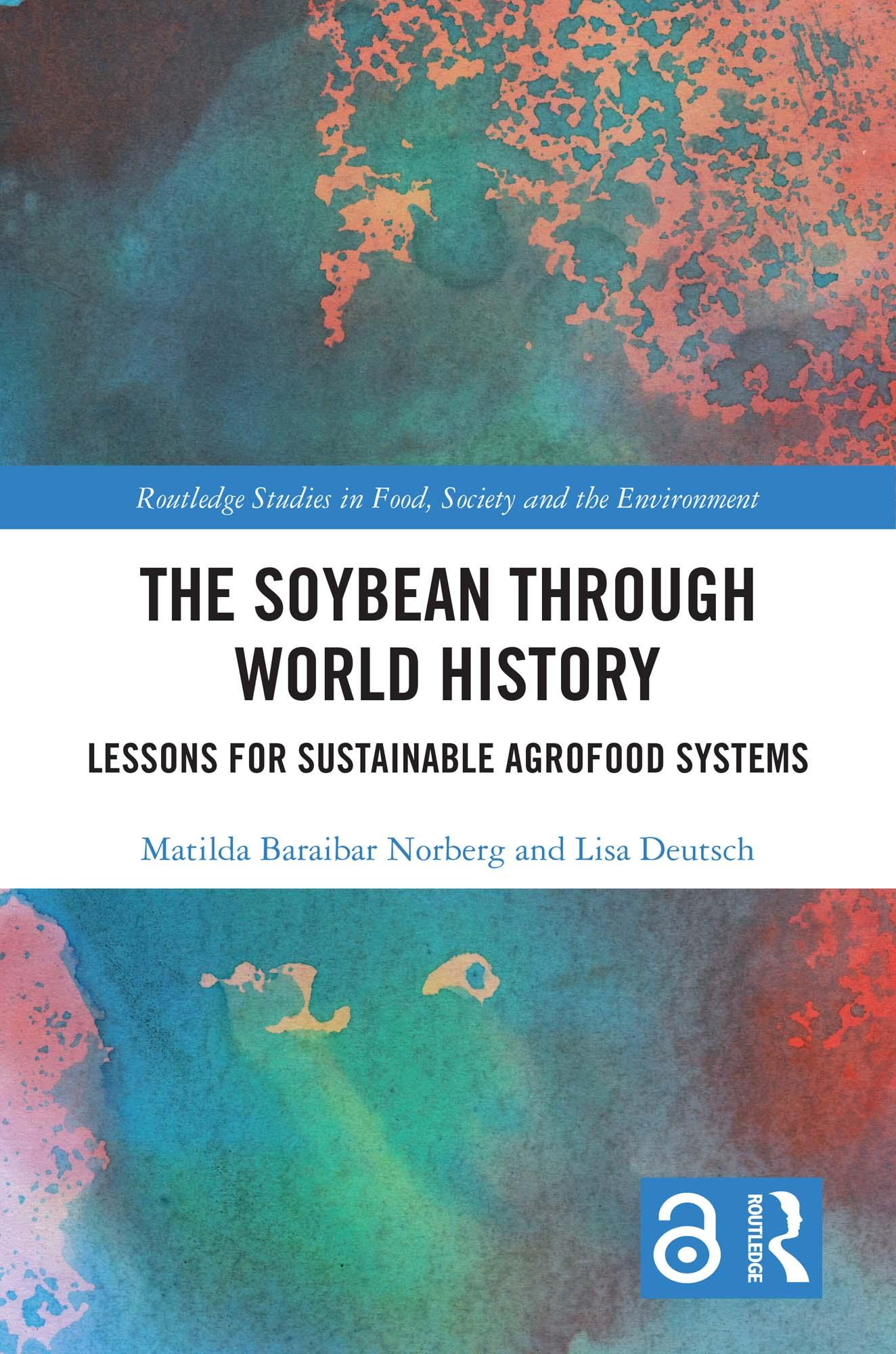
This book examines the changing roles and functions of the soybean throughout world history and discusses how this reflects the complex processes of agrofood globalization.
The book uses a historical lens to analyze the processes and features that brought us to the current global configuration of the soybean commodity chain. From its origins as a peasant food in ancient China, today the protein-rich soybean is by far the most cultivated biotech crop on Earth; used to make a huge variety of food and industrial products, including animal feed, tofu, cooking oil, soy sauce, biodiesel and soap. While there is a burgeoning amount of literature on how the contemporary global soy web affects large tracts of our planet’s social-ecological systems, little attention has been given to the questions of how we got here and what alternative roles the soybean has played in the past. This book fills this gap and demonstrates that it is impossible to properly comprehend the contemporary global soybean chain, or the wider agrofood system of which it is a part, without looking at both their long and short historical development. However, a history of the soybean and its changing roles within equally changing agrofood systems is inexorably a history about globalization. Not only does this book map out where soybeans are produced, but also who governs, wields power and accumulates capital in the entire commodity chain from inputs in production to consumption, as well as identifying the institutional context the global commodity chain operates within. The book concludes with a discussion of the main challenges and contradictions of the current soy regime that could trigger its rupture and end.
This book is essential reading for students, practitioners and scholars interested in agriculture and food systems, global commodity chains, globalization, environmental history, economic history and social-ecological systems.
Pay easily by card, Klarna, Apple Pay or Google Pay. Not happy? You always have a 14-day money-back guarantee. Read more in our terms. If you have any questions, email us at hello@memmo.org.
Memmo makes studying easier – wherever you are in the world. We bring your course books and smart study tools together in one place: summaries, quizzes, podcasts and flashcards. Plus Ted, your study buddy who answers anything you wonder. Over 50,000 students already study here – built to help you learn faster and stress less.