
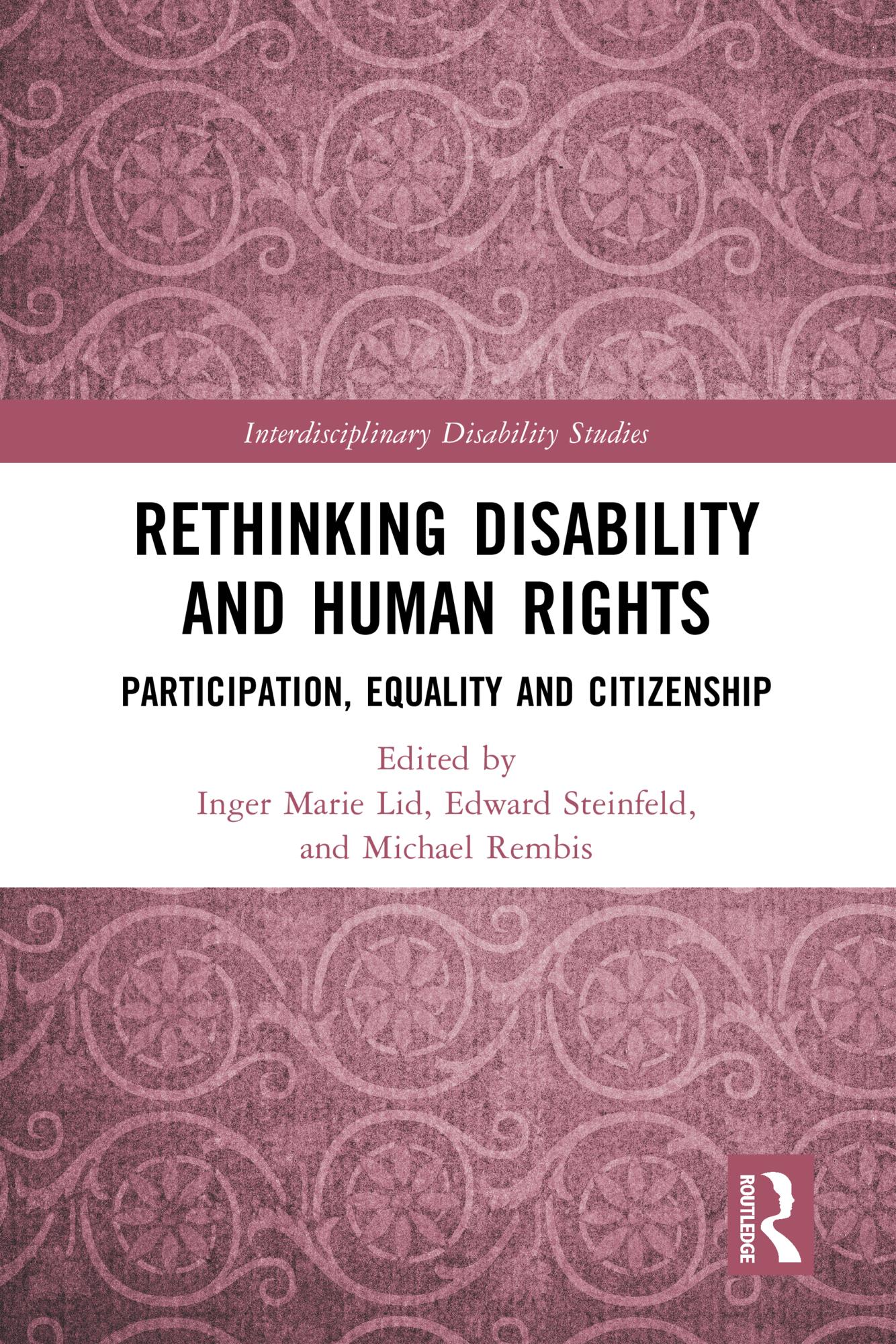
This book examines the role of disability in the right to political and social participation, an act of citizenship that many disabled people do not enjoy.
The disability rights movement does not accept the use of disability to create limits on citizenship, which poses challenges for contemporary societies that will become ever greater as the science and technology of enhancing human abilities evolves. Comprised of eight chapters, three interludes, and a postscript written by leading scholars and disability rights activists, the book explores citizenship for people with disabilities from an interdisciplinary perspective using the United Nations Convention on the Rights of Persons with Disabilities (CRPD) as a point of departure and the concept of universal design as a strategy for actualizing full citizenship for all. Situating disability in its historical and cultural contexts, the authors offer directions for rethinking citizenship, including implications for access to the built environment, information and communication systems, education, work, community life and politics.
This book will be of interest to all scholars and students working in disability studies, planning, architecture, public health, rehabilitation, social work, and education.
Pay easily by card, Klarna, Apple Pay or Google Pay. Not happy? You always have a 14-day money-back guarantee. Read more in our terms. If you have any questions, email us at hello@memmo.org.
Memmo makes studying easier – wherever you are in the world. We bring your course books and smart study tools together in one place: summaries, quizzes, podcasts and flashcards. Plus Ted, your study buddy who answers anything you wonder. Over 50,000 students already study here – built to help you learn faster and stress less.