
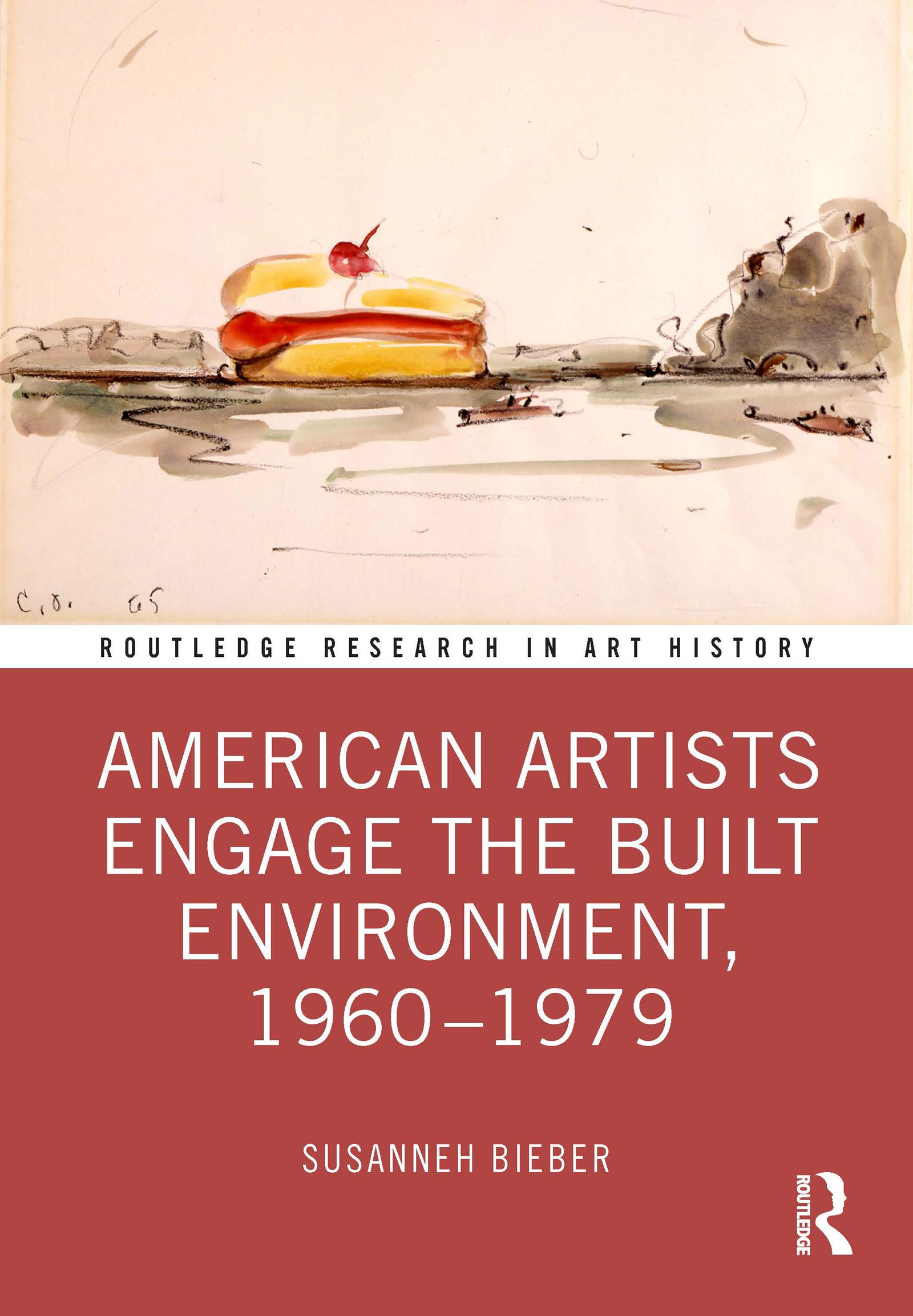
This volume reframes the development of US-American avant-garde art of the long 1960s—from minimal and pop art to land art, conceptual art, site-specific practices, and feminist art—in the context of contemporary architectural discourses.
Susanneh Bieber analyzes the work of seven major artists, Donald Judd, Robert Grosvenor, Claes Oldenburg, Robert Smithson, Lawrence Weiner, Gordon Matta-Clark, and Mary Miss, who were closely associated with the formal-aesthetic innovations of the period. While these individual artists came to represent diverse movements, Bieber argues that all of them were attracted to the field of architecture—the work of architects, engineers, preservationists, landscape designers, and urban planners—because they believed these practices more directly shaped the social and material spaces of everyday life. This book’s contribution to the field of art history is thus twofold. First, it shows that the avant-garde of the long 1960s did not simply develop according to an internal logic of art but also as part of broader sociocultural discourses about buildings and cities. Second, it exemplifies a methodological synthesis between social art history and poststructural formalism that is foundational to understanding the role of art in the construction of a more just and egalitarian society.
The book will be of interest to scholars working in art history, architecture, urbanism, and environmental humanism.
Pay easily by card, Klarna, Apple Pay or Google Pay. Not happy? You always have a 14-day money-back guarantee. Read more in our terms. If you have any questions, email us at hello@memmo.org.
Memmo makes studying easier – wherever you are in the world. We bring your course books and smart study tools together in one place: summaries, quizzes, podcasts and flashcards. Plus Ted, your study buddy who answers anything you wonder. Over 50,000 students already study here – built to help you learn faster and stress less.