
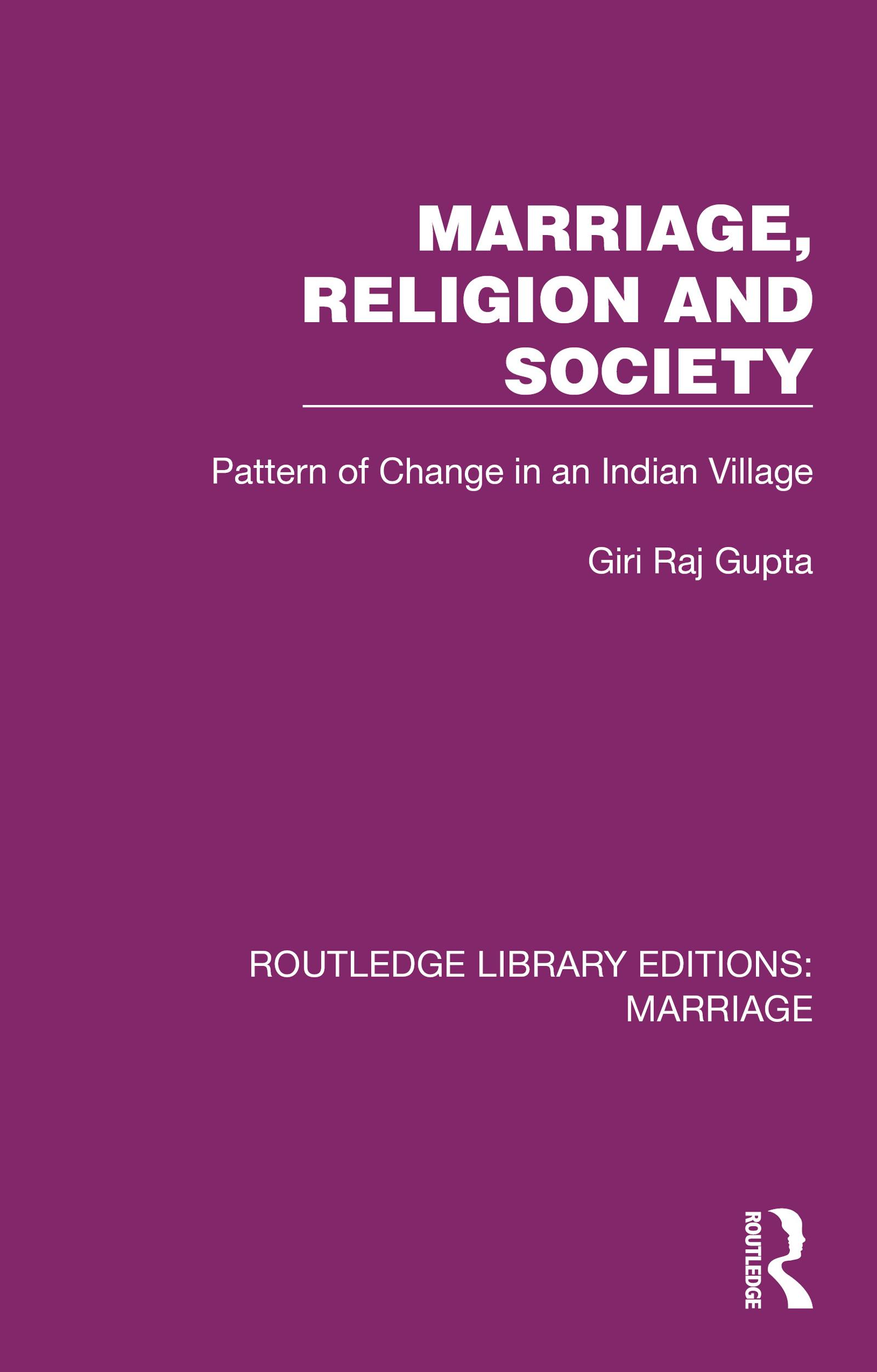
Originally published in 1974, the conclusions of the book are based on intensive field-work during 1963-66 in a village in south-east Rajasthan, India. Although the marriages of 158 boys and 163 girls were studied, the relevance of the conclusions drawn extends far beyond the village and its region since it reveals the changing themes and values in Indian society at the time.
The perceptive analysis of rites and ceremonies of marriage further illuminates the central problem of the book – how the themes of the Dharmasastras are interpreted and acted upon in village life and what kinds of reinforcements and incentives to change they provide to the various units of social structure.
The author contends that the series of marriage rites manifest the continuity of tradition, a ritual epitomisation of caste interdependence and means of systematic social advancement. At the time ritual idioms and patterns of social exchange were beginning to change, more often in observance than in content. Traditional sources of status aggrandisement continued to provide new pathways to the forces of modernisation and unveil several clues to the innovative strategies of change.
This scholarly study filled the need for a realistic appraisal of the relationship between marriage practices, religious values and the changing social structure.
Pay easily by card, Klarna, Apple Pay or Google Pay. Not happy? You always have a 14-day money-back guarantee. Read more in our terms. If you have any questions, email us at hello@memmo.org.
Memmo makes studying easier – wherever you are in the world. We bring your course books and smart study tools together in one place: summaries, quizzes, podcasts and flashcards. Plus Ted, your study buddy who answers anything you wonder. Over 50,000 students already study here – built to help you learn faster and stress less.