
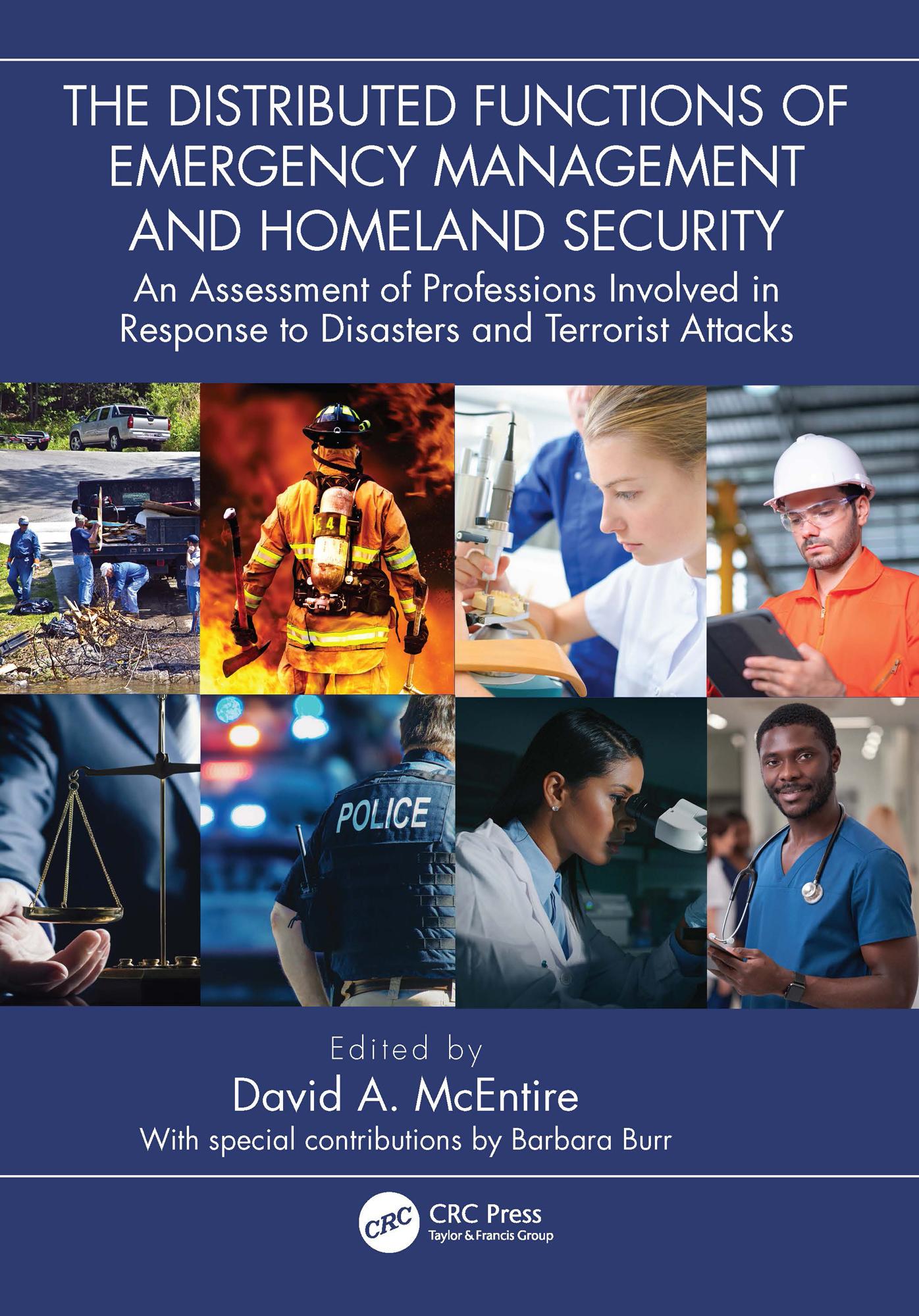
The Distributed Functions of Emergency Management and Homeland Security outlines the roles and responsibilities of various individuals and agencies involved in homeland security and all aspects of emergency management. Each chapter focuses on the practical and applied aspects of a range of public servants in various departments and the organizations that they represent.
Rather than presenting a theoretical exploration alone, the book examines the practical knowledge and hands-on skills related to various functions and how their decisions and actions play into the larger framework of safety and security —in the public, private and nonprofit sectors. Every professional has a unique and integral part to play in fulfilling their roles and obligations, whether it be in relation to prevention, mitigation, preparedness, response or recovery operations. Personnel that frequently come to mind in such scenarios include emergency managers, geographers and land-use planners, EMTs and paramedics, fire fighters, police officers, public health officials, nurses, public administrators, and public information officers. And while these individuals are integral to homeland security and emergency management, there are other professionals that also perform essential duties that—while they aren’t first-to-mind—are vital to efforts relating to terrorism and disasters; this includes pilots in the aviation sector, the military, attorneys, psychologists, and forensic professionals serving in pathology, DNA, and dentistry roles.
Chapters provide a holistic rendering of the homeland security and emergency management landscape to present all these various professional capabilities and contributions. This includes how current functions are coordinated as well as how future efforts might change relative to a more proactive, all-hazards and holistic approach. As such, the book will be a useful resource for students and practitioners to understand the dynamic professions—and various disciplines and fields—that impact disaster and terrorism preparedness and response capabilities.
Pay easily by card, Klarna, Apple Pay or Google Pay. Not happy? You always have a 14-day money-back guarantee. Read more in our terms. If you have any questions, email us at hello@memmo.org.
Memmo makes studying easier – wherever you are in the world. We bring your course books and smart study tools together in one place: summaries, quizzes, podcasts and flashcards. Plus Ted, your study buddy who answers anything you wonder. Over 50,000 students already study here – built to help you learn faster and stress less.