
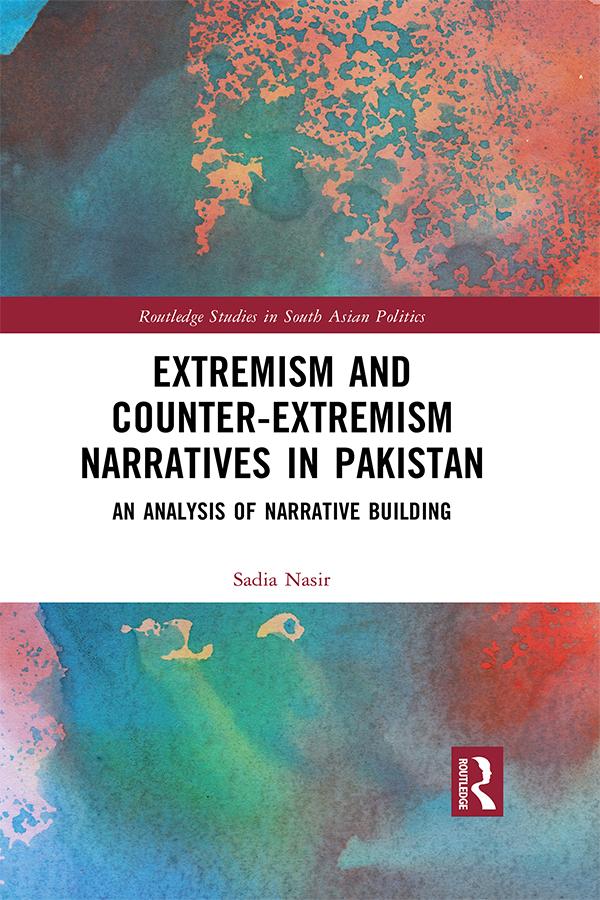
The book provides an extensive analysis of extremism, extremist narratives and counter-narratives and their role in consolidating exclusive religious, cultural and social identities in Pakistan.
Focusing on the construction and institutionalization of extremist tendencies, the book studies the process of the adoption of the narrow interpretation of religion and society, which subsequently was equated with national identity. It looks at the efforts of counter-extremism narratives, which tend to focus on violent extremism while overlooking non-violent manifestations. The author highlights that the main issue with counter-narratives is the difficulty in presenting extremism and its narratives as a threat since they have been normalized with the state being part of facilitating and building them.
A valuable and much-required contribution to the existing literature on extremism and narrative building in Pakistan, this book would help students, academics and policymakers in identifying the limitations of counter-narratives in Pakistan, while providing them with a detailed overview of extremism and extremist narratives. It will also be of interest to researchers studying Security Studies and Asian Politics, especially in the context of South Asia.
Pay easily by card, Klarna, Apple Pay or Google Pay. Not happy? You always have a 14-day money-back guarantee. Read more in our terms. If you have any questions, email us at hello@memmo.org.
Memmo makes studying easier – wherever you are in the world. We bring your course books and smart study tools together in one place: summaries, quizzes, podcasts and flashcards. Plus Ted, your study buddy who answers anything you wonder. Over 50,000 students already study here – built to help you learn faster and stress less.