
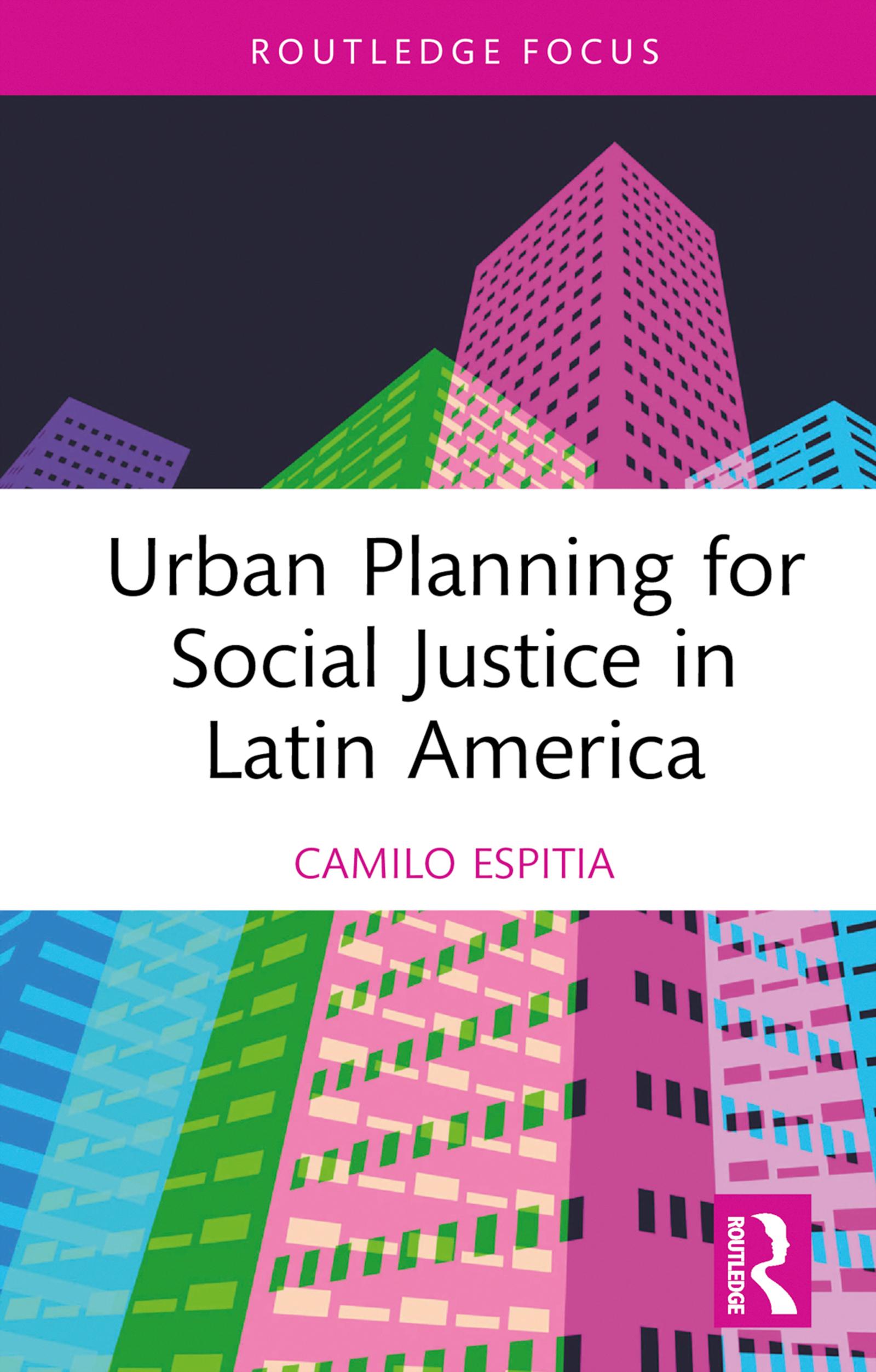
Urban Planning for Social Justice in Latin America explores how urban planning can be used as a tool for social equity. The book examines several Latin American cities, each with specific challenges, and explores how they have gradually overcome these difficulties through policies, planning, and design, and with private/public sector coordination.
The cases include:
- The built environment and social mobility in Bogotá;
- Mexico City and its difficulties with water scarcity;
- Addressing air quality and environmental justice in Lima;
- Santiago de Chile’s energy consumption and carbon footprint;
- Buenos Aires and the issue of urban agriculture and food security;
- Connectivity as a social transformation device in Medellín.
The book goes beyond simply identifying the challenges and explains some of the practical day-to-day planning efforts, including interviews with staff from those municipalities, illustrations, and strategies that have been successful. As a result, this book will be helpful to planners in the region, as well as outside Latin America, because it demonstrates how fruitful results can be achieved in areas typically perceived as underdeveloped.
Although based on research and data, this book offers a positive perspective on the possibilities rather than the limitations, hoping to inspire new generations of planners to pursue careers in search of social change.
Pay easily by card, Klarna, Apple Pay or Google Pay. Not happy? You always have a 14-day money-back guarantee. Read more in our terms. If you have any questions, email us at hello@memmo.org.
Memmo makes studying easier – wherever you are in the world. We bring your course books and smart study tools together in one place: summaries, quizzes, podcasts and flashcards. Plus Ted, your study buddy who answers anything you wonder. Over 75,000 students already study here – built to help you learn faster and stress less.