
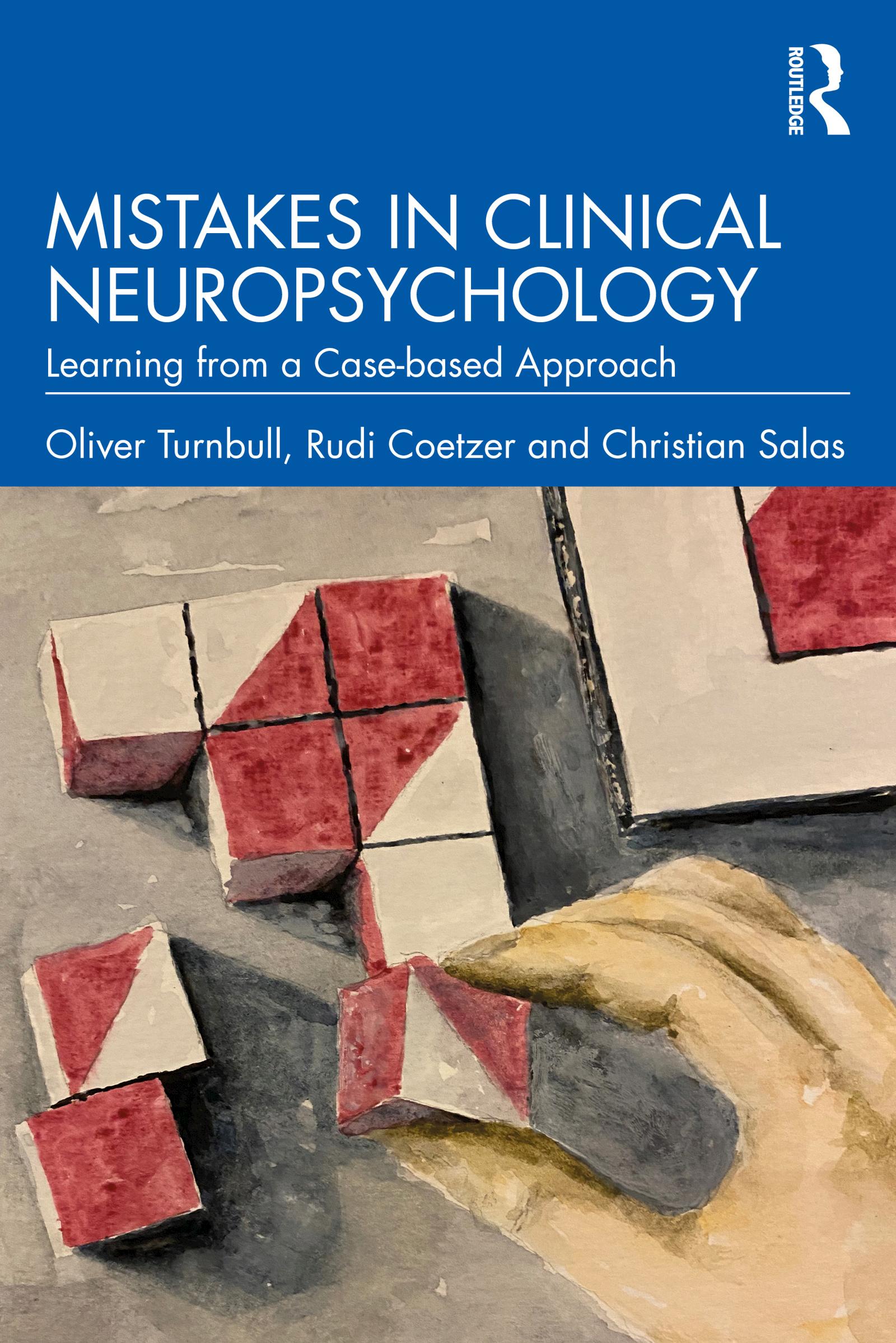
This innovative book uses a case-based approach to discuss mistakes made in the practice of clinical neuropsychology to form a helpful tool in the training of early career clinicians. By allowing readers space for critical reflection during clinical practice, the book teaches competency in clinical neuropsychology, through the examination of errors as a central part of the learning process.
The core of this book is a diverse series of mistakes, each embedded as a patient narrative. Each chapter is based around an example error, typically one that was made, by the authors, as early career clinicians. Early chapters focus on mistakes in neuropsychological assessment, and the diagnostic process. Later chapters focus on errors in rehabilitation and management. Each chapter is framed to reflect the situational context, for example the role of history, what constitutes normal performance, the way that complex tasks rely on foundational skills, or the treatment of patients with dysexecutive impairment. Towards the end of each chapter there is reflection on the nature of each error type. As such, each chapter follows the structure SEER (Situation, Example, Error, Reflection), helping the reader to imagine the situation around the mistake, its nature and relevance. The book especially emphasises small phrases of insight (axioms, or gnomes) that are widely used by experienced clinicians.
This is valuable reading for students of clinical neuropsychology, occupational therapy and speech and language therapy as well as professionals in these fields such as neurologists, psychiatrists and other rehabilitation therapists. It is especially appropriate for those in the earlier stages of their career in clinical neuropsychology, or in related disciplines which involve the assessment and treatment of patients with neurological disorders that impair cognition or disrupt the regulation of emotion. However, experienced clinicians will also find it includes interesting insights to improve their practice.
Pay easily by card, Klarna, Apple Pay or Google Pay. Not happy? You always have a 14-day money-back guarantee. Read more in our terms. If you have any questions, email us at hello@memmo.org.
Memmo makes studying easier – wherever you are in the world. We bring your course books and smart study tools together in one place: summaries, quizzes, podcasts and flashcards. Plus Ted, your study buddy who answers anything you wonder. Over 50,000 students already study here – built to help you learn faster and stress less.