
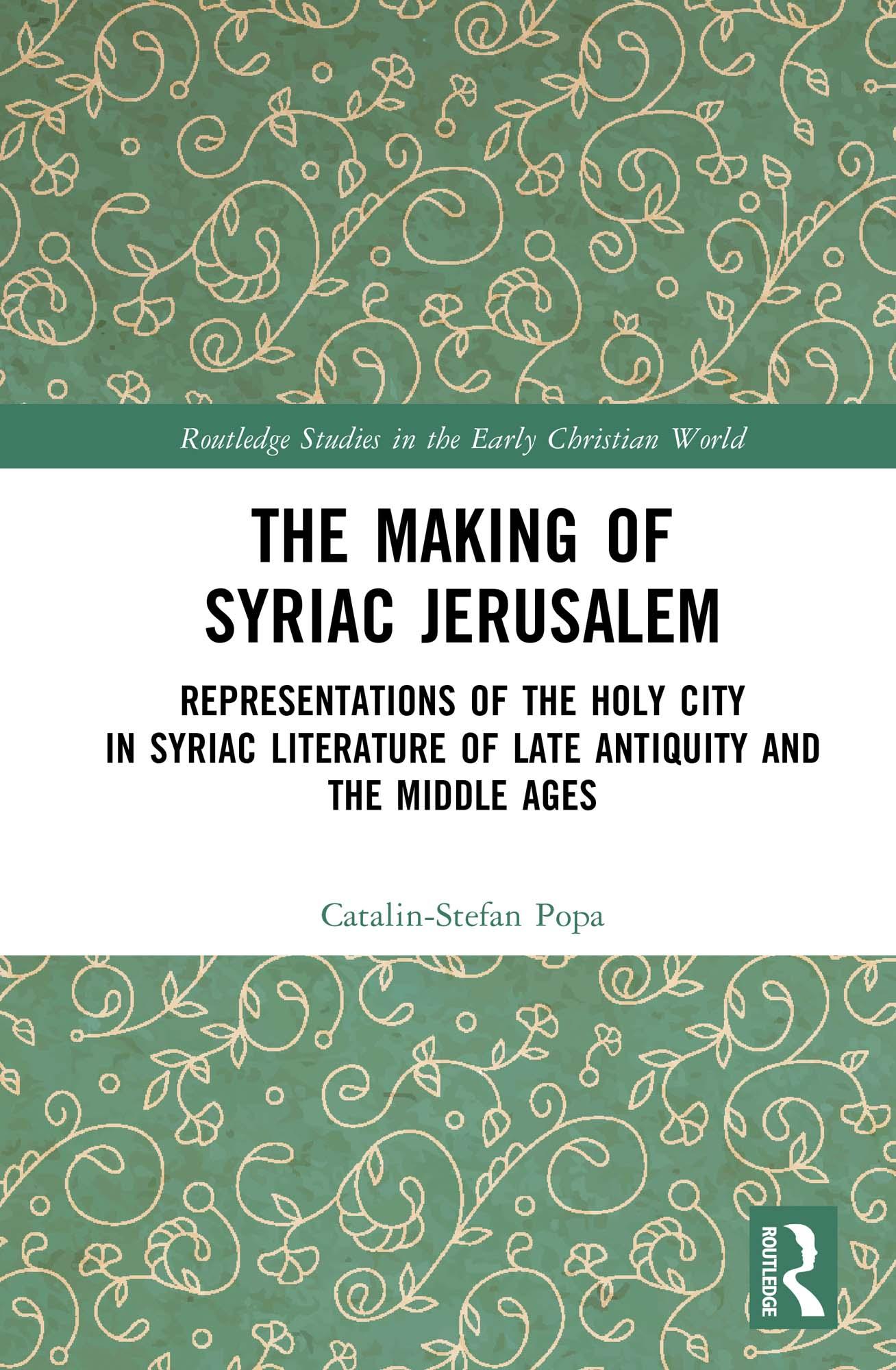
This book discusses hagiographic, historiographical, hymnological, and theological sources that contributed to the formation of the sacred picture of the physical as well as metaphysical Jerusalem in the literature of two Eastern Christian denominations, East and West Syrians.
Popa analyses the question of Syrian beliefs about the Holy City, their interaction with holy places, and how they travelled in the Holy Land. He also explores how they imagined and reflected the theology of this itinerary through literature in Late Antiquity and the Middle Ages, set alongside a well-defined local tradition that was at times at odds with Jerusalem. Even though the image of Jerusalem as a land of sacred spaces is unanimously accepted in the history of Christianity, there were also various competing positions and attitudes. This often promoted the attempt at mitigating and replacing Jerusalem’s sacred centrality to the Christian experience with local sacred heritage, which is also explored in this study. Popa argues that despite this rhetoric of artificial boundaries, the general picture epitomises a fluid and animated intersection of Syriac Christians with the Holy City especially in the medieval era and the subsequent period, through a standardised process of pilgrimage, well-integrated in the custom of advanced Christian life and monastic canon.
The Making of Syriac Jerusalem is suitable for students and scholars working on the history, literature, and theology of Syriac Christianity in the late antique and medieval periods.
Pay easily by card, Klarna, Apple Pay or Google Pay. Not happy? You always have a 14-day money-back guarantee. Read more in our terms. If you have any questions, email us at hello@memmo.org.
Memmo makes studying easier – wherever you are in the world. We bring your course books and smart study tools together in one place: summaries, quizzes, podcasts and flashcards. Plus Ted, your study buddy who answers anything you wonder. Over 50,000 students already study here – built to help you learn faster and stress less.