
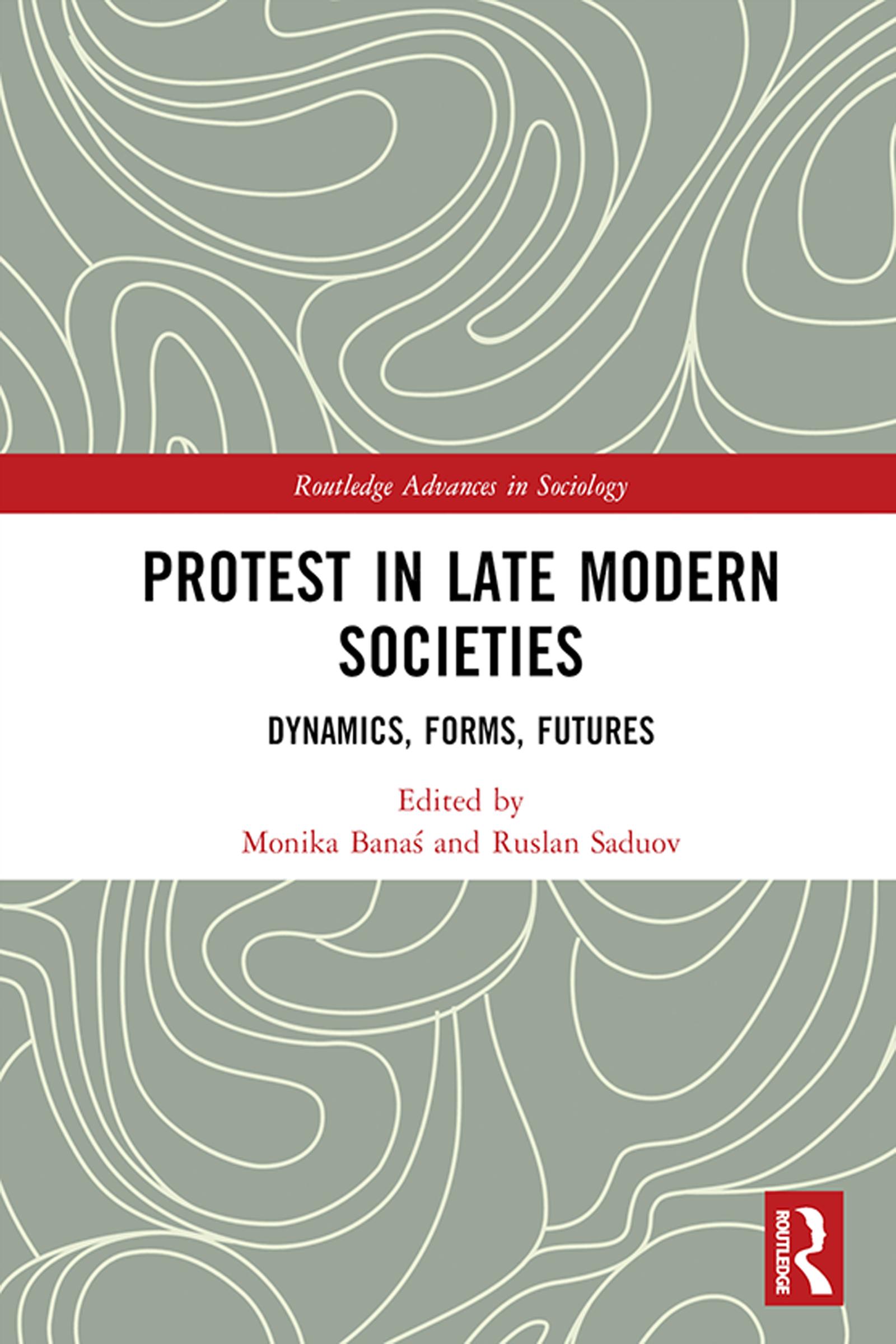
This book discusses a broadly understood phenomenon of protest from several perspectives, including historical, cultural, social, political, environmental and semiotic. Through their analyses, the authors undertake to envision the possible evolution of the forms of contestation in the further decades of the 21st century, taking into account the specificity of the globalisation processes.
A multidimensional approach offered in this volume makes it possible to capture and identify new features of contemporary contestation and those that seem unchanged despite the passage of time and altering audiences. Examples from Europe (France, the United Kingdom, Italy, Ireland, Malta, Bulgaria, Poland, Belarus, Russia), America (the United States, Mexico, Chile) and Far East (Hong Kong and China) are relevant case studies that show the faces of contestation while reaching for new or modified rhetoric, symbolism, communication channels and the so-called modus operandi of protest initiators, active and passive participants and short- and long-distant observers.
The book will be of value to a wide audience, particularly to the researchers studying contestation, social resistance, individual and collective disobedience, crisis management and cultural/social dynamic of protests. It will also be of interest to experts and individuals from outside the academia like civil activists, practitioners and NGOs compelled by contemporary processes (tensions) occurring between the state, power, society and individuals.
Pay easily by card, Klarna, Apple Pay or Google Pay. Not happy? You always have a 14-day money-back guarantee. Read more in our terms. If you have any questions, email us at hello@memmo.org.
Memmo makes studying easier – wherever you are in the world. We bring your course books and smart study tools together in one place: summaries, quizzes, podcasts and flashcards. Plus Ted, your study buddy who answers anything you wonder. Over 50,000 students already study here – built to help you learn faster and stress less.