
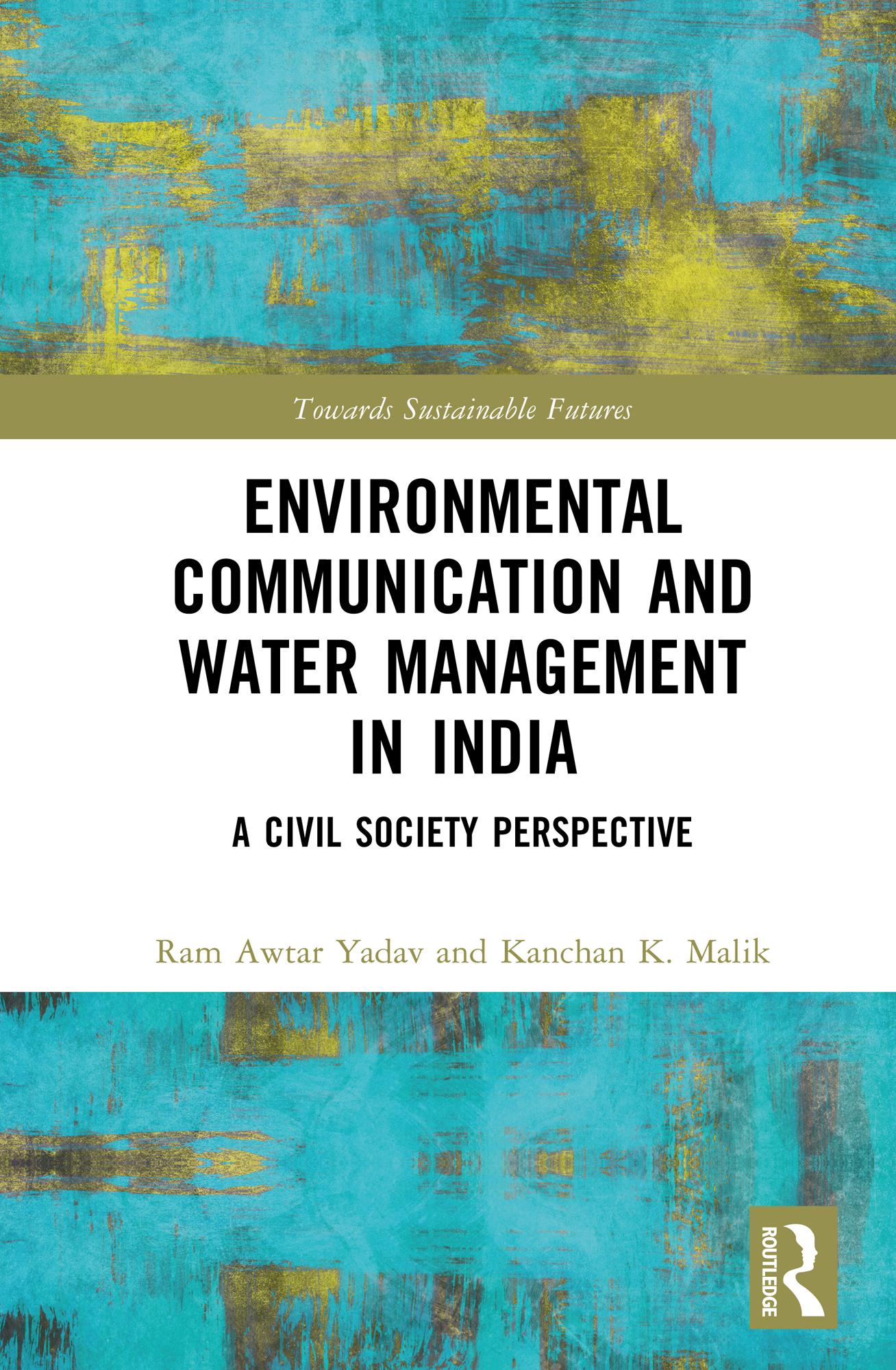
This book analyses the underlying communication strategies and approaches of grassroots water management practices in India through a case study-based ethnographic approach.
Drawing from fieldwork experiences, this volume provides a detailed overview of Parmarth, a not-for-profit NGO, which is the case study for this research. It presents an in-depth theoretically informed analysis of data collected through multiple methods, which includes key informant interviews, focus group discussions, participant observation, and document reviews, among other approaches.
The book examines Parmarth’s strategies and processes to mobilise women as important stakeholders in the region’s water conservation initiatives. It discusses communicative actions, tactics and campaigns in water interventions and the role of various stakeholders ranging from local community members to civil society.
Accessibly written, this volume is a must-read for scholars and researchers of media and communication studies, environmental communication, ecology studies, development studies, public policy, sustainable development, water management, sociology, and political science.
Pay easily by card, Klarna, Apple Pay or Google Pay. Not happy? You always have a 14-day money-back guarantee. Read more in our terms. If you have any questions, email us at hello@memmo.org.
Memmo makes studying easier – wherever you are in the world. We bring your course books and smart study tools together in one place: summaries, quizzes, podcasts and flashcards. Plus Ted, your study buddy who answers anything you wonder. Over 50,000 students already study here – built to help you learn faster and stress less.