
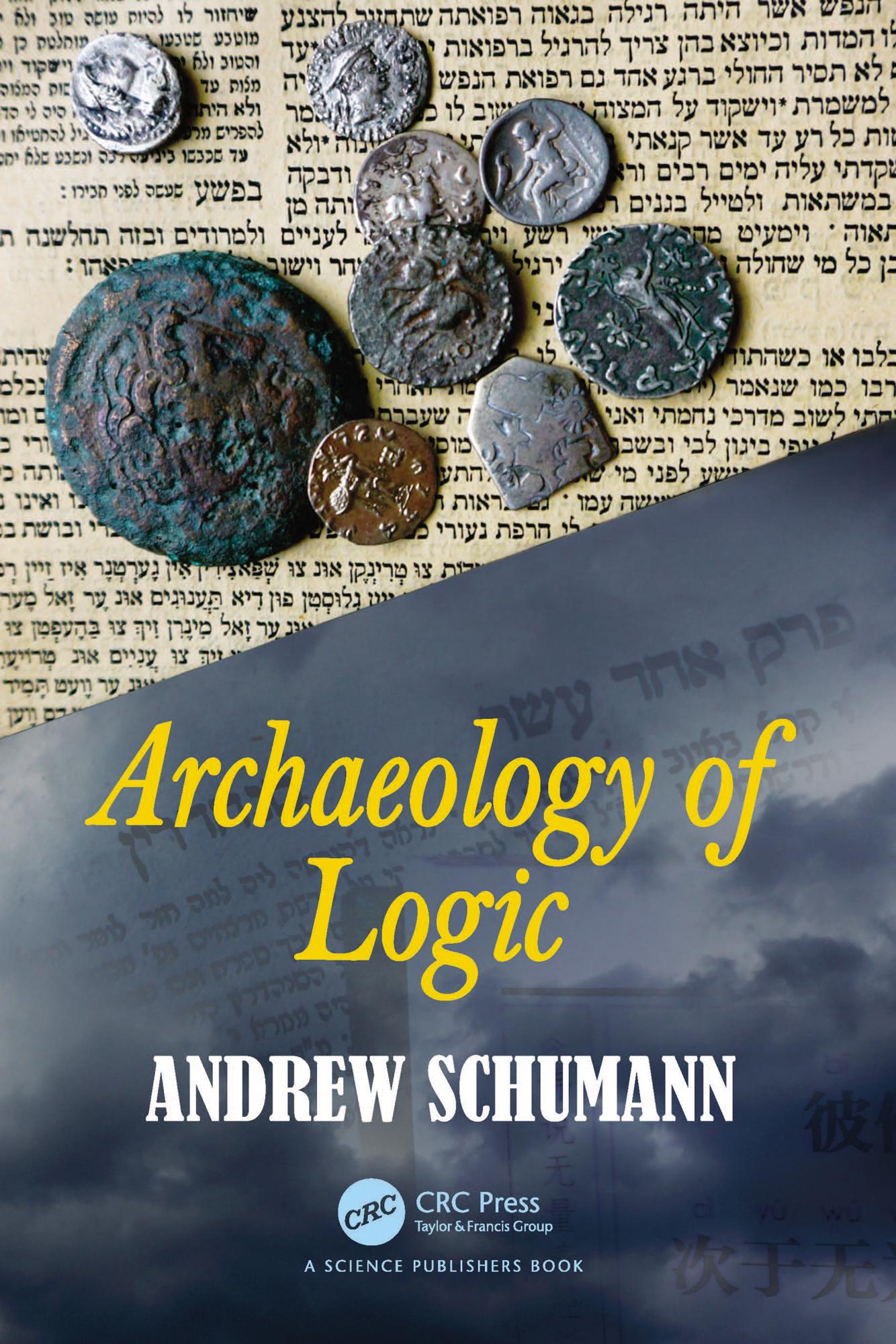
The question arises whether logic was given to us by God or whether it is the result of human evolution. I believe that at least the modus ponens rule ( A and if A then B implies B) is inherent in humans, but probably many other modern systems (e.g., resource logic, non - monotonic logic etc.) are the result of humans adapating to the environment. It is therefore of interest to study and compare the way logic is used in ancient cultures as well as the way logic is going to be used in our 21st century. This welcome book studies and compares the way formation of logic in three cultures: Ancient Greek (4th century B.C.), Judaic (1st century B.C. – 1st century A.D.) and Indo-Buddhist (2nd century A.D.) The book notes that logic became especially popular during the period of late antiquity in countries covered by the international trade of the Silk Road. This study makes a valuable contribution to the history of logic and to the very understanding of the origions and nature of logical thinking. -Prof. Dov Gabbay, King's College London, UK
Andrew Schumann in his book demonsrates that logic step-by-step arose in different places and cultural circles. He argues that if we apply a structural-genealogical method, as well as turn to various sources, particularly, religious, philosophical, linguistic, etc., then we can obtain a more general and more adequate picture of emengence and development of logic. This book is a new and very valuable contribution to the history of logic as a manifestation of the human mind. - Prof. Jan Wolenski, Jagiellonian University, Poland
The author of the Archaeology of Logic defends the claim, calling it "logic is aftter all", which sees logical competence as a practical skill that people began to learn in antiquity, as soom as they realized that avoiding cognitive biases in their reasoning would make their daily activities more successful. The in-depth reading of the book with its diving into the comparative quotations in the long dead or hardly known to most of us languages like Sumerian-Akkadian, Aramatic, Hebrew and etc, will be rewarded by the response that the logical competence is diverse and it can be trained, despite the inevitabilitiy of the reasoning fallacies; and that critical discussions and agaonal character of the social lide are the necessary tools for that. - Prof. Elena Lisanyuk
Pay easily by card, Klarna, Apple Pay or Google Pay. Not happy? You always have a 14-day money-back guarantee. Read more in our terms. If you have any questions, email us at hello@memmo.org.
Memmo makes studying easier – wherever you are in the world. We bring your course books and smart study tools together in one place: summaries, quizzes, podcasts and flashcards. Plus Ted, your study buddy who answers anything you wonder. Over 50,000 students already study here – built to help you learn faster and stress less.