
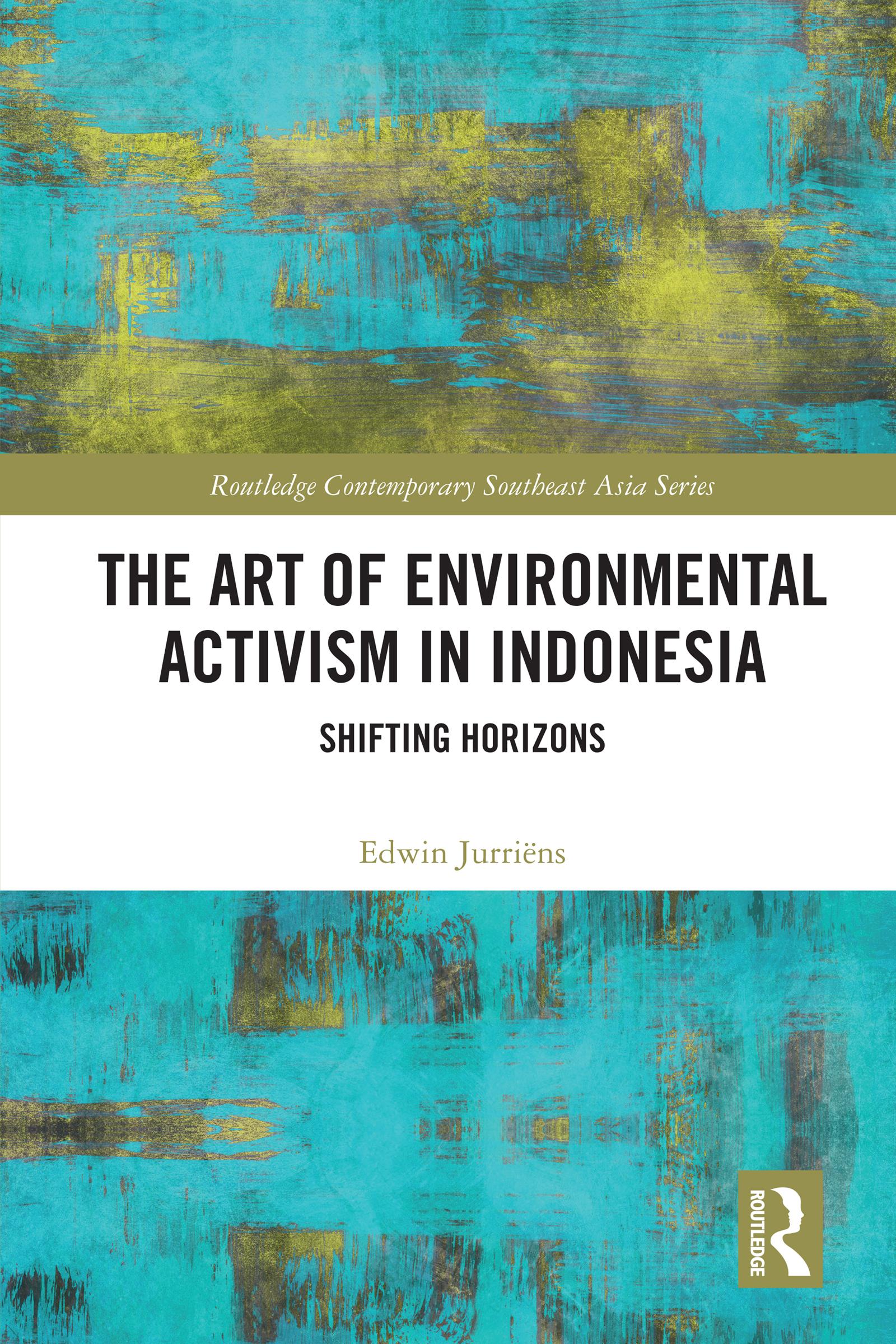
This book analyses the intersections between contemporary art and environmental activism in Indonesia.
Exploring how the arts have promoted ecological awareness from the late 1960s to the early 2020s, the book shows how the arts have contributed to societal change and public and political responses to environmental crises. This period covers Indonesia’s rapid urban development under the totalitarian New Order regime (1967–1998) as well as the enhanced freedom of expression, alternative development models, and environmental problems under the democratic governments since 1998. The book applies the concept of ‘artivism’ to refer to the vital role of art in activism. It seeks to identify and contextualise both the potential and limits of environmental artivism in Indonesia, a country whose vibrant art scenes and monumental social transformations provide a productive laboratory for exploring the power of creativity as a social and political change agent. It provides a comprehensive overview of contemporary art from Indonesia, with an in-depth analysis of artivists who seek to address and find solutions for some of the most pressing environmental issues of our times.
With its detailed, empirical approach to environmental art from Southeast Asia, this project fills in an important gap in the literature on art and activism. It is aimed at academics, students, artists, curators, policymakers, activists, and general readers with an interest in the environment, art history, and Indonesian culture, society, and politics.
Pay easily by card, Klarna, Apple Pay or Google Pay. Not happy? You always have a 14-day money-back guarantee. Read more in our terms. If you have any questions, email us at hello@memmo.org.
Memmo makes studying easier – wherever you are in the world. We bring your course books and smart study tools together in one place: summaries, quizzes, podcasts and flashcards. Plus Ted, your study buddy who answers anything you wonder. Over 50,000 students already study here – built to help you learn faster and stress less.