
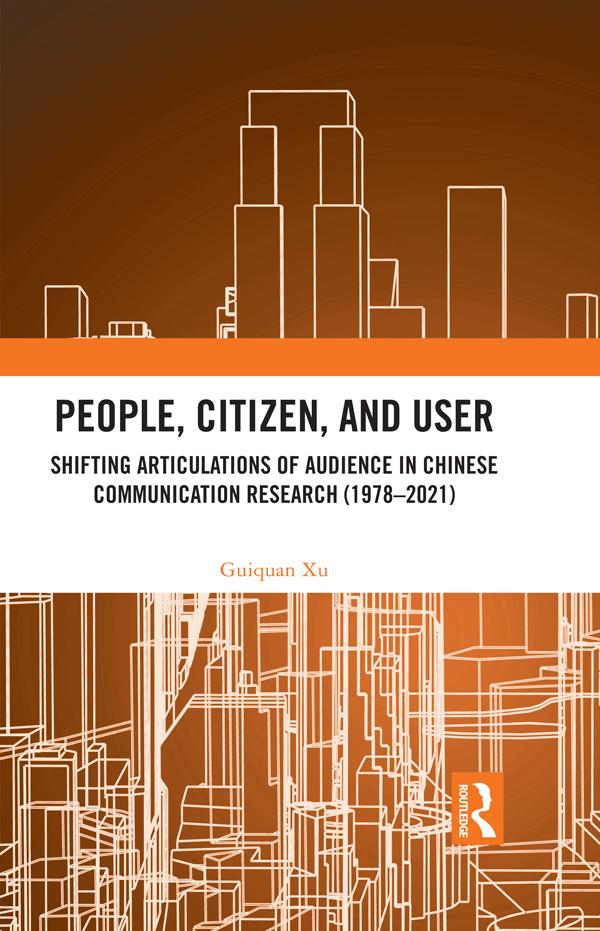
The book examines the changing discourses of Chinese audience research in the past four decades, aiming to shed light on the complicated relationships among China’s media, audiences, and society.
With the new sociology of knowledge, it adopts Laclau and Mouffe’s discourse theory as a meta-theoretical framework and interprets the concept of audience as a floating signifier. Based on the corpus of Chinese academic journal papers, the author divides the scope of analysis into four phases. In each period, Chinese audience research was related closely to the changing societal and academic contexts and hegemonic struggle as a whole. In addition, it discusses the relation between ‘western’ audience theories and Chinese audience research, as well as the contingency and rigidity of discourses in Chinese audience research.
The book contributes to the understanding of Chinese communication research in the changing societal context and will be valuable for scholars of media and communication studies or China studies.
Pay easily by card, Klarna, Apple Pay or Google Pay. Not happy? You always have a 14-day money-back guarantee. Read more in our terms. If you have any questions, email us at hello@memmo.org.
Memmo makes studying easier – wherever you are in the world. We bring your course books and smart study tools together in one place: summaries, quizzes, podcasts and flashcards. Plus Ted, your study buddy who answers anything you wonder. Over 75,000 students already study here – built to help you learn faster and stress less.