
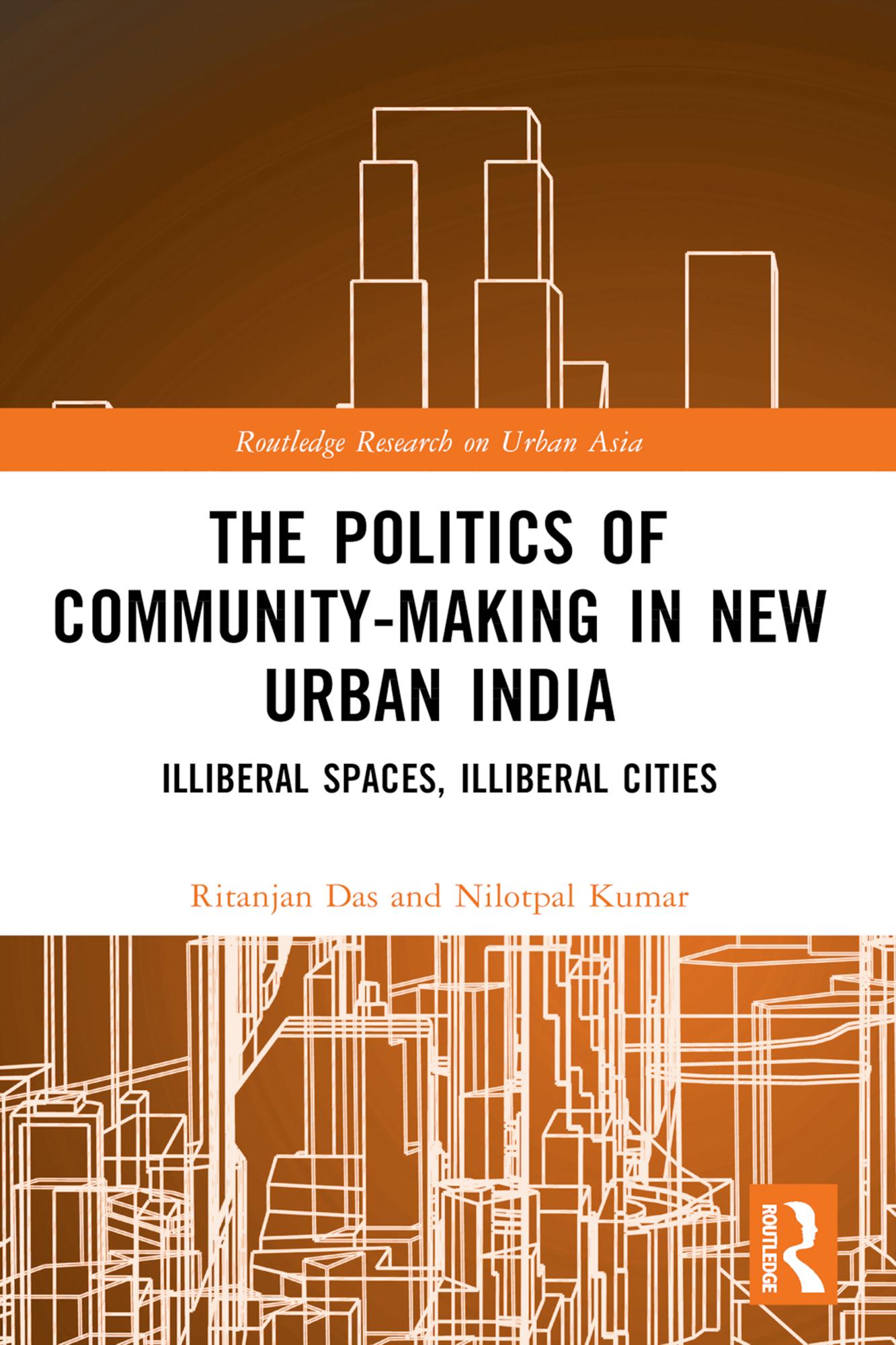
This book explores the relationship between the production of new urban spaces and illiberal community-making in contemporary India. It is based on an ethnographic study in Noida, a city at the eastern fringe of the state of Uttar Pradesh, bordering national capital Delhi.
The book demonstrates a flexible planning approach being central to the entrepreneurial turn in India’s post-liberalisation urbanisation, whereby a small-scale industrial township is transformed into a real-estate driven modern city. Its real point of departure, however, is in the argument that this turn can enable a form of illiberal community-making in new cities that are quite different from older metropolises. Exclusivist forms of solidarity and symbolic boundary construction - stemming from the differences across communities as well as their internal heterogeneities - form the crux of this process, which is examined in three distinct but often interspersed socio-spatial forms: planned middle-class residential quarters, ‘urban villages’ and migrant squatter colonies.
The book combines radical geographical conceptualisations of social production of space and neoliberal urbanism with sociological and anthropological approaches to urban community-making. It will be of interest to researchers in development studies, sociology, urban studies, as well as readers interested in society and politics of contemporary India/South Asia.
Pay easily by card, Klarna, Apple Pay or Google Pay. Not happy? You always have a 14-day money-back guarantee. Read more in our terms. If you have any questions, email us at hello@memmo.org.
Memmo makes studying easier – wherever you are in the world. We bring your course books and smart study tools together in one place: summaries, quizzes, podcasts and flashcards. Plus Ted, your study buddy who answers anything you wonder. Over 75,000 students already study here – built to help you learn faster and stress less.