
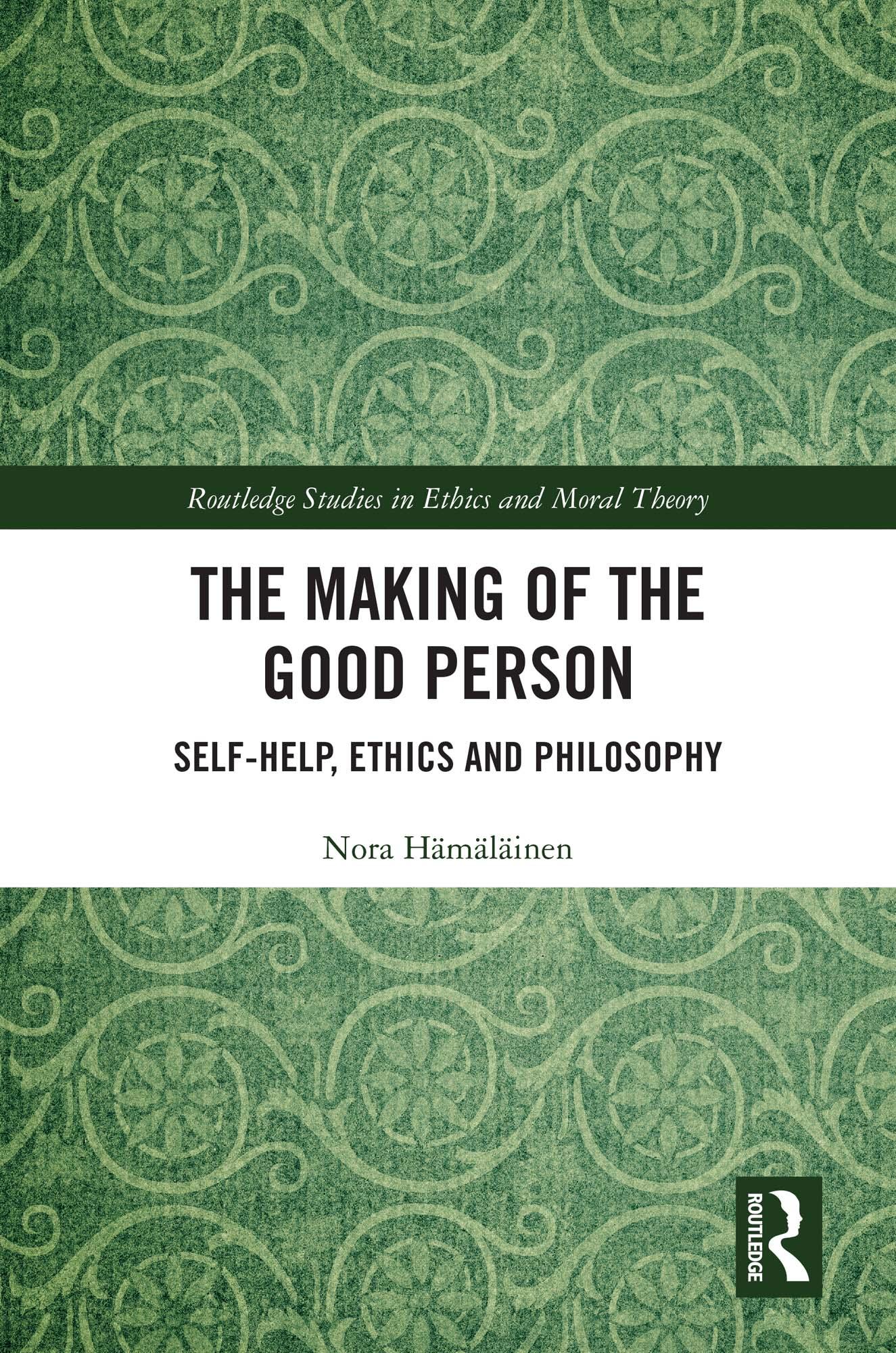
This book provides a philosophical assessment of the idea of personhood advanced in popular self-help literature. It also traces, within academic philosophy and philosophical scholarship, a self-help culture where the self is brought forth as an object of improvement and a key to meaning, progress, and profundity.
Unlike other academic treatments of the topic of self-help, this book is not primarily concerned with providing a critique of popular self-help and self-transformative practices. Rather, it is concerned with how they work to shape contemporary forms and ideals of moral personhood and are conducive to moral renegotiation and change. The book consists of two parts with somewhat different argumentative strategies. Part 1 consists of an overview and reassessment of popular self-help literature and its sociological and journalistic critics, written from a moral philosophical perspective. Part 2 opens with discussion of the current attraction, among a range of philosophers, to self-transformative themes. The chapters assess the strand of self-transformative philosophy found in the work of Ludwig Wittgenstein, Michel Foucault, Pierre Hadot, Stanley Cavell, and Iris Murdoch. Finally, the book concludes with a discussion of the theme of social change and moral renegotiation in contemporary societies, which is a central but underestimated undercurrent in discussions on contemporary self-transformative practices. The book’s dual perspective—on both popular self-help and self-transformative currents in philosophy—enables a cultural and moral philosophical analysis of contemporary ethical ideals of personhood, as well as reflection on the literatures available for its development.
The Making of the Good Person will be of interest to scholars and advanced students working in moral philosophy, history of philosophy, psychology, sociology, and literary studies.
Pay easily by card, Klarna, Apple Pay or Google Pay. Not happy? You always have a 14-day money-back guarantee. Read more in our terms. If you have any questions, email us at hello@memmo.org.
Memmo makes studying easier – wherever you are in the world. We bring your course books and smart study tools together in one place: summaries, quizzes, podcasts and flashcards. Plus Ted, your study buddy who answers anything you wonder. Over 50,000 students already study here – built to help you learn faster and stress less.