
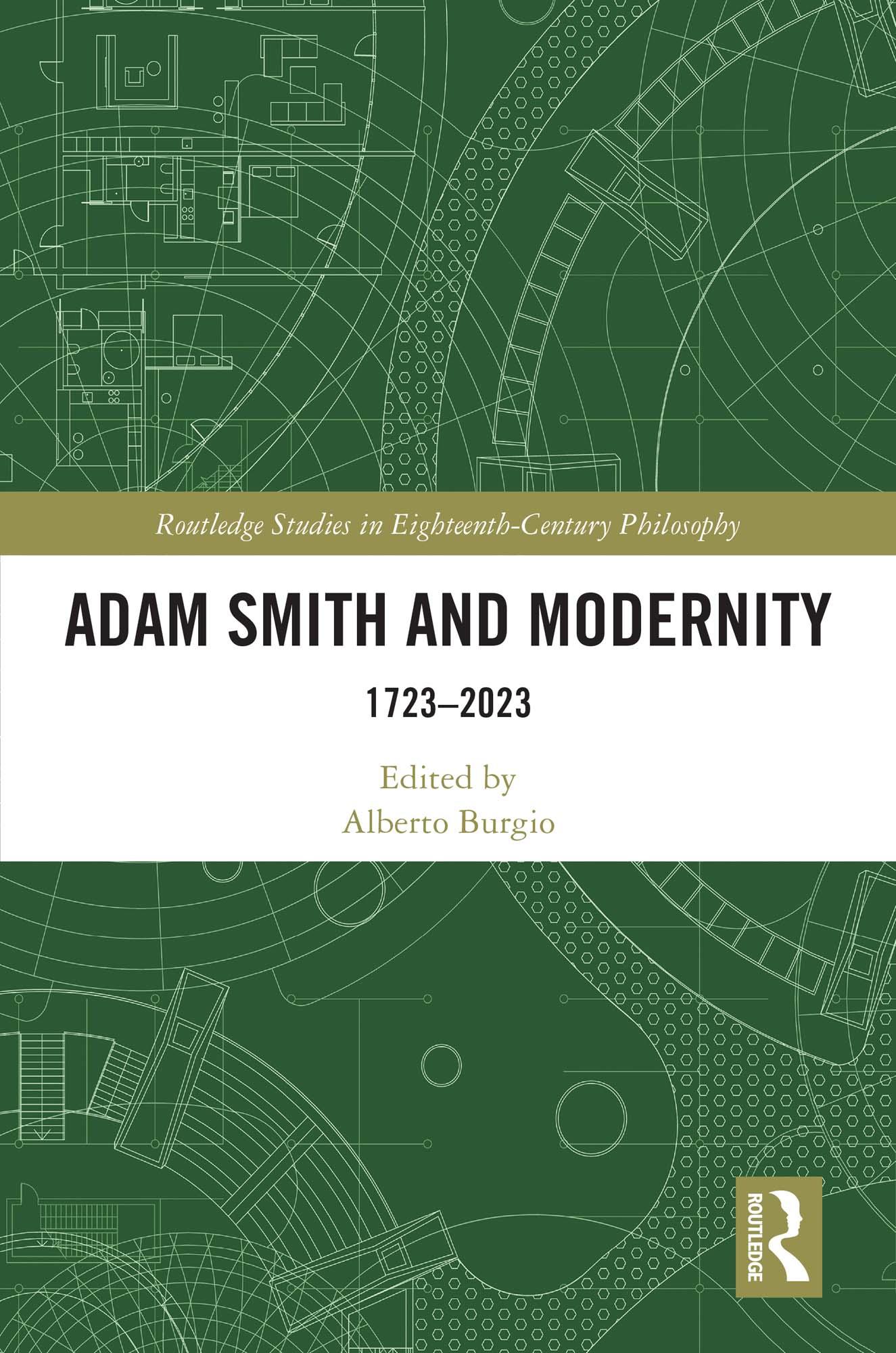
This volume features 19 original chapters on Adam Smith’s conception of modernity. The contributions demonstrate the relevance of Smith as the great interpreter of modernity 250 years after the publication of The Wealth of Nations.
The chapters in Part 1 focus on structural aspects of Smith’s work. They cover topics such as Smith as the theorist of a spontaneous order, the systematic dimension of Smith’s theoretical construction, and Smith’s role as a historian of economic thought. Part 2 addresses Smith’s conception of modern subjectivity between Lectures on Rhetoric and Belles-Lettres, Theory of Moral Sentiments, and Wealth of Nations. Here the contributors consider the figure of the Smithian "merchant" and the importance of ridicule and satire for understanding modern civility, and comment on the role of sympathy, imagination, and moral judgement in developing a sense of self, the condition of the modern man in society, and the virtue of self-command. Part 3 focuses on the crucial question of the relationship between ethics and economics discussing the link between efficiency, equity and justice, the nature of Smith's theory of value, and the ethical connotation of Smith's critique. Part 4 deals with topics inherent to the functional dynamics and development process of the Smithian "commercial society." These topics include law and authority, the relationship between work and freedom, the parable of the "poor man's son," and the economic and political consequences of the new secular orthodoxy. Finally, the chapters in Part 5 explore themes related to history and the Smithian idea of progress. They focus on the link between trade and progress of civilization, Smith’s modern sociological vision of mass commercial societies, Smith's judgement on “savage” and premodern societies, and the controversial question of the immanentistic or providentialist perspective from which Smith considers both the social dynamics and the historical process.
Adam Smith and Modernity will appeal to scholars and advanced students on 18th-century philosophy, the history of economic thought, and the history of social and political philosophy.
Pay easily by card, Klarna, Apple Pay or Google Pay. Not happy? You always have a 14-day money-back guarantee. Read more in our terms. If you have any questions, email us at hello@memmo.org.
Memmo makes studying easier – wherever you are in the world. We bring your course books and smart study tools together in one place: summaries, quizzes, podcasts and flashcards. Plus Ted, your study buddy who answers anything you wonder. Over 50,000 students already study here – built to help you learn faster and stress less.