
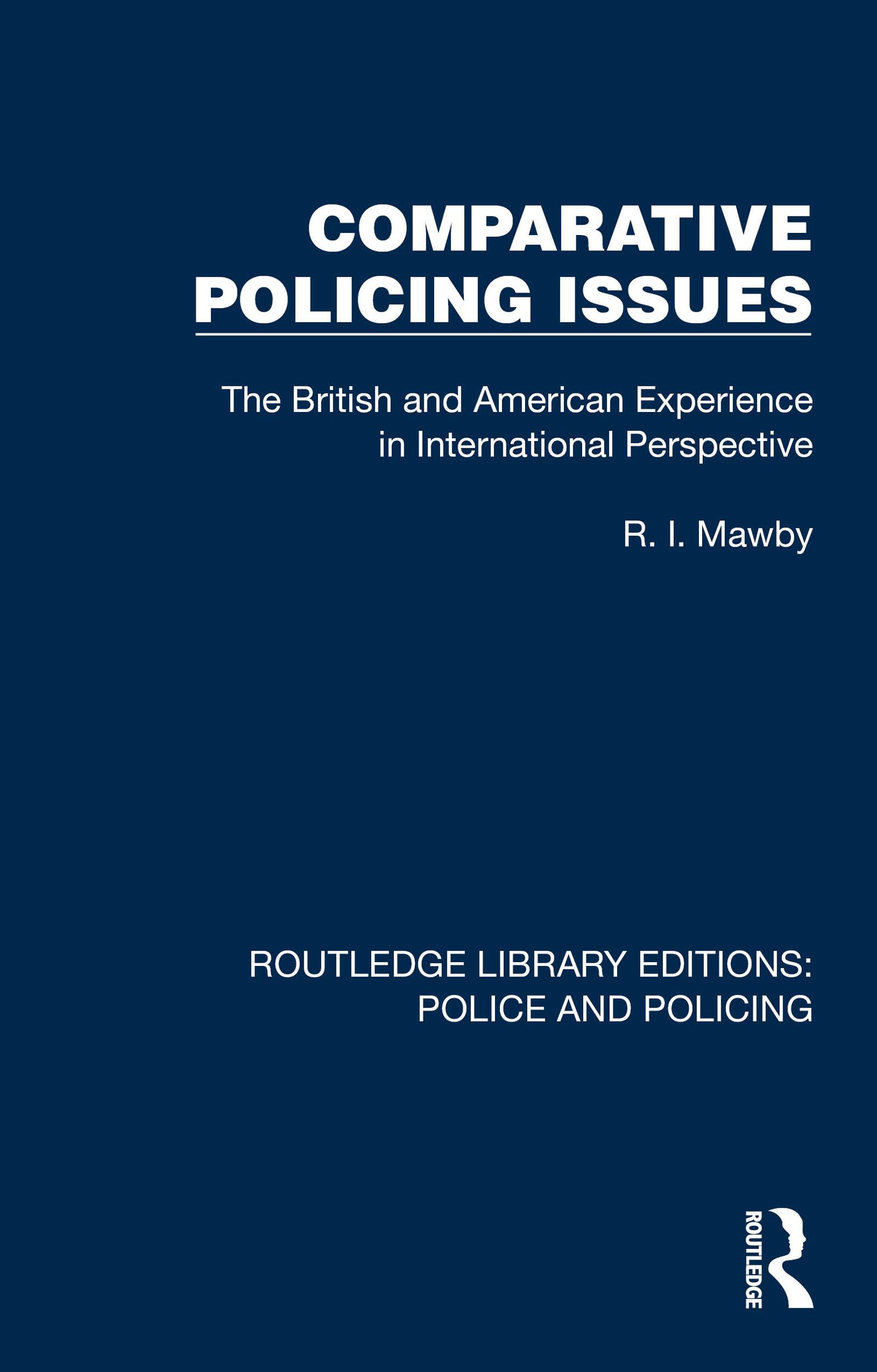
Originally published in 1990, Comparative Policing Issues was the first introductory text to consider key issues in the policing of modern societies from an international, comparative perspective.
The author begins with a discussion of policing itself and considers how the modern police force has emerged. Separate sections then focus on France and the Netherlands as examples of Western European societies: Canada and Hong Kong as influenced by the colonial tradition; Japan as an Eastern capitalist society; and the USSR, China and Cuba as contrasting examples of communist police systems. These and other countries are then considered in terms of the relationship between the police and the communities they ‘serve’.
Critical issues addressed include the following: Are communist and capitalist systems of policing significantly different? What lessons are to be learnt from Japan, with its low crime rate? How accountable are the police in different societies, and to whom? To what extent is the ‘character’ of the police in any society determined by the wider culture, and social and political structure of that society? How practicable is it to transfer ideas about policing from one society to another?
The lowering of barriers within the European community and the return of Hong Kong to China are just two examples of the need for a comparative analysis of policing. Students of criminology and police studies, and police and others working in the criminal justice system will find this book an invaluable resource.
Pay easily by card, Klarna, Apple Pay or Google Pay. Not happy? You always have a 14-day money-back guarantee. Read more in our terms. If you have any questions, email us at hello@memmo.org.
Memmo makes studying easier – wherever you are in the world. We bring your course books and smart study tools together in one place: summaries, quizzes, podcasts and flashcards. Plus Ted, your study buddy who answers anything you wonder. Over 50,000 students already study here – built to help you learn faster and stress less.