
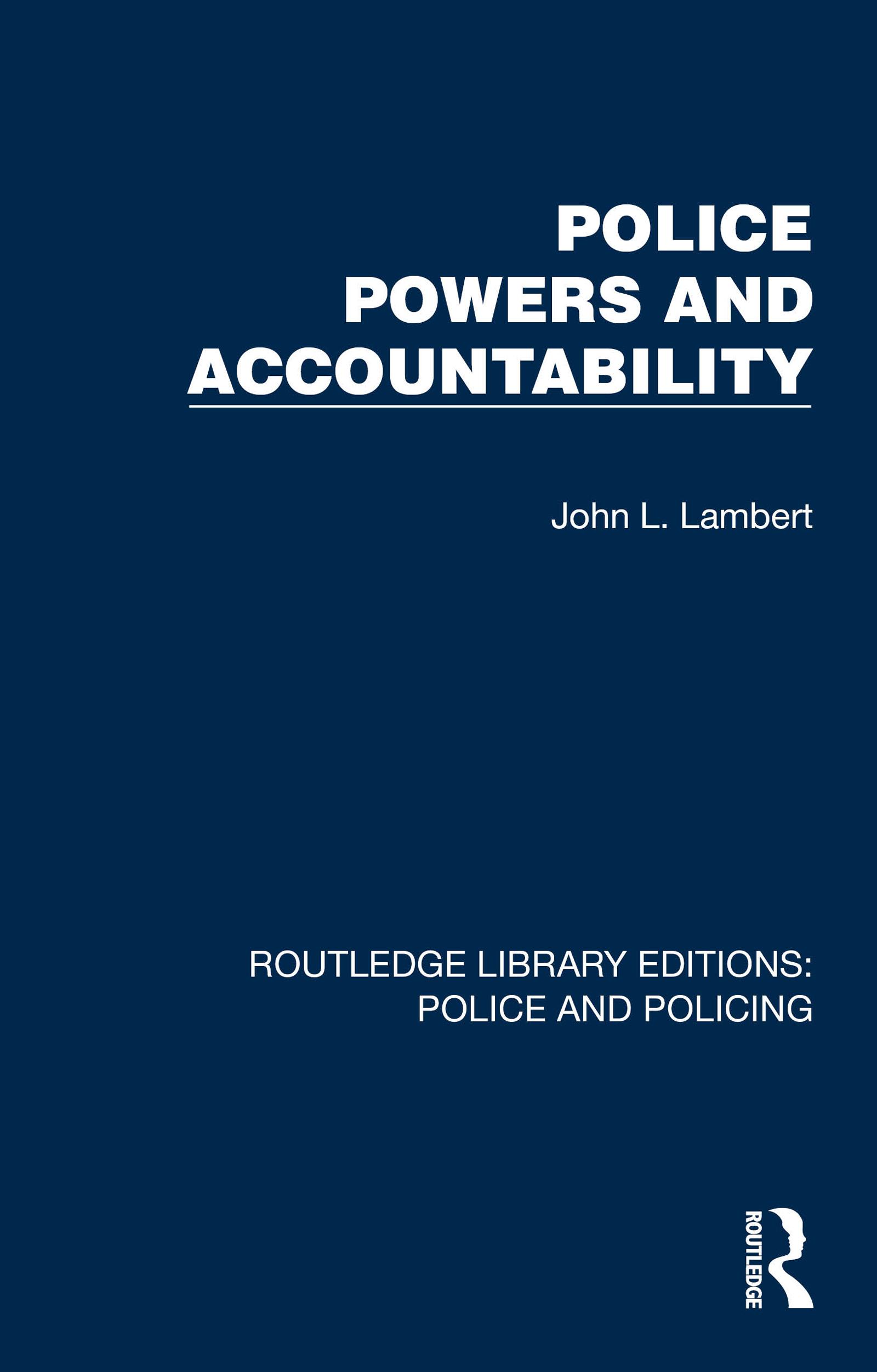
The traditional view of the role of the police had come under increasing attacks in the early 1980s. The riots of 1981 and the Scarman Inquiry stimulated a widespread public debate about policing, police powers and accountability. It had become clear that the police did not simply enforce the law. They also made policy about what law to enforce, when to enforce it and against whom to enforce it. It was the control of this discretionary power which was at the heart of the debate at the time.
Originally published in 1986, this book considers these critical issues in contemporary policing. It concentrates on those aspects of policing that were usually covered in law and law related courses. It deals with the constitutional framework within which the police operates. It examines the police complaints procedure and the full range of police powers against the background of the political debate at the time. Throughout the book the 1984 Police and Criminal Evidence Act is discussed in detail and its impact upon police and public alike is analysed.
Pay easily by card, Klarna, Apple Pay or Google Pay. Not happy? You always have a 14-day money-back guarantee. Read more in our terms. If you have any questions, email us at hello@memmo.org.
Memmo makes studying easier – wherever you are in the world. We bring your course books and smart study tools together in one place: summaries, quizzes, podcasts and flashcards. Plus Ted, your study buddy who answers anything you wonder. Over 50,000 students already study here – built to help you learn faster and stress less.