
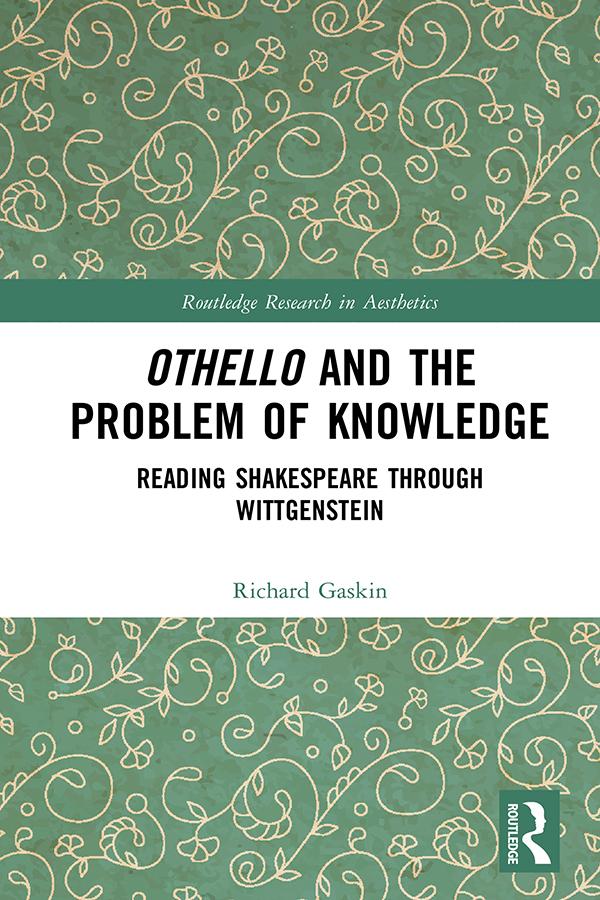
This book analyses the epistemological problems that Shakespeare explores in Othello. In particular, it uses the methods of analytic philosophy, especially the work of the later Wittgenstein, to characterize these problems and the play.
Shakespeare’s Othello is often thought to connect with traditional sceptical problems, and in particular with the problem of other minds. In this book, Richard Gaskin argues that the play does indeed connect in interesting—but also in surprising and so far relatively unexplored—ways with traditional epistemological concerns. Shakespeare presupposes a generally Wittgensteinian model of mind as revealed in behaviour, and communication as necessarily successful in general. Gaskin examines different epistemological models of the tragedy, and argues that it is useful to apply materials from Wittgenstein’s On Certainty to the analysis of Othello’s loss of confidence in Desdemona’s fidelity: Othello treats Desdemona’s fidelity as a ‘hinge certainty’, something that is so fundamental to the language-game that abandoning it results—so Wittgenstein predicts—in chaos and madness. The tragedy arises, Gaskin suggests, from treating the wrong kind of thing as a hinge certainty.
Othello and the Problem of Knowledge will appeal to scholars and advanced students interested in aesthetics, epistemology, philosophy of literature, Shakespeare, and Wittgenstein.
Pay easily by card, Klarna, Apple Pay or Google Pay. Not happy? You always have a 14-day money-back guarantee. Read more in our terms. If you have any questions, email us at hello@memmo.org.
Memmo makes studying easier – wherever you are in the world. We bring your course books and smart study tools together in one place: summaries, quizzes, podcasts and flashcards. Plus Ted, your study buddy who answers anything you wonder. Over 50,000 students already study here – built to help you learn faster and stress less.