
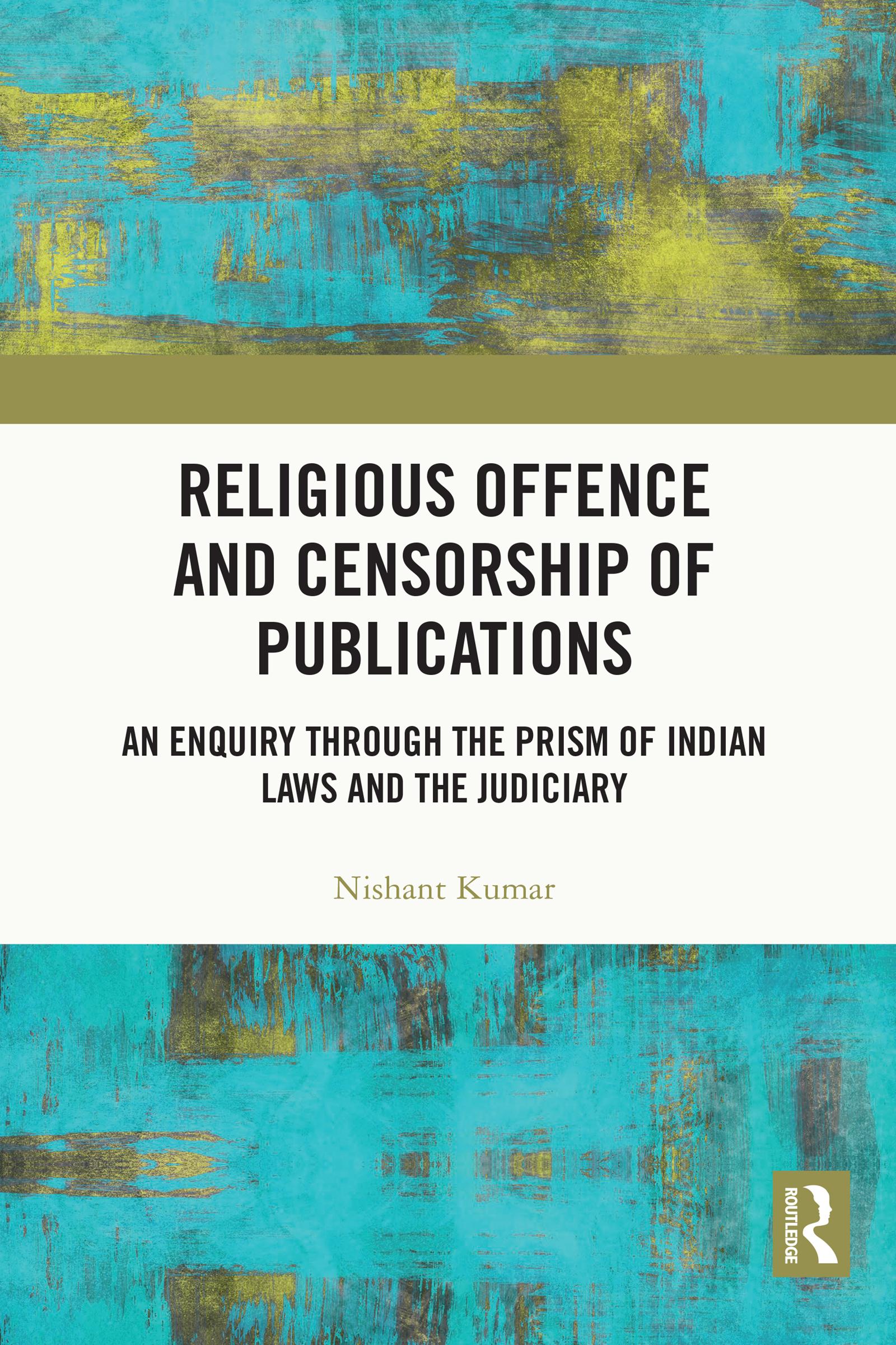
This book analyzes the role of laws and the judiciary in the process of censorship in India. It examines the rationales and observations produced by the judiciary when demands for censorship are directed against publications that allegedly offend religious sentiments. Focusing on a micro-level analysis of censorship of publications, it presents a hard case to understand the limitations of freedom of expression and the role played by the judiciary in defining its boundaries. The volume traces the evolution of laws governing freedom of expression since the colonial period and the context in which these laws were amended after Independence. It also explicates how the legal process – the structural and functional aspects of working of judiciary – affects the fate of freedom of expression in India. Employing comparative legal analysis, it tries to understand and situate the Indian case within the larger discourse of censorship and freedom of expression around the world, thereby marking its similarities and differences. In unravelling the politics of censorship, the author also examines the interaction among different stakeholders like government, non-state actors and the judiciary.
A tract for our times, this book will be of great interest to scholars and researchers of law, especially constitutional law and fundamental rights, politics, especially political theory and Indian politics, modern India and South Asian studies.
Pay easily by card, Klarna, Apple Pay or Google Pay. Not happy? You always have a 14-day money-back guarantee. Read more in our terms. If you have any questions, email us at hello@memmo.org.
Memmo makes studying easier – wherever you are in the world. We bring your course books and smart study tools together in one place: summaries, quizzes, podcasts and flashcards. Plus Ted, your study buddy who answers anything you wonder. Over 50,000 students already study here – built to help you learn faster and stress less.