
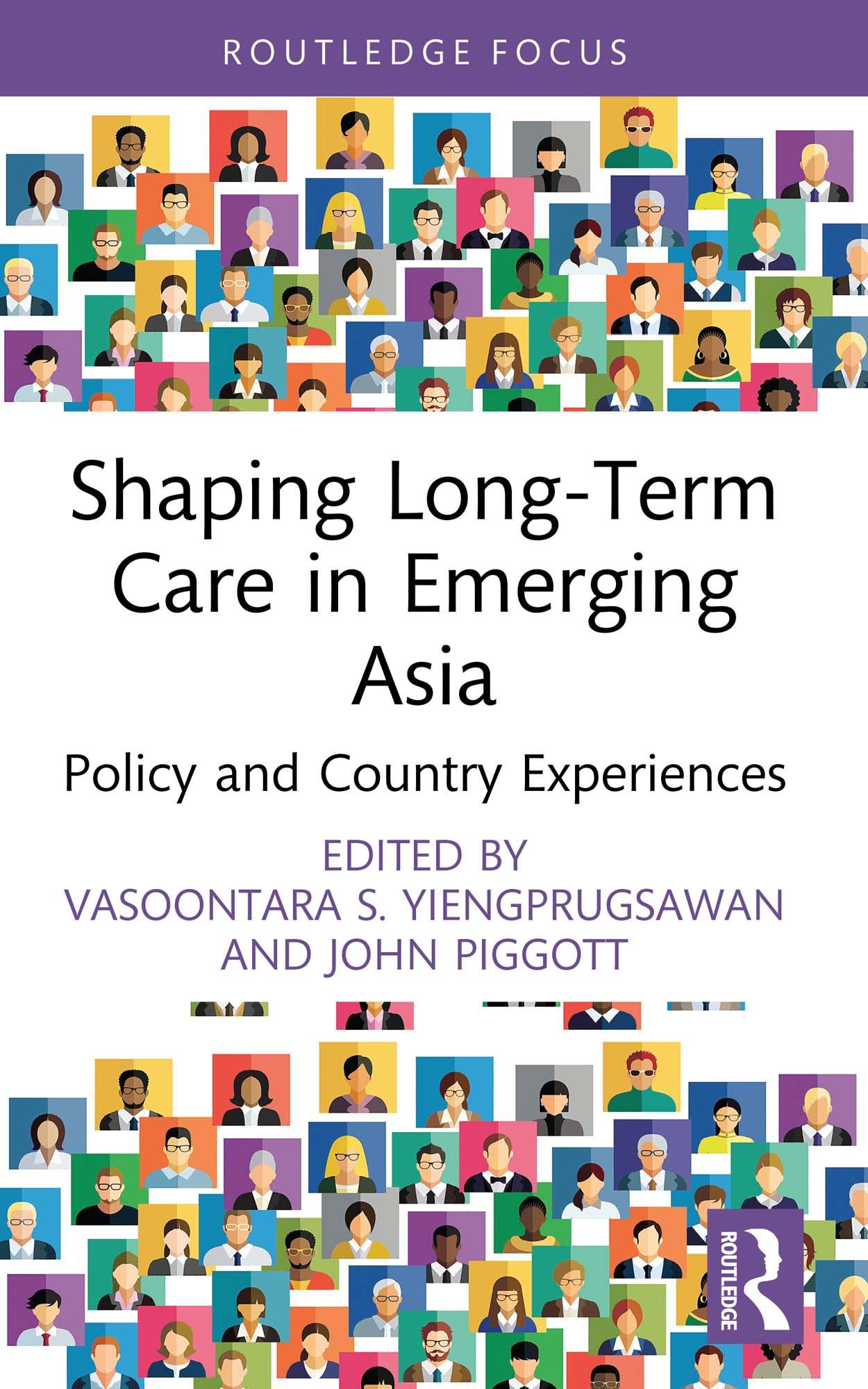
Countries are facing increasing life expectancy and a shrinking family size and in effect, this may escalate demands for medical and supportive services. The role of families in providing informal care will remain important. However, the simultaneous decline in the supply of informal caregiving caused by changes in family structure and higher female labour-market participation necessitate the expansion of the public role in care provision. This book analyses the challenges of long-term care (LTC) policy development and implications from advanced LTC systems and a current trajectory in emerging economies in Asia.
The book approaches the subject through comparative analysis on what works and what does not to provide insight into public policy options for sustainable LTC provision and financing mechanisms. How the countries adopt different approaches to health and social systems towards LTC development could provide important insight and perspectives into policy options in the region.
This book aims at academics, policymakers and practitioners in health, social, and aged care services and could also be used as a teaching resource for undergraduate students in health and social sciences and postgraduate programs in public health, epidemiology, social demography, gerontology, and nursing. The book will be of interest to a wider audience not only on social and health consequences of population ageing but also health and social policy relating to older persons.
Pay easily by card, Klarna, Apple Pay or Google Pay. Not happy? You always have a 14-day money-back guarantee. Read more in our terms. If you have any questions, email us at hello@memmo.org.
Memmo makes studying easier – wherever you are in the world. We bring your course books and smart study tools together in one place: summaries, quizzes, podcasts and flashcards. Plus Ted, your study buddy who answers anything you wonder. Over 50,000 students already study here – built to help you learn faster and stress less.