
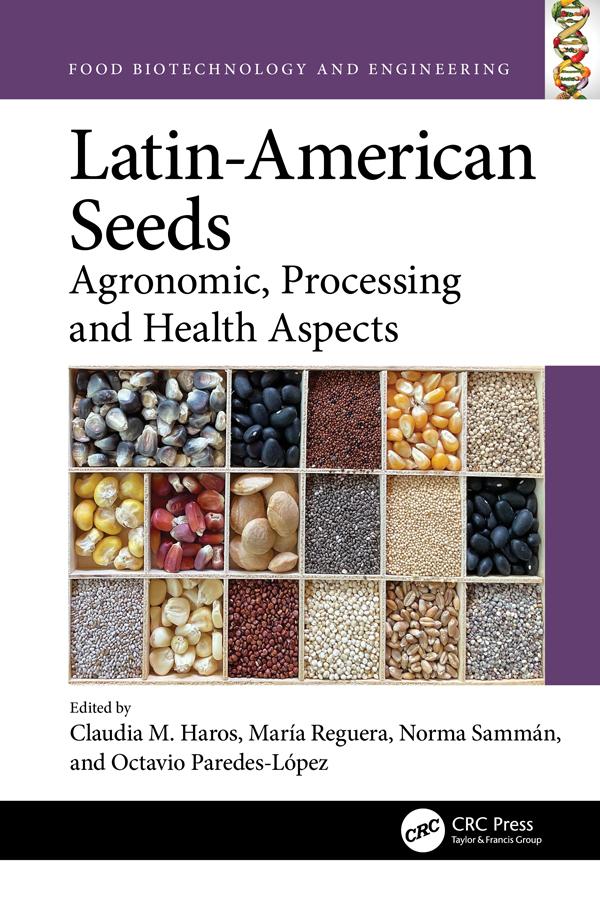
In the last few years, the Latin-American seeds have gained increased importance (also due to the increased demand for gluten-free foods). Worldwide demand for Latin-American seeds and grains has risen in a high proportion. In parallel, seeds and grains' research from this region in all relevant fields has been intensified. Latin-American Seeds: Agronomic, Processing and Health Aspects summarizes the recent research on Latin-American crops regarding agronomic and botanical characteristics, composition, structure, use, production, technology, and impact on human health.
Latin-American cultivars studied here are included in the groups of cereals, pseudo-cereals, oilseeds, and legumes that are used in a great variety of innovative and traditional foods. The main crops that are covered in this book are Latin-American maize (Zea mays), amaranth (Amaranthus spp), quinoa (Chenopodium spp), kañiwa (Chenopodium pallidicaule), chia (Salvia hispanica), sacha inchi (Plukenetia volubilis) and legumes such as black turtle and common beans (Phaseolus vulgaris) and tarwi (Lupinus mutabilis).
Key Features:
- Contains updated information about recent research works on Latin-American crops
- Includes a variety of Latin-American plant species that are used in a great variety of innovative and traditional foods
- Addresses a wide range of topics related to agronomy, plant physiology, and nutritional and technological properties, processing, fractionation and development of new products for human health
Pay easily by card, Klarna, Apple Pay or Google Pay. Not happy? You always have a 14-day money-back guarantee. Read more in our terms. If you have any questions, email us at hello@memmo.org.
Memmo makes studying easier – wherever you are in the world. We bring your course books and smart study tools together in one place: summaries, quizzes, podcasts and flashcards. Plus Ted, your study buddy who answers anything you wonder. Over 50,000 students already study here – built to help you learn faster and stress less.