
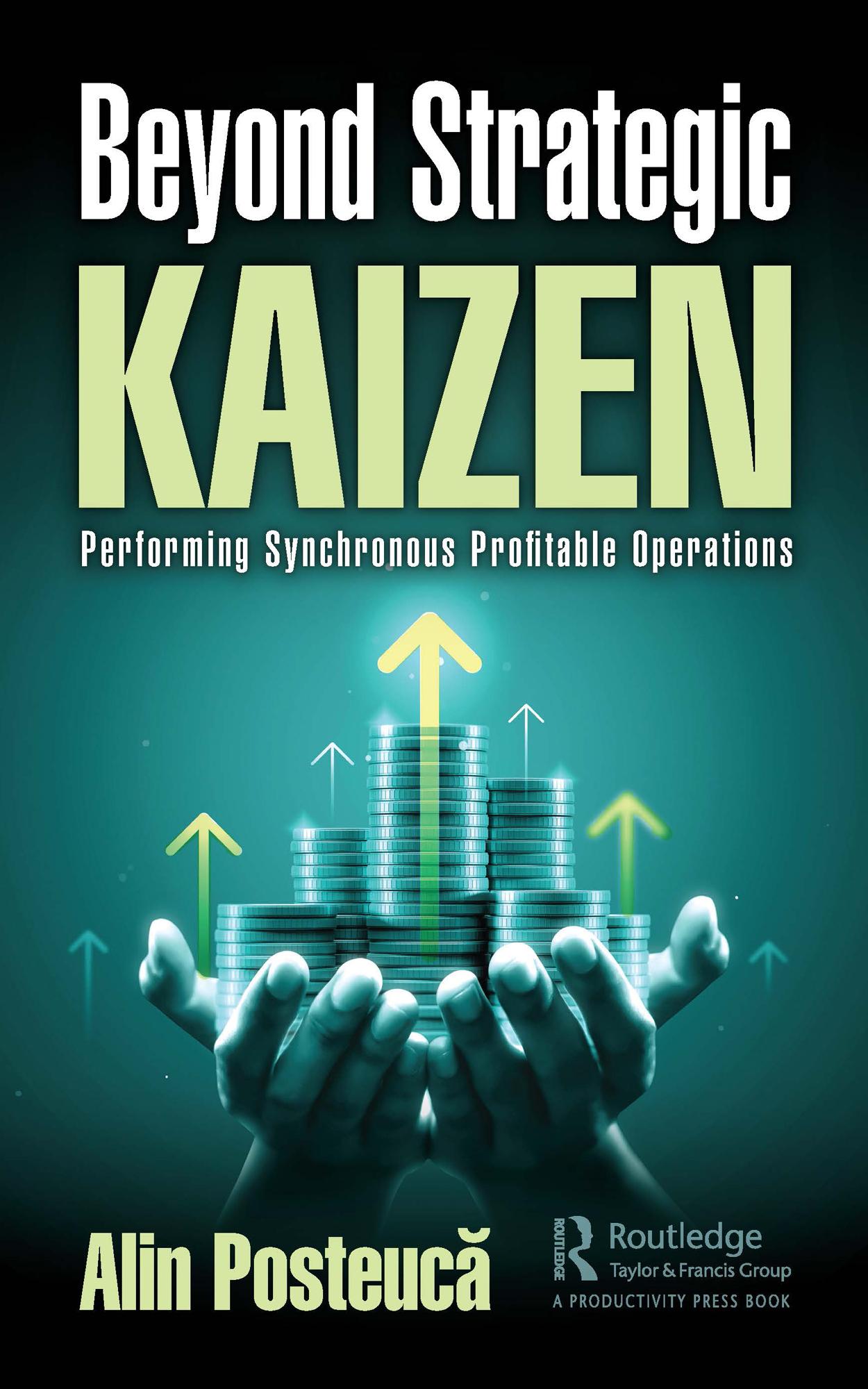
Currently, the challenge for manufacturing organizations is how to achieve their expected profit by continuously improving productivity or reducing costs. Manufacturing organizations have been using different improvement approaches to achieving cost reduction and productivity improvement for years by eliminating various losses and waste structures, such as excess inventory, excessive workforce, excessive capacity, excessive utility consumption, and so on. But is the problem solved? Unfortunately, no! Often manufacturing companies focus on maximizing the flow and meeting customer needs but forget their real aim – to make a profit for their stakeholders. Too many organizations meet customer expectations by seeking to continuously synchronize the flow to market demand but forget to check that they are doing it profitably enough to ensure business continuity and prosperity. When the financial results show that they are not so profitable, it is already too late. Moreover, the strategic direction of systematic improvements according to the sales trend – depending on the current degree of production capacity utilization and its dynamic effects on cost structures – is deficient in many manufacturing companies. So, would the failure of strategic and profitable systematic improvements be an option? Of course not!
If the ultimate goal of the organization is to create target profit for stakeholders, then the behavior and strategic systematic improvements must be directed to those scenarios, strategies, tasks, problems, and “production levers” that are best based on creating the target profit. That’s what Strategic Kaizen thinking does – the simultaneous and consistent achievement of systematic operational and financial improvements in a strategic and operational manner. It achieves both synchronous operations at market demand by fulfilling takt time and profitable operations in accordance with profit demand by fulfilling takt profit. In short, the Strategic Kaizen mission is striving for the fulfillment of the ideal state of operations called synchronous profitable operations. In this book, the author, while presenting in detail the seven processes of Strategic Kaizen methodology, exposes the answer to historically incomplete thinking of productivity improvements for target profitability. The uniqueness of the book is reinforced by the detailed presentation of the successful application of the Strategic Kaizen thinking over the years in two multinational manufacturing organizations operating in highly competitive markets, addressing the synchronous profitable operations for both the sales increase scenario and the sales decrease scenario. Moreover, it presents examples of the practical application of the “white-collar” Strategic Kaizen.
Essentially, by adopting the Strategic Kaizen methodology presented in detail in this book to consistently achieve the ideal state of a manufacturing organization, organizations will enter a new paradigm of thinking of strategic improvements – Strategic Kaizen thinking – to meet annual and multiannual target profits in a unique and effective way that operates according to its own strategic and operational management system.
Pay easily by card, Klarna, Apple Pay or Google Pay. Not happy? You always have a 14-day money-back guarantee. Read more in our terms. If you have any questions, email us at hello@memmo.org.
Memmo makes studying easier – wherever you are in the world. We bring your course books and smart study tools together in one place: summaries, quizzes, podcasts and flashcards. Plus Ted, your study buddy who answers anything you wonder. Over 50,000 students already study here – built to help you learn faster and stress less.