
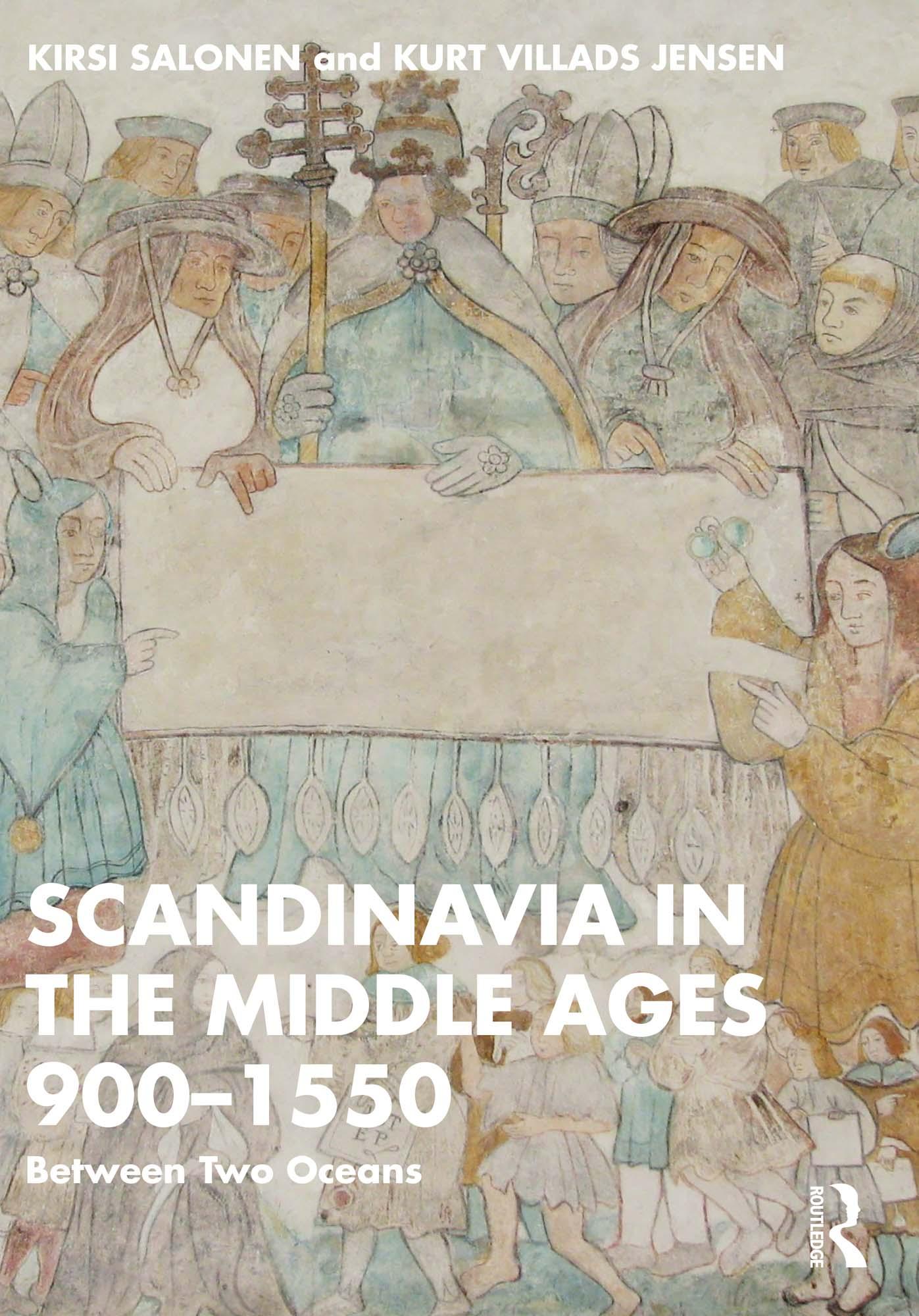
Medieval Scandinavia went through momentous changes. Regional power centres merged and gave birth to the three strong kingdoms of Denmark, Norway, and Sweden. At the end of the Middle Ages, they together formed the enormous Kalmar Union comprising almost all lands around the North Atlantic and the Baltic Sea. In the Middle Ages, Scandinavia became part of a common Europe, yet preserved its own distinct cultural markers.
Scandinavia in the Middle Ages 900–1550 covers the entire Middle Ages into an engaging narrative. The book gives a chronological overview of political, ecclesiastical, cultural, and economic developments. It integrates to this narrative climatic changes, energy crises, devastating epidemies, family life and livelihood, arts, education, technology and literature, and much else. The book shows how different groups had an important role in shaping society: kings and peasants, pious priests, nuns and crusaders, merchants, and students, without forgetting minorities such as Sámi and Jews. The book is divided into three chronological parts 900–1200, 1200–1400, and 1400–1550, where analyses of general trends are illustrated by the acts of individual men and women.
This book is essential reading for students of, as well as all those interested in, medieval Scandinavia and Europe more broadly.
Pay easily by card, Klarna, Apple Pay or Google Pay. Not happy? You always have a 14-day money-back guarantee. Read more in our terms. If you have any questions, email us at hello@memmo.org.
Memmo makes studying easier – wherever you are in the world. We bring your course books and smart study tools together in one place: summaries, quizzes, podcasts and flashcards. Plus Ted, your study buddy who answers anything you wonder. Over 50,000 students already study here – built to help you learn faster and stress less.