
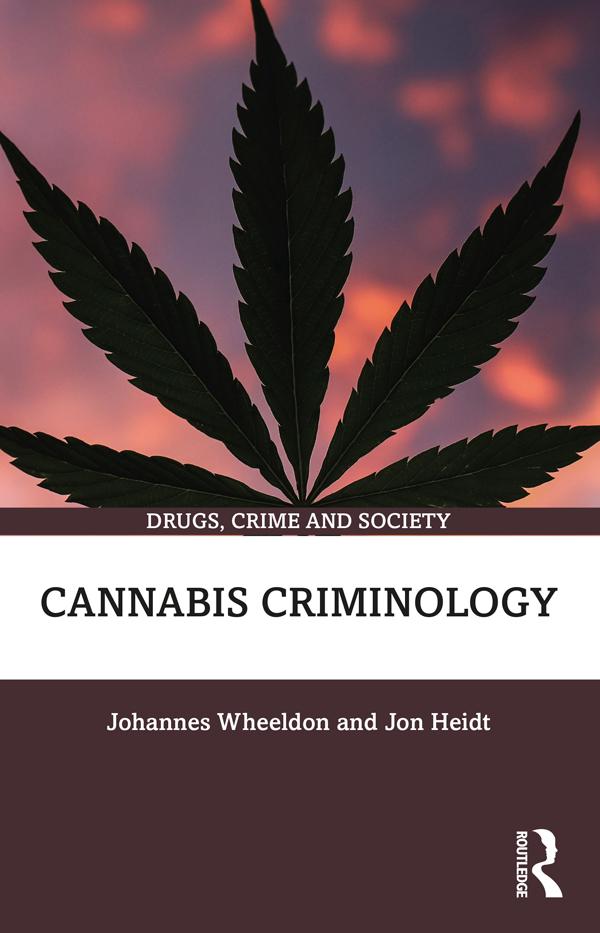
Cannabis Criminology explores the prohibition, decriminalization, and liberalization of cannabis policy through the lens of criminological and sociological theory, essential concepts, and cannabis research. It does so by focusing on five thematic areas: law, society, and social control; police and policing; race, ethnicity, and criminalization; the economics of cannabis; and cannabis use and crime. It is the first book on cannabis since President Joe Biden signed an executive order in 2022 to pardon citizens and lawful permanent residents convicted of simple cannabis possession under federal law and DC statute. Cannabis is now legal in some form in 37 US states. To understand the reform of cannabis policy and the challenges to come, we first need to understand the connections between cannabis and criminology.
The book links key areas in past and contemporary cannabis research to criminological and sociological theories, including key concepts, emergent concerns, and new directions. Based on an up-to-date review of this growing area of research, the book outlines a research program based on five essential thematic areas. Introducing cannabis as a critical case study in moral-legal re-negotiation, it outlines how cannabis prohibition has influenced cannabis around the world. Five discrete chapters focus on thematic areas, criminological and sociological theories, define essential concepts, and provide research focused on law, society, and social control (Chapter 2), police and policing cannabis (Chapter 3), race, ethnicity, and criminalization (Chapter 4), the economics of cannabis (Chapter 5), and cannabis and crime (Chapter 6). The book concludes by presenting new ways to engage prohibitionist thinking, by challenging myths, embracing social media, and developing a duty of care to guide future cannabis researchers and explicitly involve people who use cannabis.
Cannabis Criminology will be of interest to a variety of readers, including students and scholars from a range of backgrounds studying drug use, drug policy, cannabis legalization, and other drug-related issues. It will also appeal to policymakers who want to know more about cannabis legalization and drug prohibition, those working in the criminal justice system, and social work professionals. Due to its accessible style, people involved in the cannabis industry, as well as cannabis users may also find the book interesting.
Pay easily by card, Klarna, Apple Pay or Google Pay. Not happy? You always have a 14-day money-back guarantee. Read more in our terms. If you have any questions, email us at hello@memmo.org.
Memmo makes studying easier – wherever you are in the world. We bring your course books and smart study tools together in one place: summaries, quizzes, podcasts and flashcards. Plus Ted, your study buddy who answers anything you wonder. Over 50,000 students already study here – built to help you learn faster and stress less.