
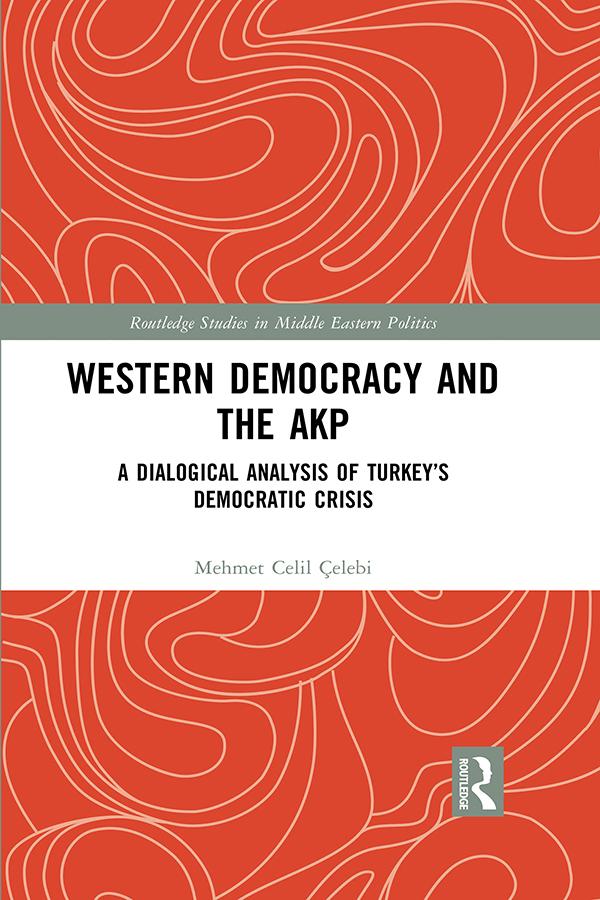
Upturning the typical view of Turkey’s democratic trajectory as a product of authoritarian assault or unfortunate circumstances, this book argues that the AKP, first elected in 2002, has consistently advanced a narrative of democracy as the work of an elite working for the 'National Will'.
Beginning with an analysis of the historical processes that led to the AKP’s rise at the beginning of the 21st century, the book then focuses on the AKP since 2002. Though Turkey’s democratic transition was originally characterised by Western co-operation, the author outlines the gradual deterioration of these relations since the 2010s, as well as the decline of political rights, freedom of expression and the rule of law. However, bringing in theoretical perspectives of democracy, it is argued that the AKP has adopted an alternative definition based on the 'National Will' throughout its rule, resistant to the Western essentialist view. As such, the AKP’s story highlights that the root of this crisis lies within democracy itself.
The book will appeal to historians and analysts of Turkish politics, as well as to political scientists interested in theories of democracy. Moreover, for those interested in the global contemporary crisis of democracy, the book provides an important case-study.
Pay easily by card, Klarna, Apple Pay or Google Pay. Not happy? You always have a 14-day money-back guarantee. Read more in our terms. If you have any questions, email us at hello@memmo.org.
Memmo makes studying easier – wherever you are in the world. We bring your course books and smart study tools together in one place: summaries, quizzes, podcasts and flashcards. Plus Ted, your study buddy who answers anything you wonder. Over 50,000 students already study here – built to help you learn faster and stress less.