
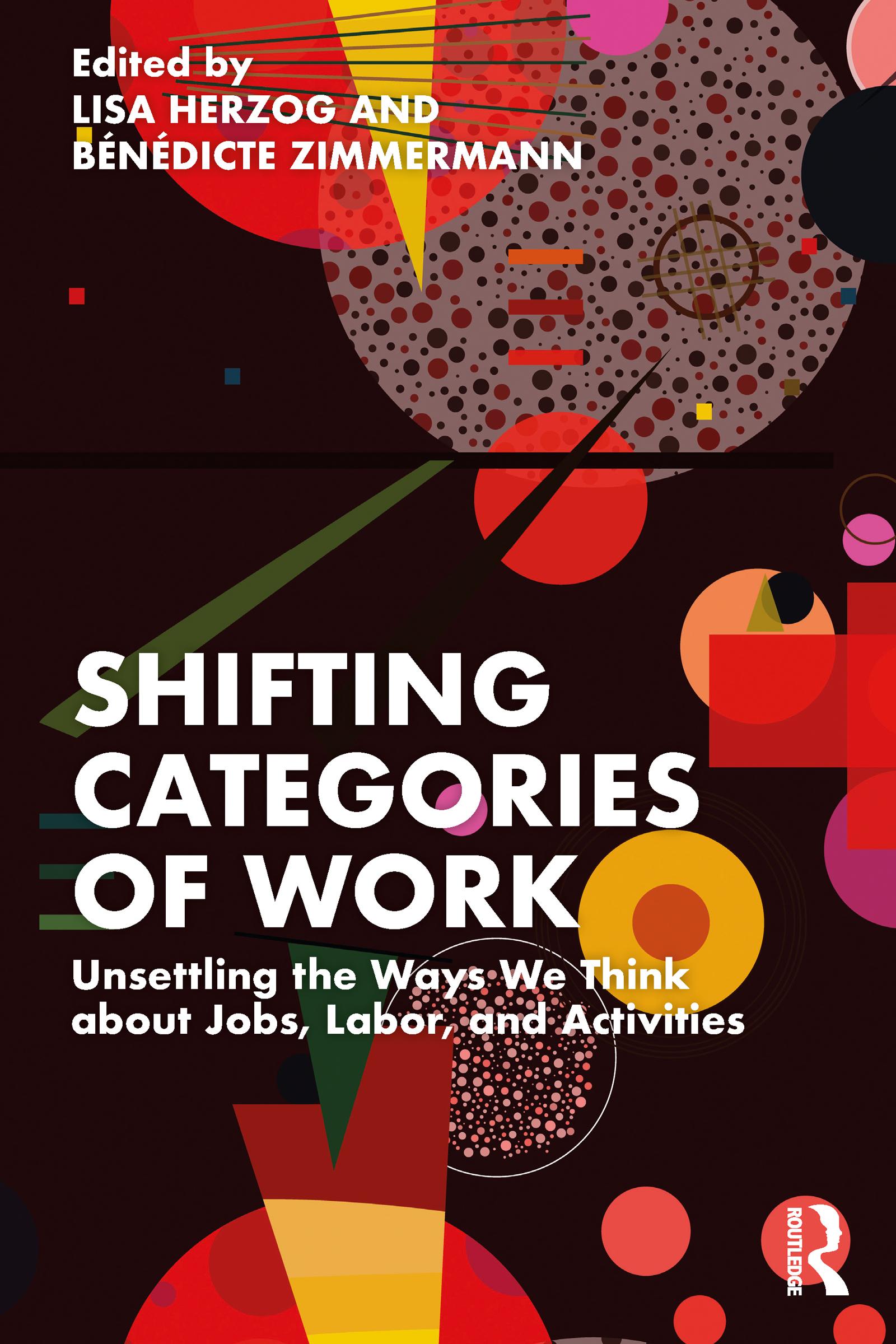
What do human beings do when they work, how is work organized, and what are its multidimensional – economic, social, political, biographical, ecological – effects? We cannot answer these questions without drawing on the numerous categories that we use to describe work, such as "skilled" or "unskilled" work, "domestic work" or "wage labor," "gig work" or "platform work." Such categories are not merely theoretical labels as they also have practical effects. But where do these categories come from, what are their histories, how do they differ between countries, and how are they evolving? Shifting Categories of Work asks these questions, illuminating the many ways in which our societies categorize work. Written by sociologists, philosophers, historians and anthropologists as well as management and legal scholars, the contributions in this volume contrast different cultural practices and frameworks of categorizing work across different countries.
Organized around the three axes of (un)organized work, (in)visible work and (in)valuable work, this book shows how ways of categorizing work express, but also recreate, lines of privilege and disadvantage – challenging our preconceived notions of what work is and what it could be, as it invites us to rethink the categories we use for understanding the work we do, and hence, to some extent, ourselves.
Pay easily by card, Klarna, Apple Pay or Google Pay. Not happy? You always have a 14-day money-back guarantee. Read more in our terms. If you have any questions, email us at hello@memmo.org.
Memmo makes studying easier – wherever you are in the world. We bring your course books and smart study tools together in one place: summaries, quizzes, podcasts and flashcards. Plus Ted, your study buddy who answers anything you wonder. Over 50,000 students already study here – built to help you learn faster and stress less.