
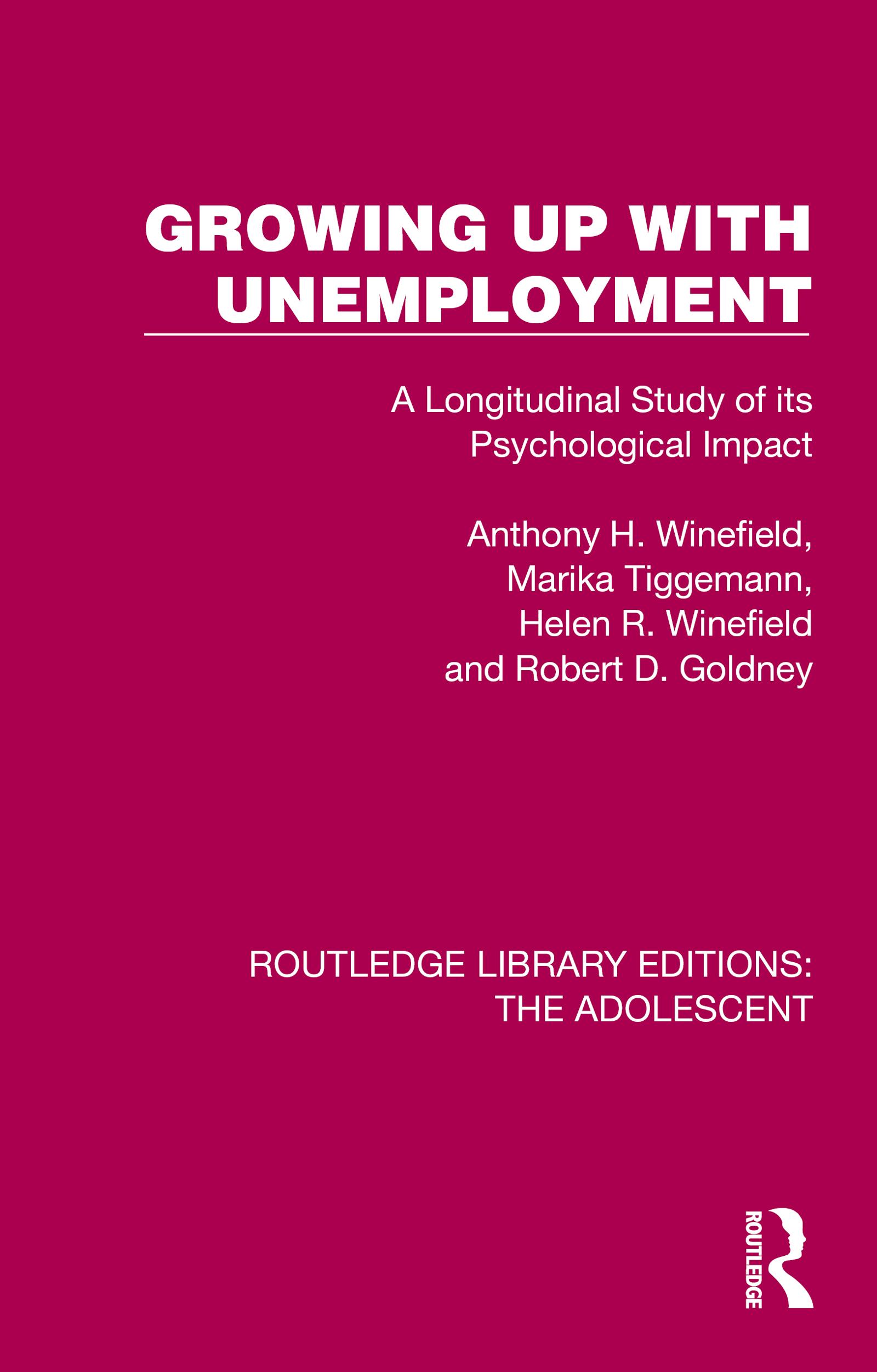
The transition from school to work is recognized by developmental psychologists as a significant phase in maturation of young people. In the 1990s the likelihood that the transition might be delayed by a period of prolonged unemployment was greater than any time since the 1930s. The psychological consequences of such a delay need to be understood because they may be damaging to both the individual and to society, particularly if they are long-lasting. Such an understanding is essential for the development of sound policy in relation to youth unemployment.
Originally published in 1993, Growing up with Unemployment describes a major longitudinal study of a large group of South Australian school leavers through the 1980s. It assesses the scale and context of the problem and reviews the methods and theories that have been developed to study the psychological impact of unemployment. It also looks at those factors which may contribute towards helping young people cope with it, such as financial security, social support and being involved in constructive activities with other people. The authors also examine how we might be able to predict future unemployment and understand the relationship between it and alcohol consumption, smoking and drug use.
This book describes a major study with important implications for employment policy, as well as future theory and research. This title will be interesting historical reading for students of psychology and social policy, policy makers and all those who deal with young people.
Pay easily by card, Klarna, Apple Pay or Google Pay. Not happy? You always have a 14-day money-back guarantee. Read more in our terms. If you have any questions, email us at hello@memmo.org.
Memmo makes studying easier – wherever you are in the world. We bring your course books and smart study tools together in one place: summaries, quizzes, podcasts and flashcards. Plus Ted, your study buddy who answers anything you wonder. Over 50,000 students already study here – built to help you learn faster and stress less.