
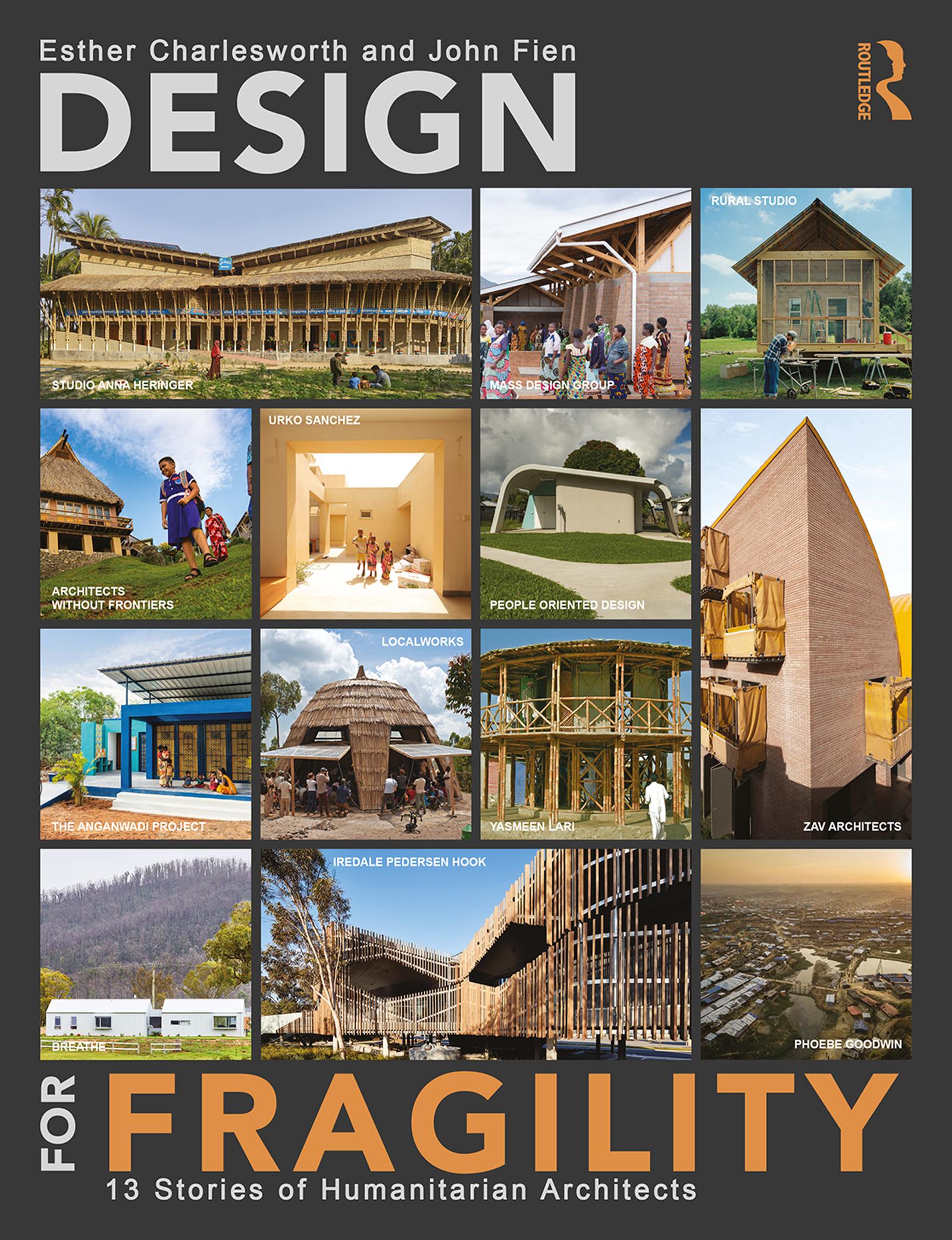
The demand is now urgent for architects to respond to the design and planning challenges of rebuilding cities and landscapes being destroyed by civil conflict, (un)natural disasters, political instability, and poverty. The number of people fleeing their homes and being displaced by such conflict now totals almost 100 million. Despite the massive human and physical costs of these crises, the number of architects, planners, and landscape architects equipped to work with disaster and development professionals in rebuilding in the aftermath of conflict, floods, fires, earthquakes, typhoons, and tsunamis remains chronically low. Design for Fragility expands the nascent, but rapidly growing field of humanitarian architecture by exploring 13 design responses to such conflict and displacement across 11 countries, including Australia, Bangladesh, Fiji, India, Iran, Pakistan, and the USA. Linked to this displacement is the systemic poverty that often lingers from previous colonial territories and eras, in which many of the featured projects in the book are located.
This book follows Charlesworth’s Humanitarian Architecture: 15 Stories of Architects Working After Disasters (Routledge 2014), which analysed the role for architects in exercising ‘spatial agency’ while designing shelter and settlement projects for communities after conflict and disaster. Since that time, the humanitarian architecture movement has expanded globally with the prominence of design agencies including the MASS Design Group and Architecture Sans Frontières (ASF) International. Design for Fragility analyses this role of spatial agency in architecture by addressing diverse conditions of fragility across 13 built projects – from refugee housing in Uganda and an orphanage for teenage girls in Iran to a residential centre in Northern Australia for people with acquired brain injury.
Each of the projects profiled in this book explore:
- The experiences and perceptions of fragility – or precarity – that provided a design challenge and directed the particular spatial response.
- The specific typology of the project, whether that be a housing, health, children’s, or a First Nations project.
- The personal values that influenced the architects to work on humanitarian/community projects and how consultation occurred with diverse and often contested project stakeholders.
- The experiences of the design team as well as project managers, occupants, and donors of the built project, exploring what they deemed successful about the project, and what, if any, were its limitations.
Beautifully designed with over 150 illustrations, this practical and inspiring book is for architects, landscape architects, design educators, humanitarian and development aid agencies that are involved, or seeking to be part, of future disaster mitigation and reconstruction strategies and projects, globally.
Pay easily by card, Klarna, Apple Pay or Google Pay. Not happy? You always have a 14-day money-back guarantee. Read more in our terms. If you have any questions, email us at hello@memmo.org.
Memmo makes studying easier – wherever you are in the world. We bring your course books and smart study tools together in one place: summaries, quizzes, podcasts and flashcards. Plus Ted, your study buddy who answers anything you wonder. Over 50,000 students already study here – built to help you learn faster and stress less.