
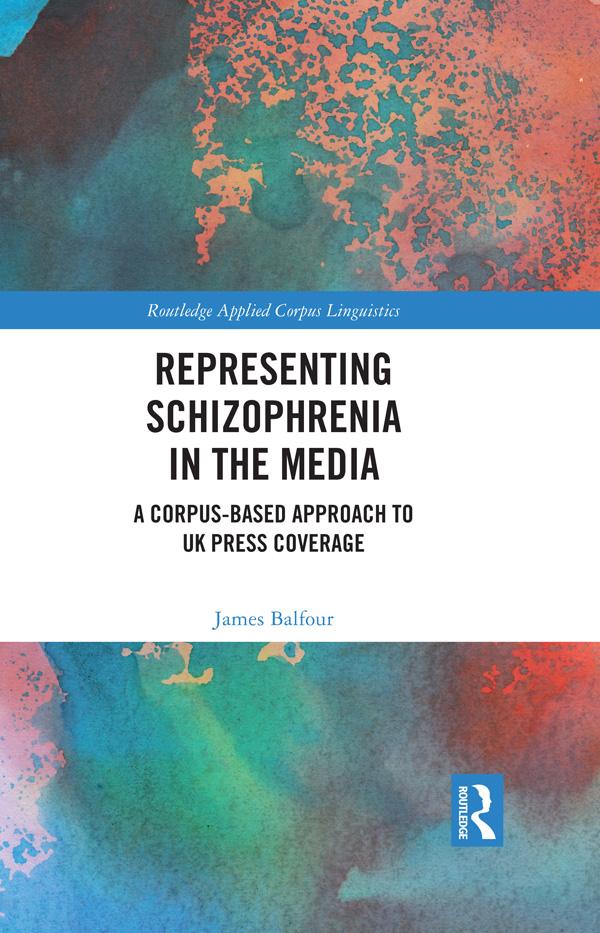
This book presents a critical analysis of ways in which schizophrenia and people with schizophrenia are represented in the press. Interrogating a 15-million-word corpus of news articles published by nine UK national newspapers over a 15-year period, the author draws on techniques from corpus linguistics and critical discourse analysis to identify the most frequent and salient linguistic features used by journalists to influence and reflect broader public attitudes towards people with schizophrenia. In doing so this book:
- Evaluates the extent to which media representations are accurate and the extent to which they are potentially helpful or harmful towards people living with schizophrenia;
- Employs a bottom-up approach guided by linguistic patterns, such as collocates and keywords, identified by corpus software;
- Contributes to the de-stigmatisation of schizophrenic disorder by unveiling some of the widespread misconceptions surrounding it;
- Applies a mixed-methods approach in order to expose attitudes and beliefs found ‘between the lines’ – values and assumptions which are often implicit in the way language is used and therefore not visible to the naked eye.
The findings of this monograph will be relevant to advanced students and researchers of health communication, corpus linguistics and applied linguistics and will also carry importance for journalists and mental health practitioners.
Pay easily by card, Klarna, Apple Pay or Google Pay. Not happy? You always have a 14-day money-back guarantee. Read more in our terms. If you have any questions, email us at hello@memmo.org.
Memmo makes studying easier – wherever you are in the world. We bring your course books and smart study tools together in one place: summaries, quizzes, podcasts and flashcards. Plus Ted, your study buddy who answers anything you wonder. Over 75,000 students already study here – built to help you learn faster and stress less.