
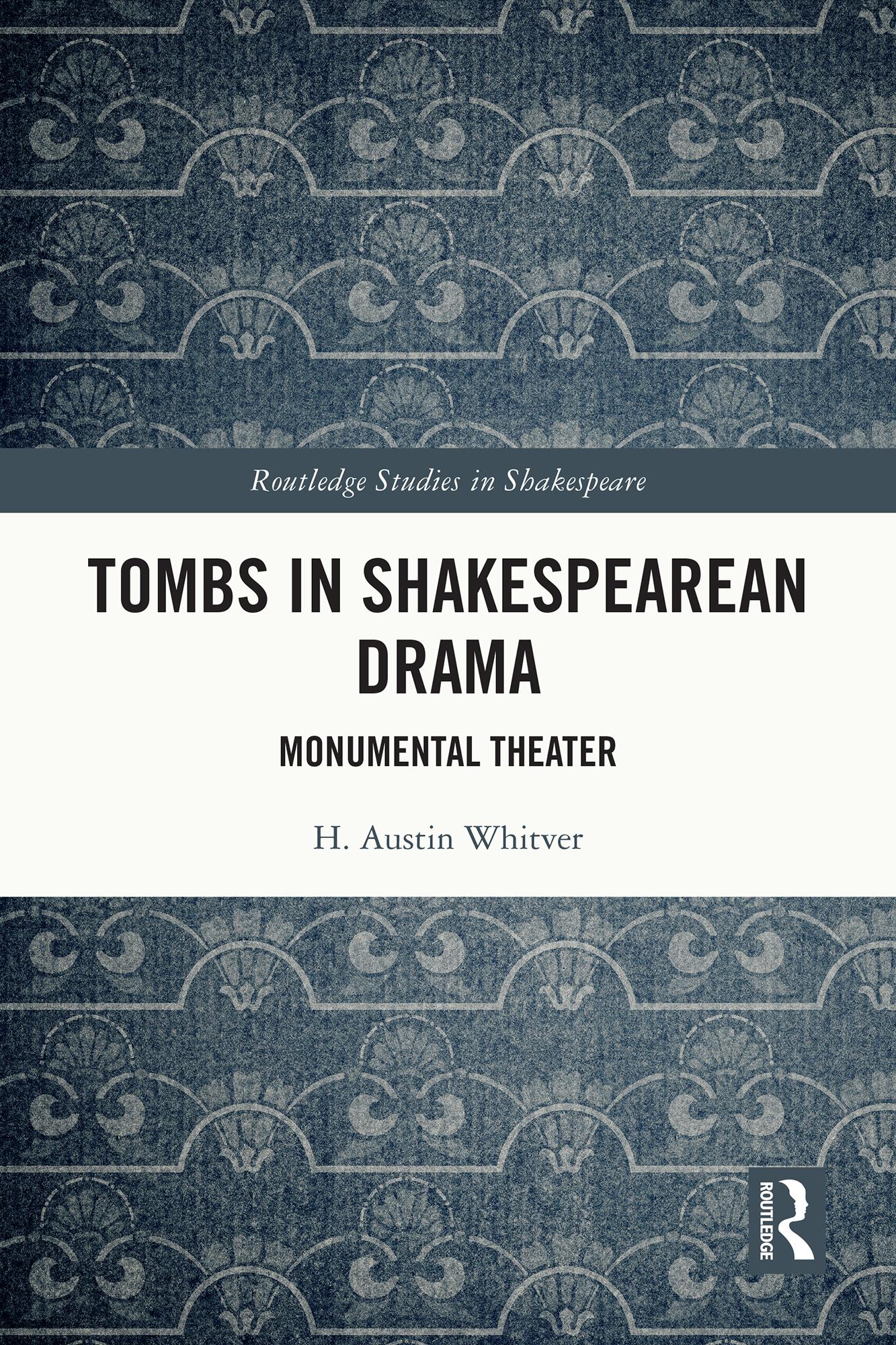
Tombs in Shakespearean Drama explores the rhetorical deployment of tombs and monuments on the early modern stage, demonstrating their historiographic power and mythmaking potential. By analyzing references to tombs in plays by Shakespeare and others in conjunction with extant monuments, this volume demonstrates how these references function in two overlapping ways in period drama: monuments act as repositories of information about the past, and they allow the living to construct and preserve fictive narratives.
The stage exposes the flimsy materiality of paper, placing less value on the written word than period poetry. In this way, critics have perhaps oversold as universal Shakespeare’s poetic praise of stone. Tombs within plays act as a powerful historical and narrative medium, raising the stakes to provide the stage with the illusion of permanency. Playwrights use tombs to anchor the stage action, giving a sense of lasting importance to dramatic events and combatting the ephemeral nature of the playhouse. In drama, Shakespeare and others drew on the persona preserved on tombs; this volume widens our view of how these representations interacted in the commemorative economy of early modern England. Within the playhouse, it was the tomb, not the tome, that stood as a symbol of permanence.
Pay easily by card, Klarna, Apple Pay or Google Pay. Not happy? You always have a 14-day money-back guarantee. Read more in our terms. If you have any questions, email us at hello@memmo.org.
Memmo makes studying easier – wherever you are in the world. We bring your course books and smart study tools together in one place: summaries, quizzes, podcasts and flashcards. Plus Ted, your study buddy who answers anything you wonder. Over 75,000 students already study here – built to help you learn faster and stress less.