
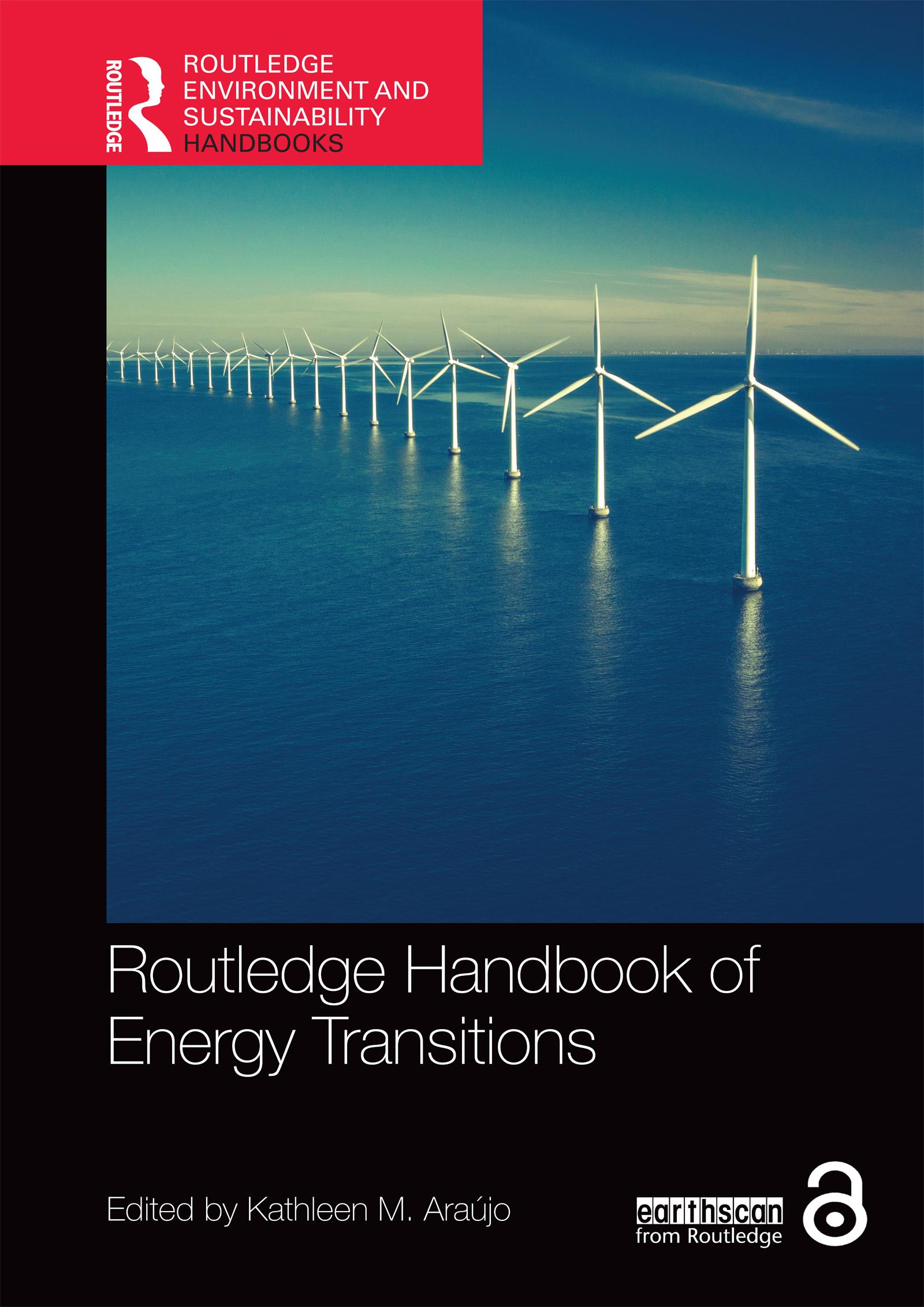
The Routledge Handbook of Energy Transitions draws upon a unique and multidisciplinary network of experts from around the world to explore the expanding field of energy transitions.
This Handbook recognizes that considerable changes are underway or are being developed for the modes in which energy is sourced, delivered, and utilized. Employing a sociotechnical approach that accounts for economics and engineering, as well as more cross-cutting factors, including innovation, policy and planning, and management, the volume considers contemporary ideas and practices that characterize the field. The book explores pressing issues, including choices about infrastructure, the role of food systems and materials, sustainability, and energy democracy. Disruption is a core theme throughout, with the authors examining topics such as digitalization, extreme weather, and COVID-19, along with regional similarities and differences. Overall, the Routledge Handbook of Energy Transitions advances the field of energy transitions by connecting ideas, taking stock of empirical insights, and challenging how we think about the theory and practice of energy systems change.
This innovative volume functions as an authoritative roadmap with both regional and global relevance. It will be an essential resource for students, policymakers, researchers, and practitioners researching and working in the fields of energy transitions, planning, environmental management and policy, sustainable business, engineering, science and technology studies, political science, geography, design anthropology, and environmental justice.
The Handbook was awarded Best Edited Book About Energy by the American Energy Society "What stands out in this Handbook is its sociotechnical examination of the considerable changes in which energy is sourced, delivered, and utilized."
Chapter 26 of this book is freely available as a downloadable Open Access PDF at http://www.taylorfrancis.com under a Creative Commons [Attribution-Non Commercial-No Derivatives (CC-BY-NC-ND)] 4.0 license.
Chapter 10 of this book is freely available as a downloadable Open Access PDF at http://www.taylorfrancis.com under a Creative Commons [Attribution-Non Commercial-No Derivatives (CC-BY-NC-ND)] 4.0 license.
Pay easily by card, Klarna, Apple Pay or Google Pay. Not happy? You always have a 14-day money-back guarantee. Read more in our terms. If you have any questions, email us at hello@memmo.org.
Memmo makes studying easier – wherever you are in the world. We bring your course books and smart study tools together in one place: summaries, quizzes, podcasts and flashcards. Plus Ted, your study buddy who answers anything you wonder. Over 50,000 students already study here – built to help you learn faster and stress less.