
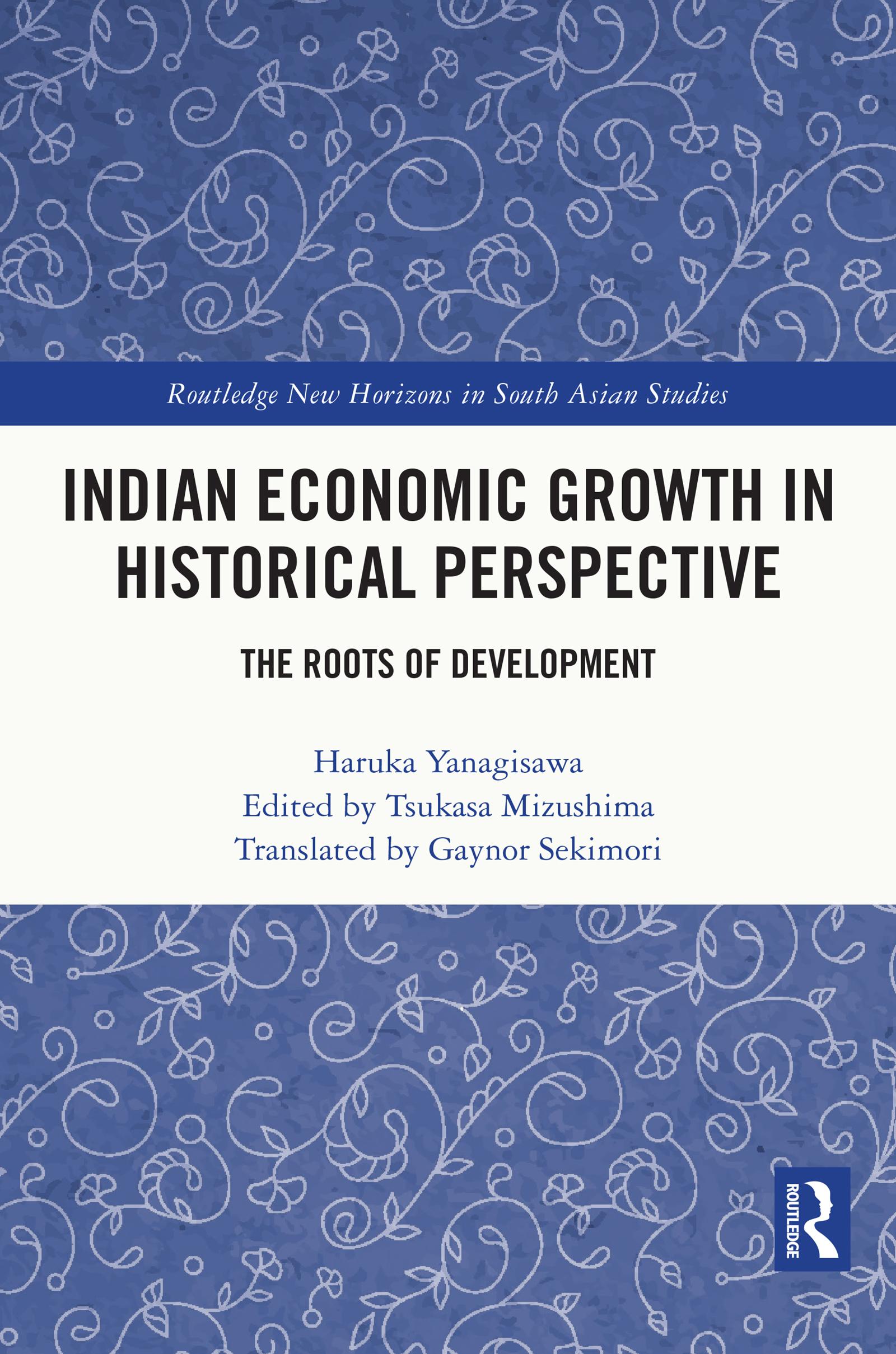
This book investigates the roots of rapid economic growth of India in recent decades, by exploring historical processes from the late colonial period.
Based upon decades-long archival and field research, this book deals with the period from the late nineteenth century to 2013 and offers an integral viewpoint of the economic history of India. While critiquing the conventional understanding that links recent economic growth only with the development of high-tech, export-oriented service sectors under the liberalised economy, the book suggests deeper and wider roots of development that had a cumulative effect in three stages. First, the agrarian development and rural socio-economic changes from the end of the nineteenth century. Second, the state-led import-substitution industrialisation since 1950 that established the industrial foundations for future economic growth. Third, the economic reforms since 1991 that helped technology-intensive industries find new markets with improved quality of production.
For the first time available in English, this book by the late Professor Haruka Yanagisawa, who was a leading figure in the South Asia studies collective in Japan, is an important contribution to the academic tradition of economic history of India. It will be of interest to researchers in the field of social and economic history, sociology, anthropology and economies of South Asia.
Pay easily by card, Klarna, Apple Pay or Google Pay. Not happy? You always have a 14-day money-back guarantee. Read more in our terms. If you have any questions, email us at hello@memmo.org.
Memmo makes studying easier – wherever you are in the world. We bring your course books and smart study tools together in one place: summaries, quizzes, podcasts and flashcards. Plus Ted, your study buddy who answers anything you wonder. Over 50,000 students already study here – built to help you learn faster and stress less.