
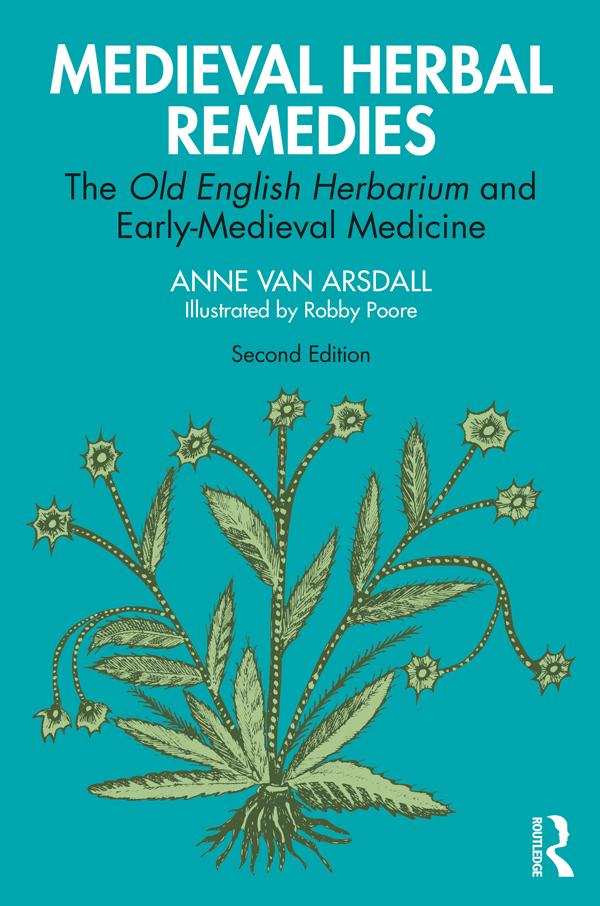
Featured here is a modern translation of a medieval herbal, with a study showing how this technical treatise on herbs was turned into a literary curiosity in the nineteenth century. The contours of this second edition replicate the first; however, it has been revised and updated throughout to reflect new scholarship and new findings. New information is presented on Oswald Cockayne, the nineteenth-century philologist who first translated the Old English medical texts for the modern world.
Here the medieval text is read as an example of technical writing (i.e., intended to convey instructions/information), not as literature. The audience it was originally aimed at would know how to diagnose and treat medical conditions and knew or was learning how to follow its instructions. For that reason, while working on the translation, specialists in relevant fields were asked to shed light on its terse wording, for example, herbalists and physicians. Unlike many current studies, this work discusses the Herbarium and other medical texts in Old English as part of a tradition developed throughout early-medieval Europe associated with monasteries and their libraries.
The book is intended for scholars in cross-cultural fields; that is, with roots in one field and branches in several, such as nineteenth-century or medieval studies, for historians of herbalism, medicine, pharmacy, botany, and of the Western Middle Ages, broadly and inclusively defined, and for readers interested in the history of herbalism and medicine.
Pay easily by card, Klarna, Apple Pay or Google Pay. Not happy? You always have a 14-day money-back guarantee. Read more in our terms. If you have any questions, email us at hello@memmo.org.
Memmo makes studying easier – wherever you are in the world. We bring your course books and smart study tools together in one place: summaries, quizzes, podcasts and flashcards. Plus Ted, your study buddy who answers anything you wonder. Over 50,000 students already study here – built to help you learn faster and stress less.