
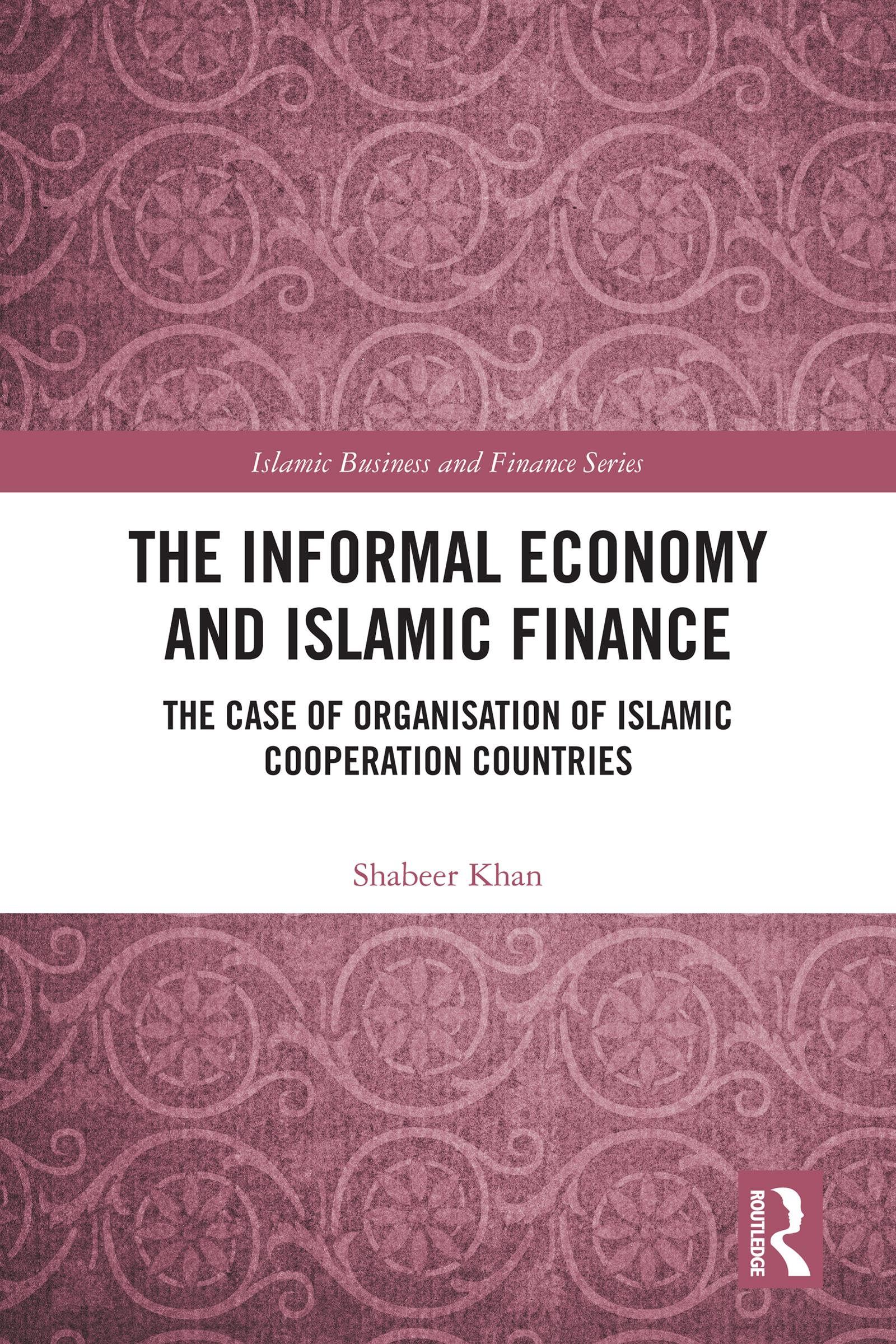
The characteristics, nature, determinants, and size of the informal economy differ from country to country. While much research has been carried out in the context of advanced economies, less attention has been given to developing countries, especially those in the Organisation of Islamic Cooperation (OIC) nations.
This is one of the first books to investigate Islamic finance’s stance on the informal economy and to discuss it from an OIC perspective. It covers the various definitions, historical development, types, and determining factors behind the shadow economy and the reasons for people’s preference to join and stay in the informal economy. Similarly, different theories are discussed in detail, thus providing a deeper understanding of the subject matter.
The book examines the indicators of the informal sector, such as unemployment, regulation, and taxation, and the effect of financial development and the role of financial inclusion in informal economy in the case of OIC countries compared to non-OIC countries. It defines the main features of the informal economy and discusses their implications for policy formation and implementation. Additionally, the author provides guidance on Islamic finance’s role in the informal economy and offers policy recommendations in order to bring more people into the formal economy.
The book presents deep and specialist knowledge on the shadow economy as well as facts and figures pertaining to OIC countries, and, as such, will open the door for future research in this important but understudied field, especially from an Islamic finance angle. It can be used as a comprehensive guide for students, academics, and researchers of Islamic studies, development economics, political economy, public policy, law, sociology, and anthropology.
Pay easily by card, Klarna, Apple Pay or Google Pay. Not happy? You always have a 14-day money-back guarantee. Read more in our terms. If you have any questions, email us at hello@memmo.org.
Memmo makes studying easier – wherever you are in the world. We bring your course books and smart study tools together in one place: summaries, quizzes, podcasts and flashcards. Plus Ted, your study buddy who answers anything you wonder. Over 50,000 students already study here – built to help you learn faster and stress less.